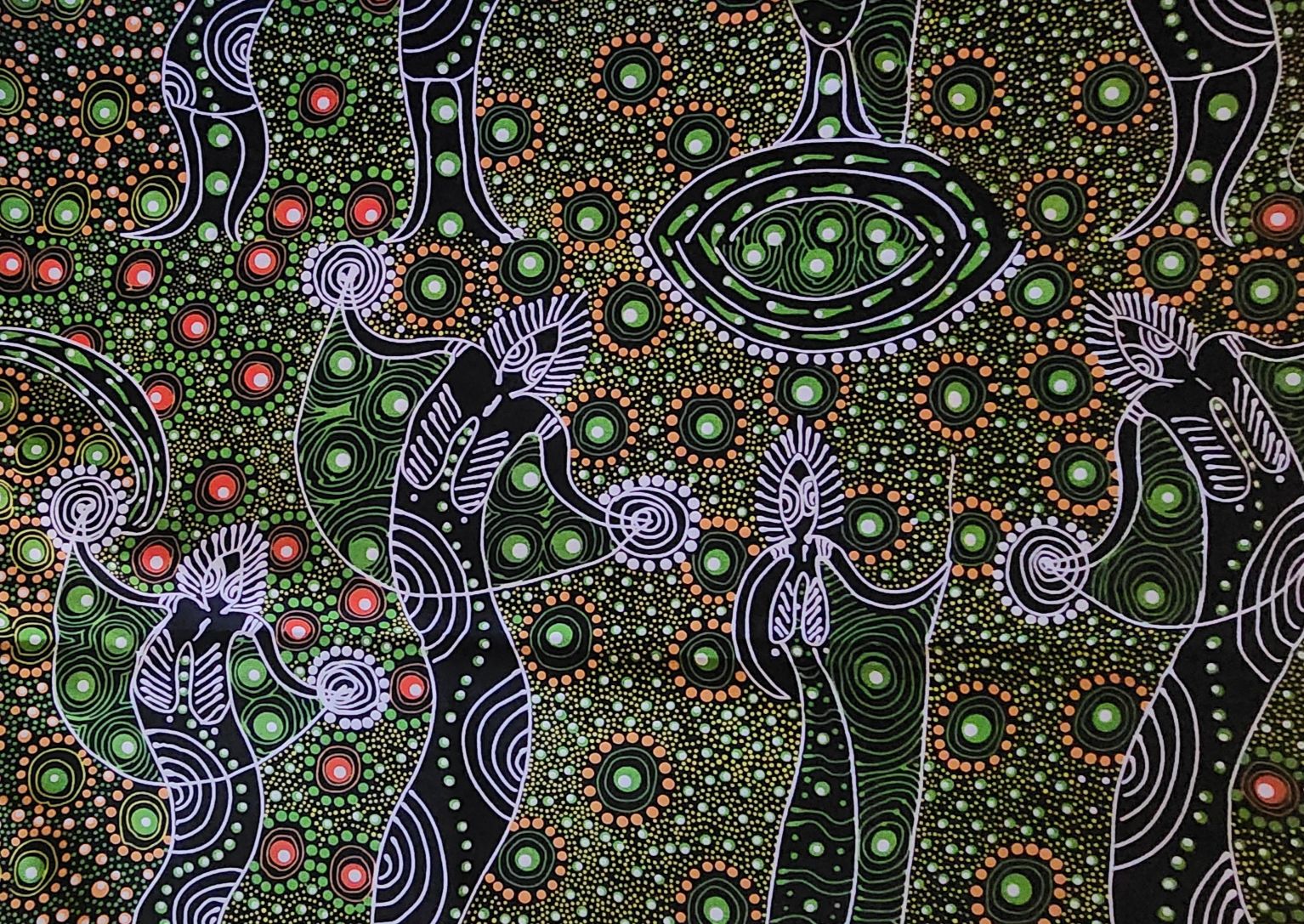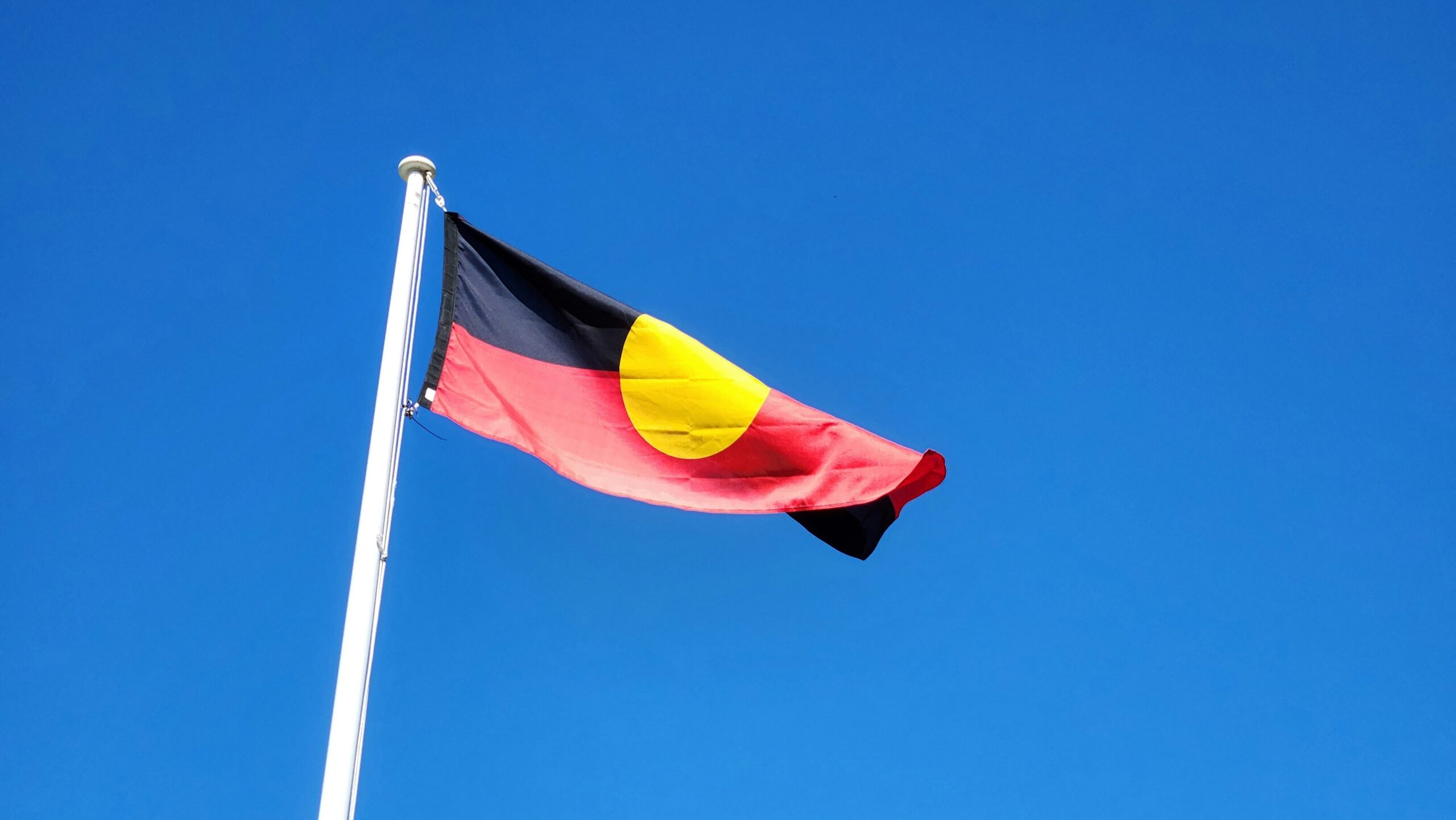
When you look into traditional Aboriginal culture, you quickly realize that lessons weren’t taught through boring textbooks or strict lectures. Instead, they were woven into beautiful, memorable tales called Dreaming Stories. These aren’t just fictional fairy tales; they are ancient, living records used to pass down vital survival rules, moral codes, and environmental science to the next generation.
Since water was the ultimate life-or-death resource in the dry Australian bush, it makes total sense that one of the most famous Dreaming stories centers around a very thirsty, very greedy amphibian: Tiddalik the Frog.
Here is the legendary tale of the frog that literally drank the world, and the powerful lesson it still holds for us today.
🐸The Legend of Tiddalik the Greedy Frog🐸
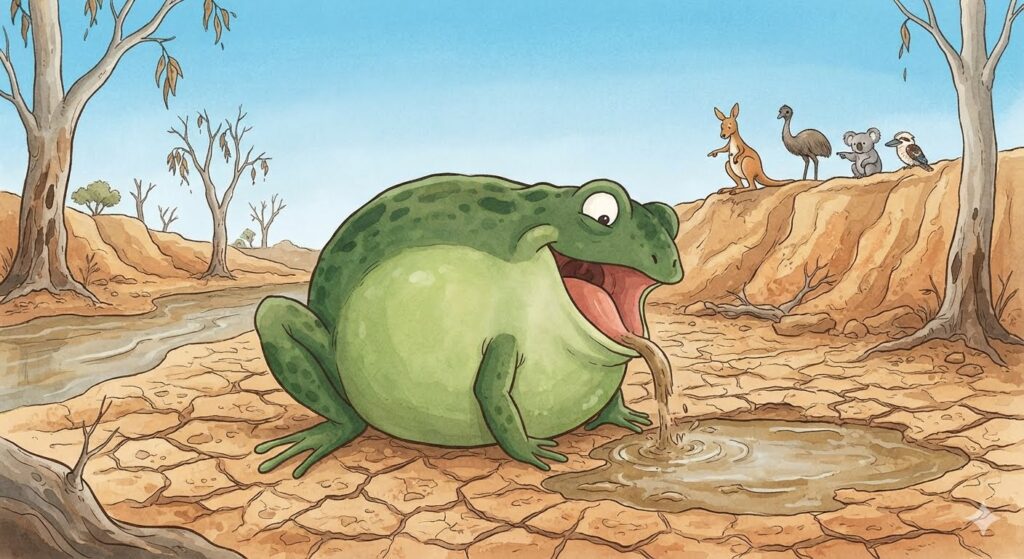
Long ago in the Dreaming, Tiddalik was the largest frog in the entire world. One morning, he woke up with a massive, unquenchable thirst. He hopped down to the local waterhole and started to drink. But he just couldn’t stop. He kept drinking and drinking until he had swallowed every single drop of fresh water in the land.
The consequences were instant and devastating. The roaring rivers dried up to a trickle, the deep lakes vanished, and the lush billabongs turned into baked, cracked mud. All the other animals—the kangaroos, emus, wombats, and koalas—were left panting in the heat, dying of thirst. They gathered together in a panic, desperately needing a plan to get the water back before it was too late.
💡The Big Idea💡
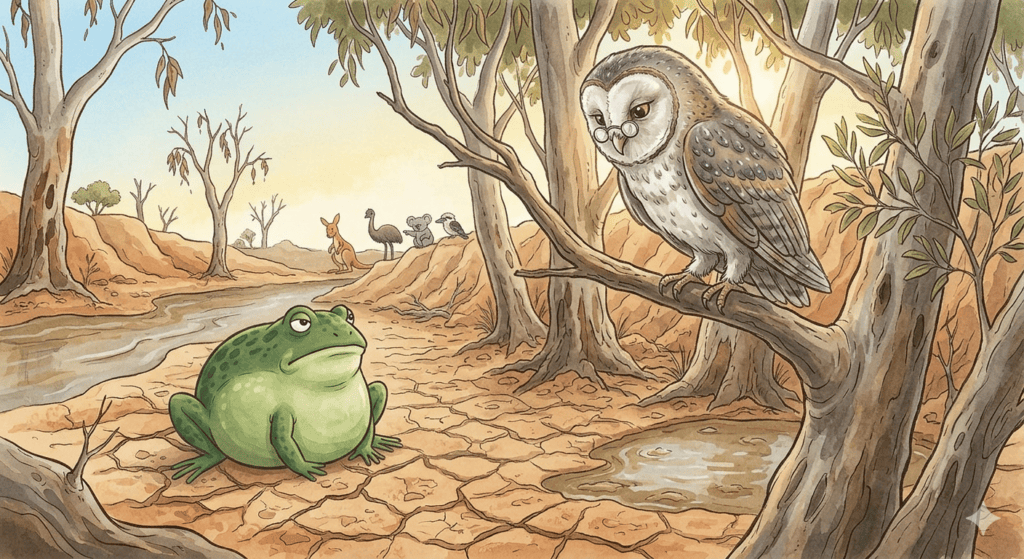
The wise old Owl looked at the giant, bloated frog sitting stubbornly in the mud and realized the truth: Tiddalik was holding the entire world’s water supply inside his belly. Cutting him open would destroy the water, and asking nicely clearly wasn’t working. The only solution? They had to make him laugh. If Tiddalik opened his mouth to laugh, the water would come rushing out.
The animals lined up to put on the ultimate comedy show, taking turns trying to crack the stubborn frog’s straight face:
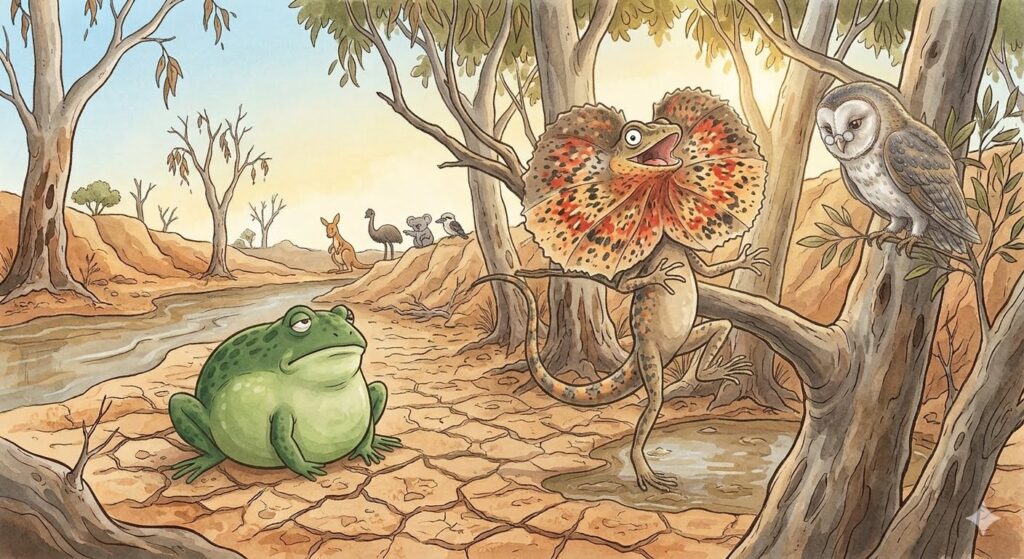
- The Kangaroo tried vaulting completely over the Emu, but Tiddalik just stared blankly.
- The Frill-necked Lizard puffed out his neck, stood on his hind legs, and did a ridiculous dance, but Tiddalik didn’t even blink.
- The Kookaburra let out his absolute loudest, most infectious belly laugh and told his best jokes, but the giant frog just looked incredibly bored.
🔀The Final Twist🔀
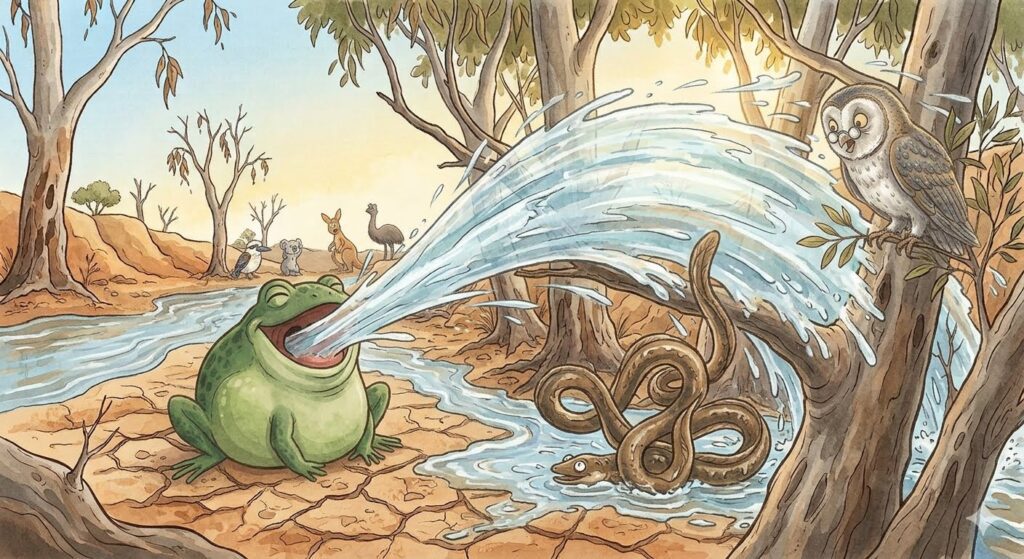
The animals were exhausted and losing hope when Nabunum the Eel slithered forward. He decided to try a different kind of movement. He began to twist, turn, and contort his body into hilarious, pretzel-like shapes, wriggling uncontrollably in the dust like a wacky inflatable tube man.
Tiddalik watched the ridiculous, squirming eel. First, his big frog eyes twitched. Then, his massive, bloated throat started to rumble. Finally, he couldn’t hold it in any longer—he let out a massive, booming laugh!
As his mouth flew wide open, a colossal tidal wave of fresh water exploded out of him. The torrent rushed across the landscape, completely refilling lakes, rivers, and waterholes, instantly bringing the dead environment back to life.
The Verdict: More Than Just a Funny Story
While the story of Tiddalik sounds like a fun children’s tale, it actually served as a vital educational tool in traditional Aboriginal society, carrying two crucial cultural lessons:
☝️The Danger of Greed: In a community that relied on sharing and pooling resources to survive, hoarding was the ultimate sin. Tiddalik represents what happens when one individual takes more than their fair share—the entire community suffers.
✌️Sacred Water Conservation: Water is life. In arid regions, protecting and respecting water sources was a sacred duty. The story reminded everyone that water is a shared global resource that must be managed with absolute care.
It’s a beautiful reminder from the world’s oldest continuous living culture that greed always leaves everyone dry—and sometimes, it takes a little community teamwork (and a good laugh) to fix the balance.