
St. Paul’s church in Frankfurt am Main is a stunning historic building that serves as an exhibition space and a memorial.
From its origins as a monastery to its transformation into a Protestant Lutheran church. This site embodies the birth of Germany’s first parliament, standing as a powerful symbol of German democracy.
Today, St. Paul’s Church stands not only as a powerful symbol of German democracy. It’s also as a captivating place for visitors to explore and reflect on the past, with exhibitions that delve into its rich historical context and the evolution of democratic ideals in Germany.
Historic Building
St. Paul’s Church (Paulskirche) in Frankfurt am Main is an architecturally stunning historic building that serves as an exhibition space and a memorial.
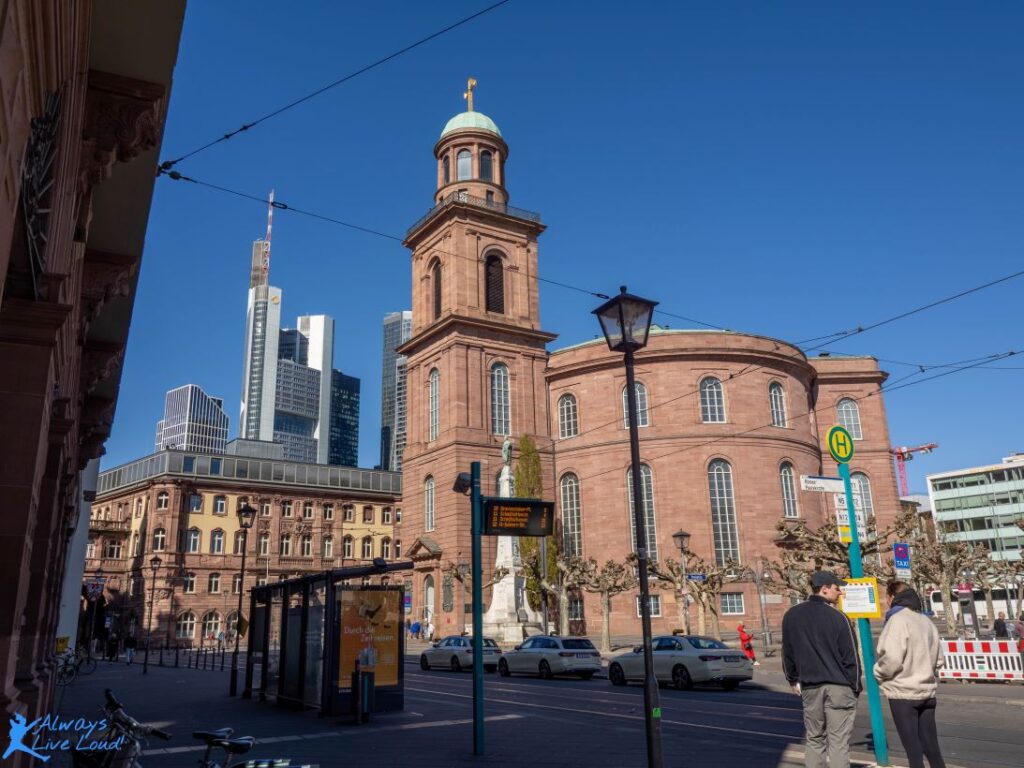
Originally constructed in the 18th century as a monastery. Then it transitioned into a Protestant Lutheran church and is best known as the site of Germany’s first democratic parliament in 1848. This significant event marked a pivotal moment in German history, symbolizing the dawn of democracy in the nation.
A significant milestone in German history occurred between 1848 and 1849. It’s when St. Paul’s Church became the gathering place for the historic Frankfurt National Assembly. This Assembly was instrumental in drafting a constitution for a unified Germany, signifying the birth of the country’s first parliament.
The church has since emerged as a potent symbol of the democratic movement in Germany. This movement embodied the aspirations for freedom, unity, and representation among its people. Its legacy inspires discussions about democracy and civic engagement in contemporary Germany.
First Freely Elected Parliament
Germany’s first freely elected parliament gathered at St. Paul’s Church in Frankfurt 175 years ago. The constitution they wrote clearly shows the strong spirit of democracy in Germany’s history. This spirit began with the National Assembly on May 18, 1848.
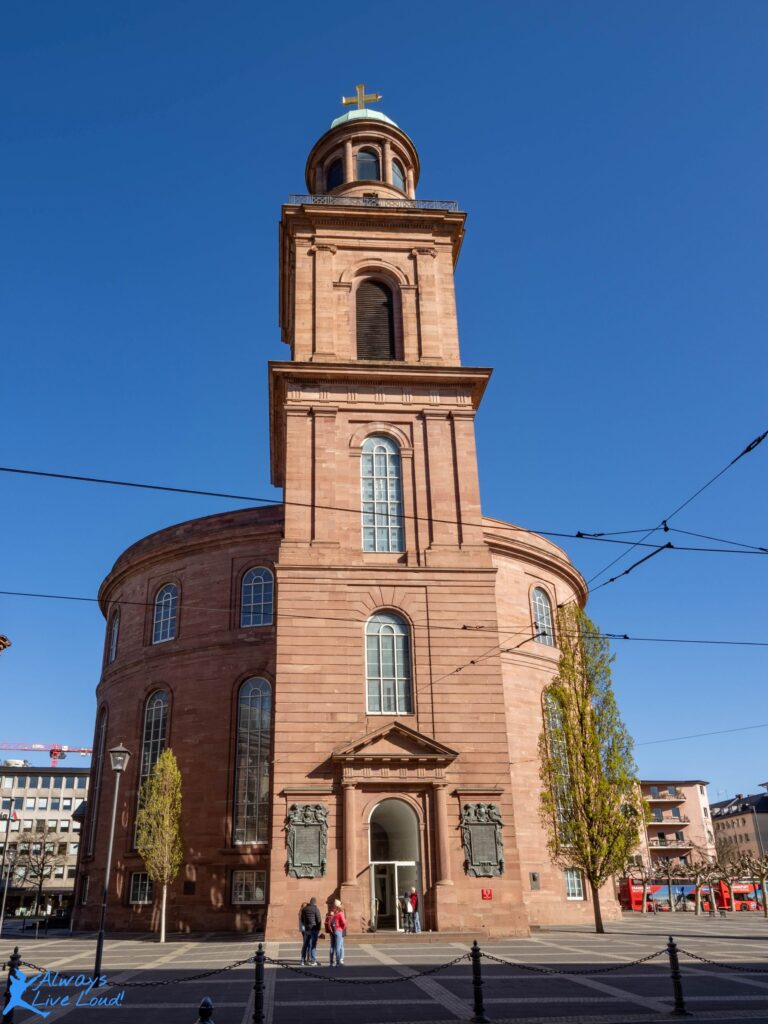
During the 19th century, Europe was filled with revolutionary energy.People in the German states were inspired by changes in France. They actively sought freedom, democracy, and the ability to shape their own future.
The German people faced hardships and poverty, but they remained hopeful that they could achieve the rights promised by the French Revolution in their own country. This hope was strong among students and professors, who wanted to bring together Germany’s many small states and principalities into one united nation.
As a result, the aspiration for a unified state became a central goal when the National Assembly convened at St. Paul’s Church on that pivotal day in May. This Assembly was groundbreaking, representing the first time the German people had a freely elected legislature.
The National Assembly was Germany’s first national parliament. It had about 600 delegates who worked to create a constitution based on freedom, equality, and the rule of law.
They wanted to set up a federal state that recognized the diverse cultures of Germany’s different regions. Their aim was to build a more unified and democratic future.
Interesting Aspect of the Building
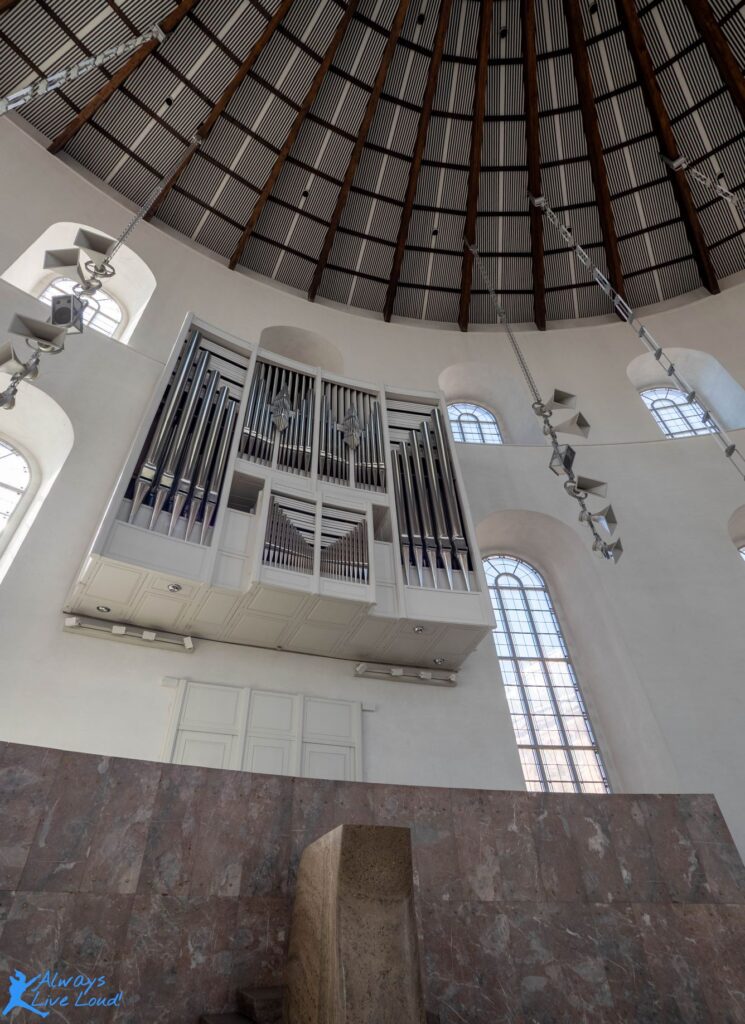
The stunning reddish-brick facade and distinctive tower enhance the city’s architectural landscape. The newly developed basement level is now dedicated to a permanent exhibition, providing a valuable cultural resource.
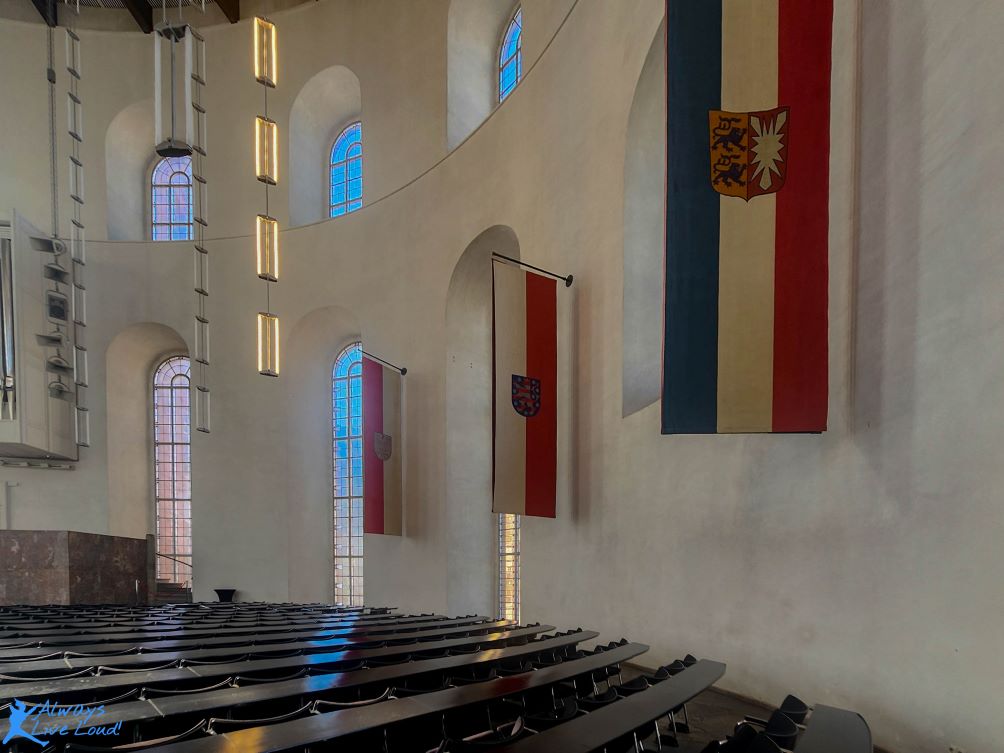
Meanwhile, the main floor hall is an esteemed venue, ideal for hosting significant events.
St. Paul’s Church (Paulskirche) is an interesting architectural marvel that initially seems circular. However, it is actually designed in the shape of an ellipse.
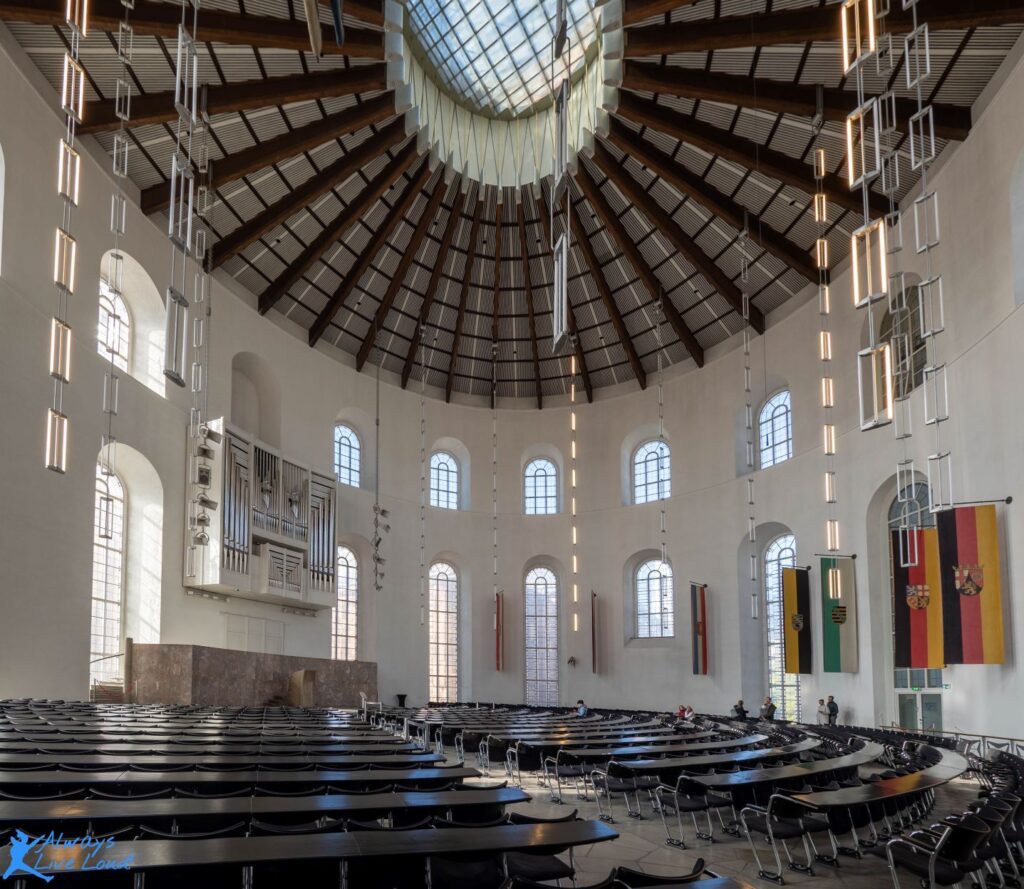
The architects worked hard to design the assembly room to be both attractive and functional. It has a seating arrangement that is suitable for parliamentary meetings. This thoughtful design choice highlights the building’s versatility and purpose, making it a fascinating landmark!
In 1988, the renovation project brought about the addition of beautiful new windows that honor the original designs, along with the installation of a brand-new organ, enhancing the space’s historical integrity.
Following this, in 1991, visitors were excited to experience the unveiling of a remarkable mural titled “The Procession of the People’s Representatives to St. Paul’s Church,” created by the talented artist Johannes Grützke. This impressive artwork can be found in the ambulatory, adding to the cultural richness of the site.
Johannes Grützke Mural
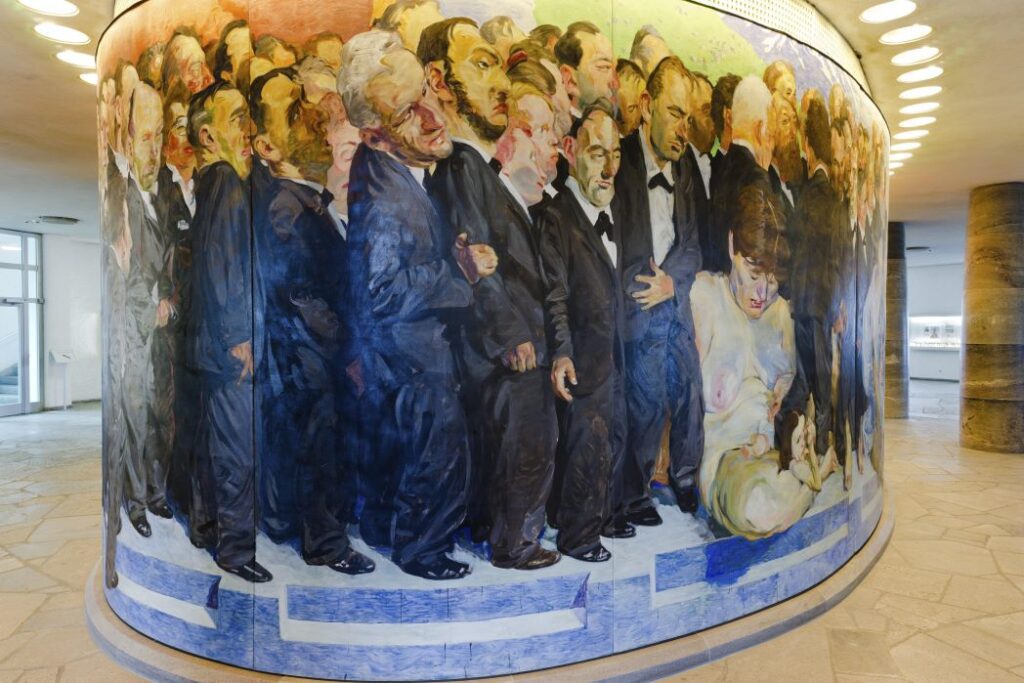
On the central wall of the ground floor, a striking mural by the talented Berlin artist Johannes Grützke thoughtfully illustrates the Assembly marching toward the church.
This artwork effectively captures the determination and unity of the figures, with their expressions reflecting a strong sense of purpose and anticipation. Not only does this mural enhance the aesthetic appeal of the space with its vibrant colors and intricate details, but it also serves as an important reminder of the church’s historical significance in the community.
It beautifully embodies themes of resilience and hope that have resonated throughout the years, encouraging viewers to reflect on the enduring strength of the community.
Destruction during the WWII
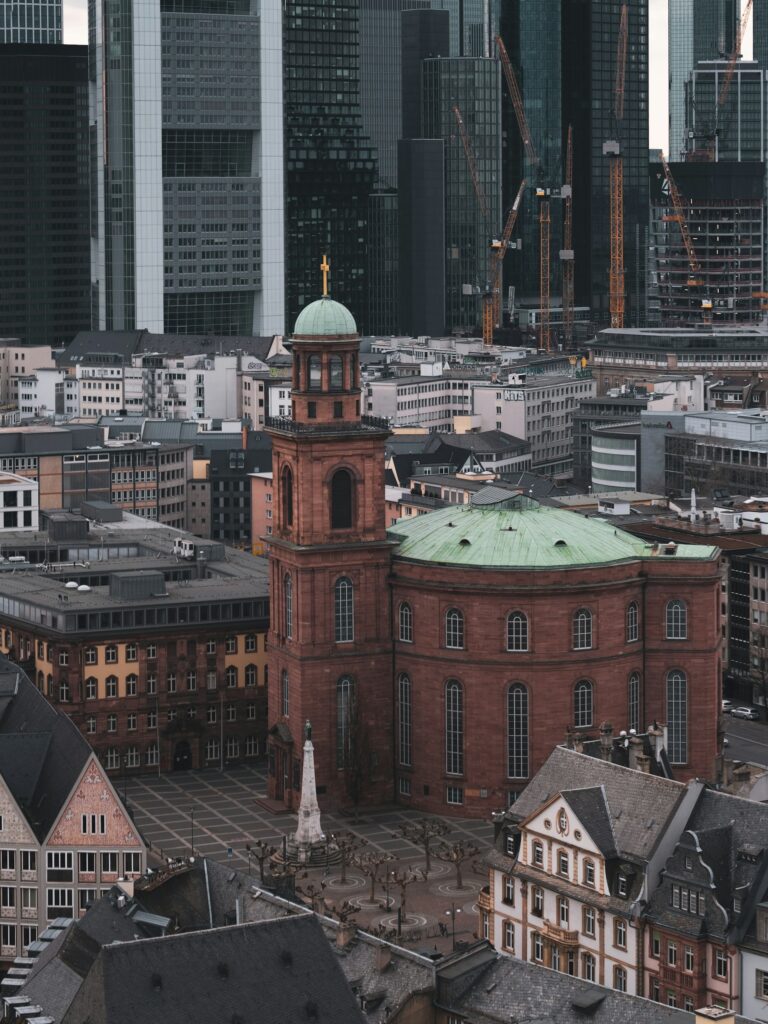
After World War II, this church was among the first buildings to be reconstructed in Frankfurt, becoming a significant symbol of peace and democracy.
The reconstruction was straightforward, partly due to the limited materials available after the war, but it also reflected the resilient spirit of a humbled Germany.
The architects designed it thoughtfully, and their vision continues to resonate with people today.
Is It Worth Visiting St. Paul Church?
This church is not only an architectural gem, but it also embodies rich historical significance.
If you’re exploring Frankfurt, let St. Paul’s Church inspire you as a must-visit destination!