When you’re in Cairns with a group of fellow photography enthusiasts, the standard tourist spots just don’t cut it. We wanted more—more textures, more elusive wildlife, and more of that ancient rainforest magic.
So, we packed our gear and headed south into the East Barron area. Our mission? To capture the legends of the Atherton Tablelands: the world’s weirdest mammal and a tree that’s been playing a 500-year-long game of botanical wrestling.
The Shy Celebrities of Peterson Creek
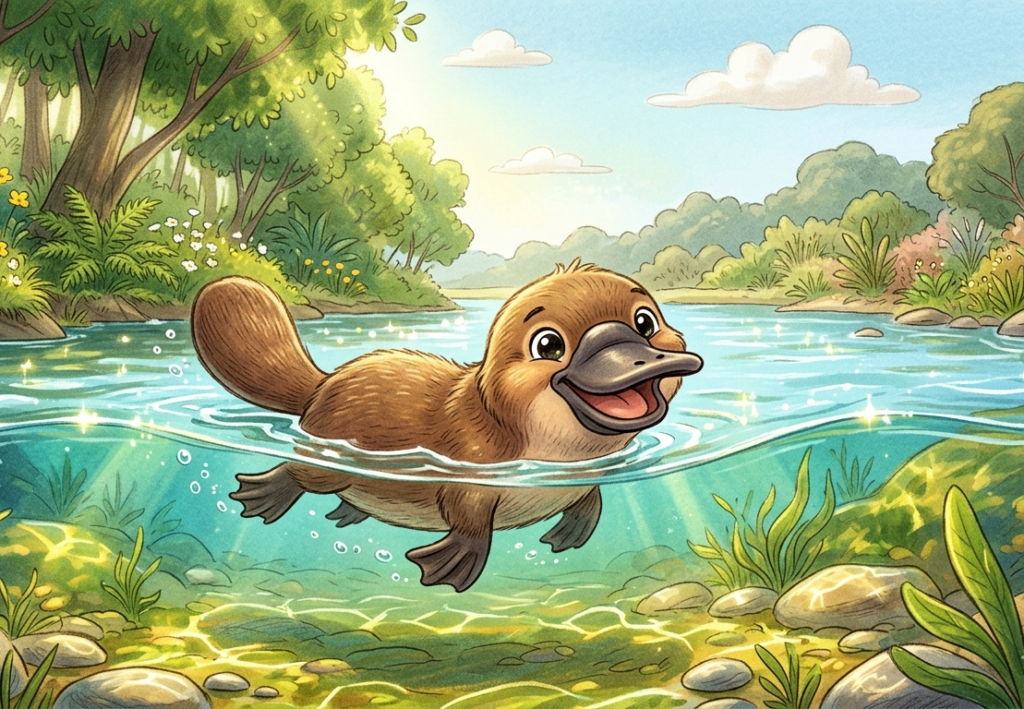
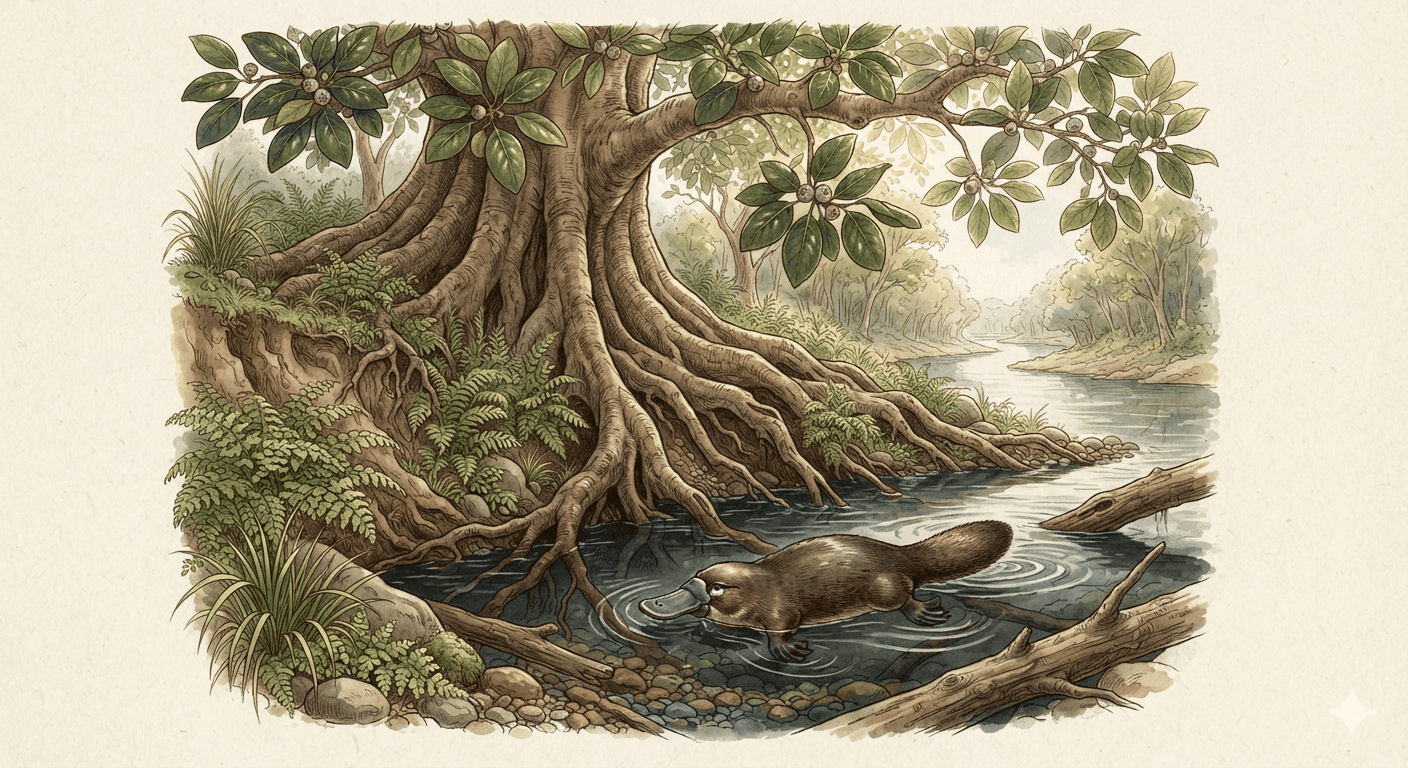
Our first stop was the Yungaburra Platypus Viewing Platform. If you’re a photographer, this place is a lesson in extreme patience. The “celebrities” here are notoriously shy and keep almost-reliable office hours at dawn and dusk.
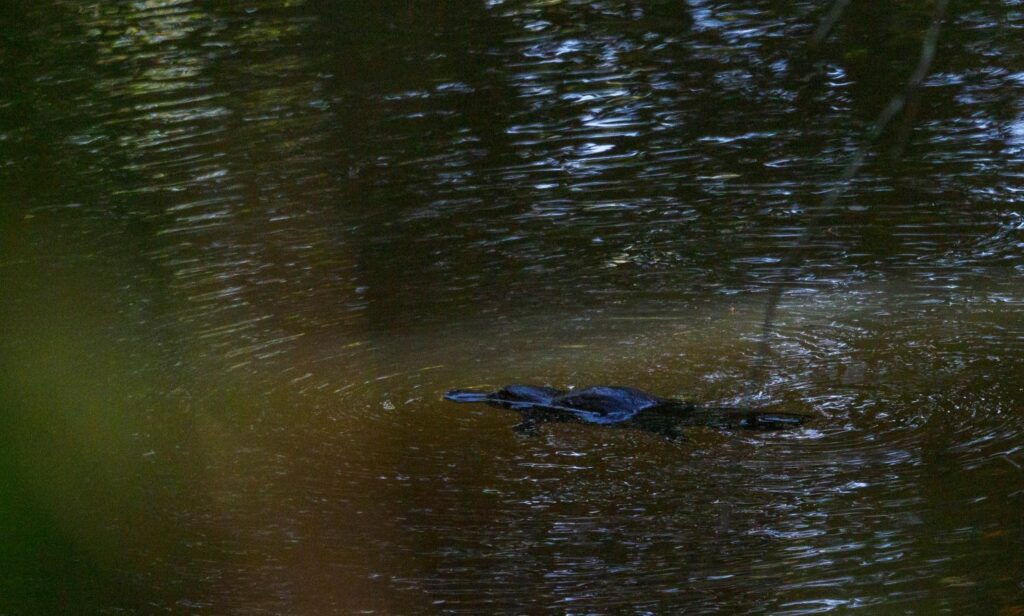
They were a bit far off—no close-up selfies with these shy superstars this time—but we definitely saw them gliding through the water, leaving telltale ripples on the surface. For those who don’t know, platypuses are basically nature’s “leftovers” project: they have a duck bill, lay eggs like a bird, but have fur like a mammal. Very confusing, very cool.
But it gets weirder. These little “submarines” actually have no stomachs, hunt using electroreceptors, and—as if they weren’t odd enough—they actually glow blue-green under UV light. While they looked nonchalant swimming in the creek, they are actually ancient survivors, with fossils of their ancestors dating back to the time of dinosaurs.
The 500-Year Strangle: The Curtain Fig Tree
After our quiet vigil at the creek, we headed further into the Curtain Fig National Park. We were greeted by a sign from the Ngadjon-Jii people, the traditional owners of this country.
They welcome visitors to the tree but ask that we take care of their special place—a sacred part of the rare Mabi rainforest.
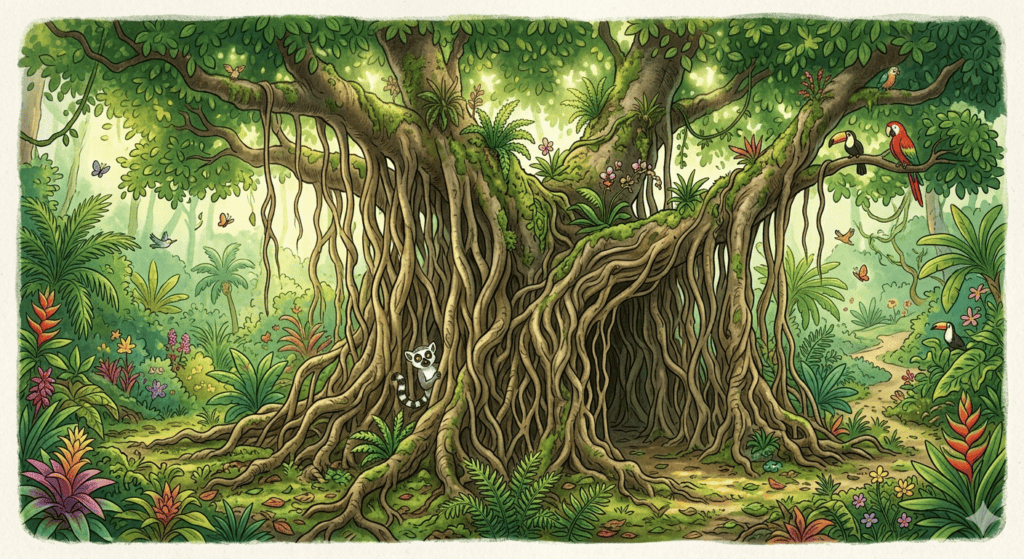
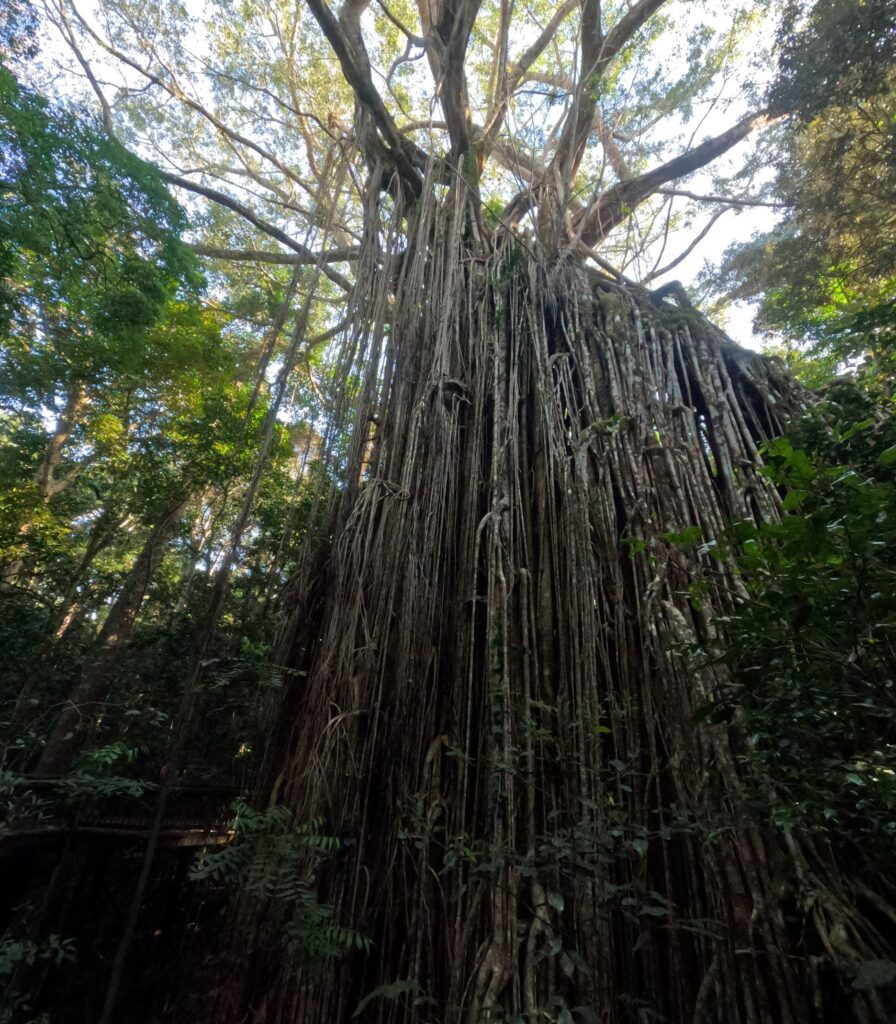
The Curtain Fig Tree itself is an absolute beast for any wide-angle lens. It’s a 50-meter-tall monument to “opportunism”. It’s an ensemble performance: about 500 years ago, a seed landed high in a host tree.
Over centuries, it dropped aerial roots 15 meters down to the forest floor, eventually strangling its host.
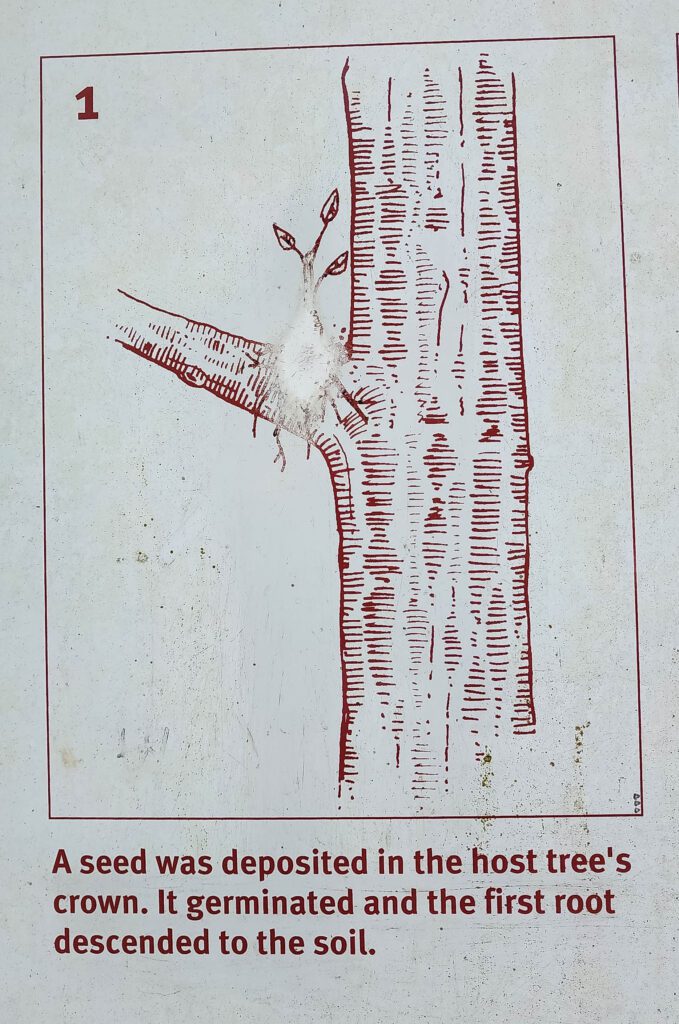
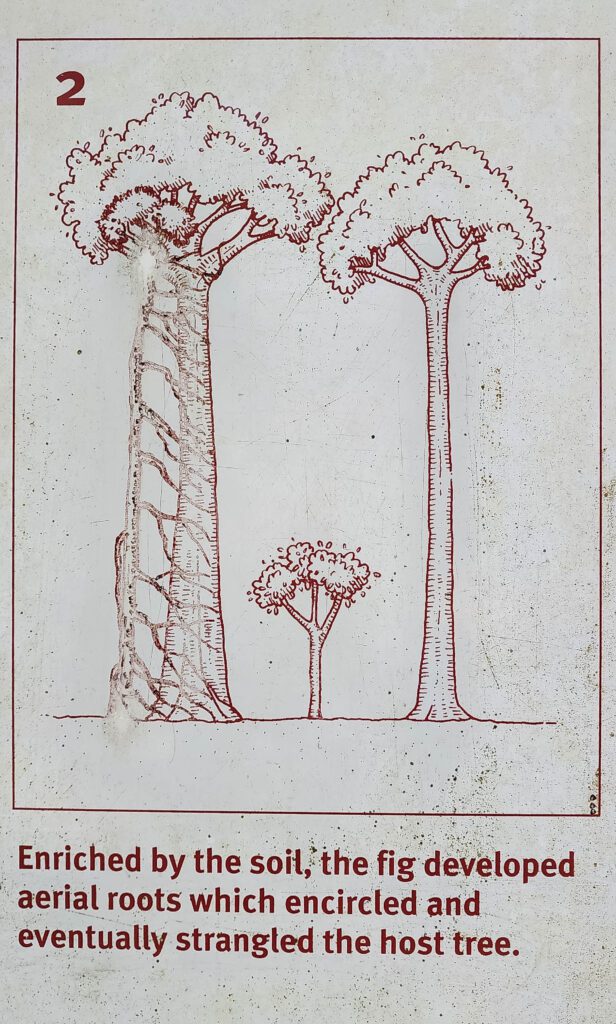
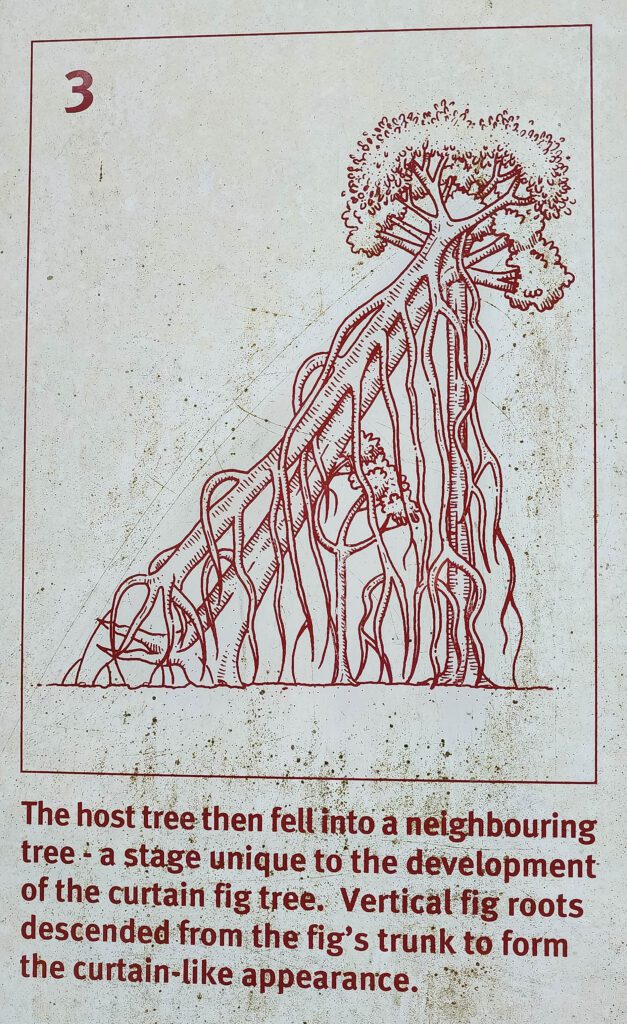
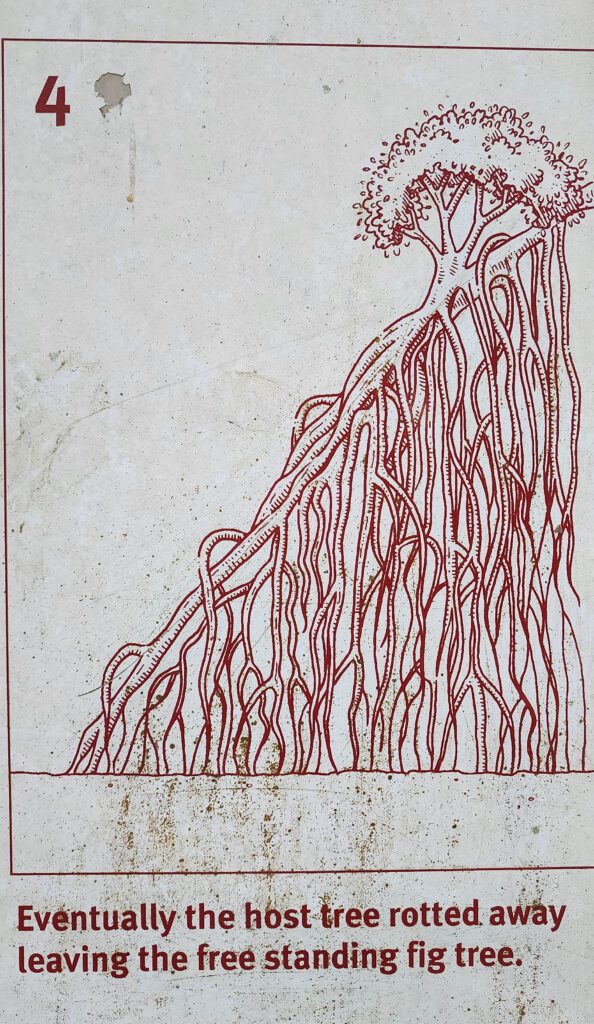
The host tree eventually tilted 45 degrees into a second tree, allowing the fig’s roots to weave a massive, intertwined “curtain”. Now that the original host has rotted away, the fig stands independently, supported only by its own massive root wall. It’s a spectacular, living sculpture that has been drawing curious tourists since the 1920s.
Final Verdict: The East Barron Experience
East Barron is a hidden gem for nature photography! I would rate it a solid 10/10 for anyone who loves to immerse themselves in the great outdoors and appreciates the art of patience. We came for the unique platypus experience and left with a newfound respect for these wonderfully weird and ancient creatures that inhabit our planet.
Whether you’re here to enjoy the scenery or hoping for a glimpse of a platypus (which might require channeling your inner yogi), East Barron truly offers views you won’t find anywhere else. Your Instagram feed will thank you, and so will your sense of adventure!