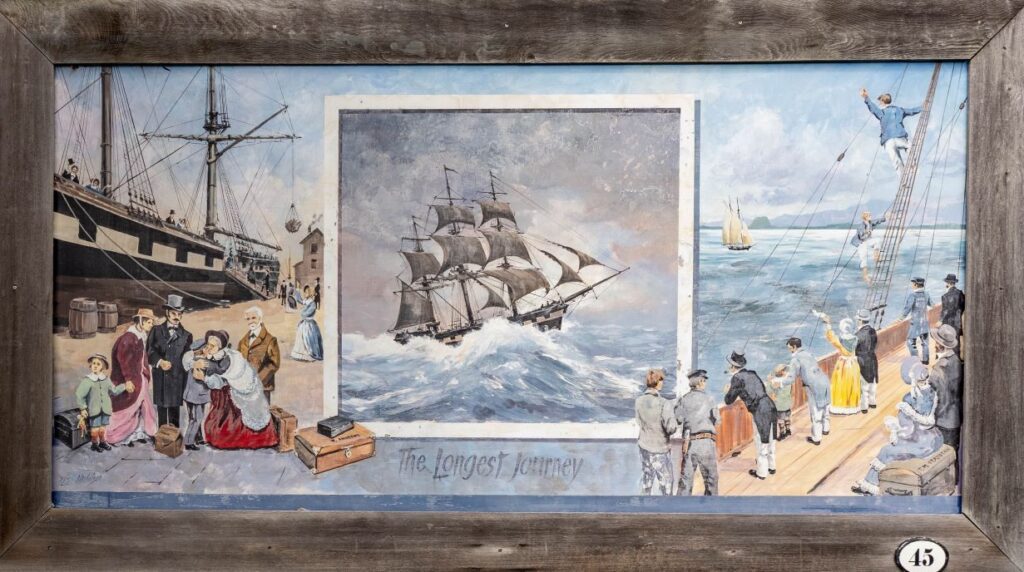
This summer, while we were having a great time on the North Island, we discovered the lovely town of Katikati. This location lies perfectly between the beautiful Waihī Beach and the lively city of Tauranga. It makes a great stop as you head into the stunning Coastal Bay of Plenty.
One thing that really stood out to us was the town’s amazing collection of murals. These colorful open air art are everywhere, brightening up buildings and public spaces, which gives the town a fun, creative vibe. Katikati has even taken on the nickname “Mural Town,” and it’s easy to see why.
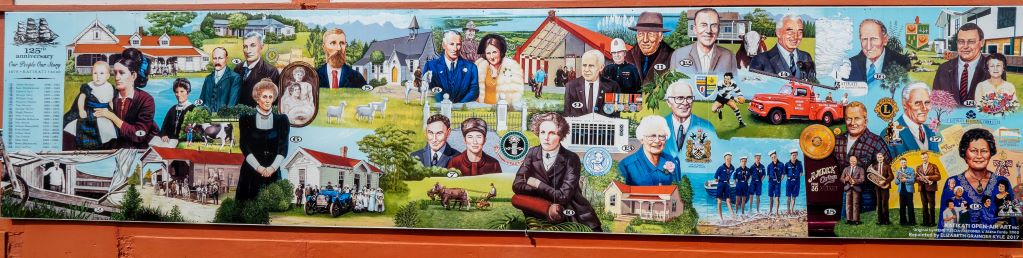
As we strolled around, we found over 35 pieces of art, including eye-catching murals, cool sculptures, and detailed carvings. Each artwork tells a bit of the town’s story, honoring its early Māori residents and the pioneering settlers who helped shape it. Plus, many pieces highlight Katikati’s roots in timber milling and farming, giving us a glimpse of its history and development. The mix of art and history makes Katikati not just visually appealing but also a meaningful experience that connects you to its cultural background.
Some History
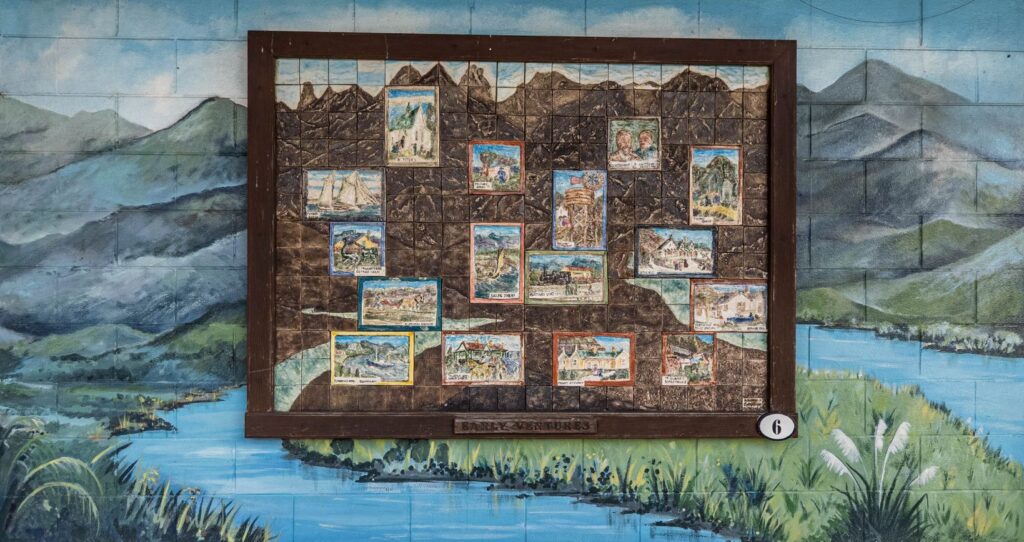
Irish Ulster settlers established the rural town of Katikati. But it was already home to Māori long before the Europeans showed up. The volcanic soil and sunny weather made it perfect for growing kūmara back in the day, just like it is now for kiwifruit and avocados.
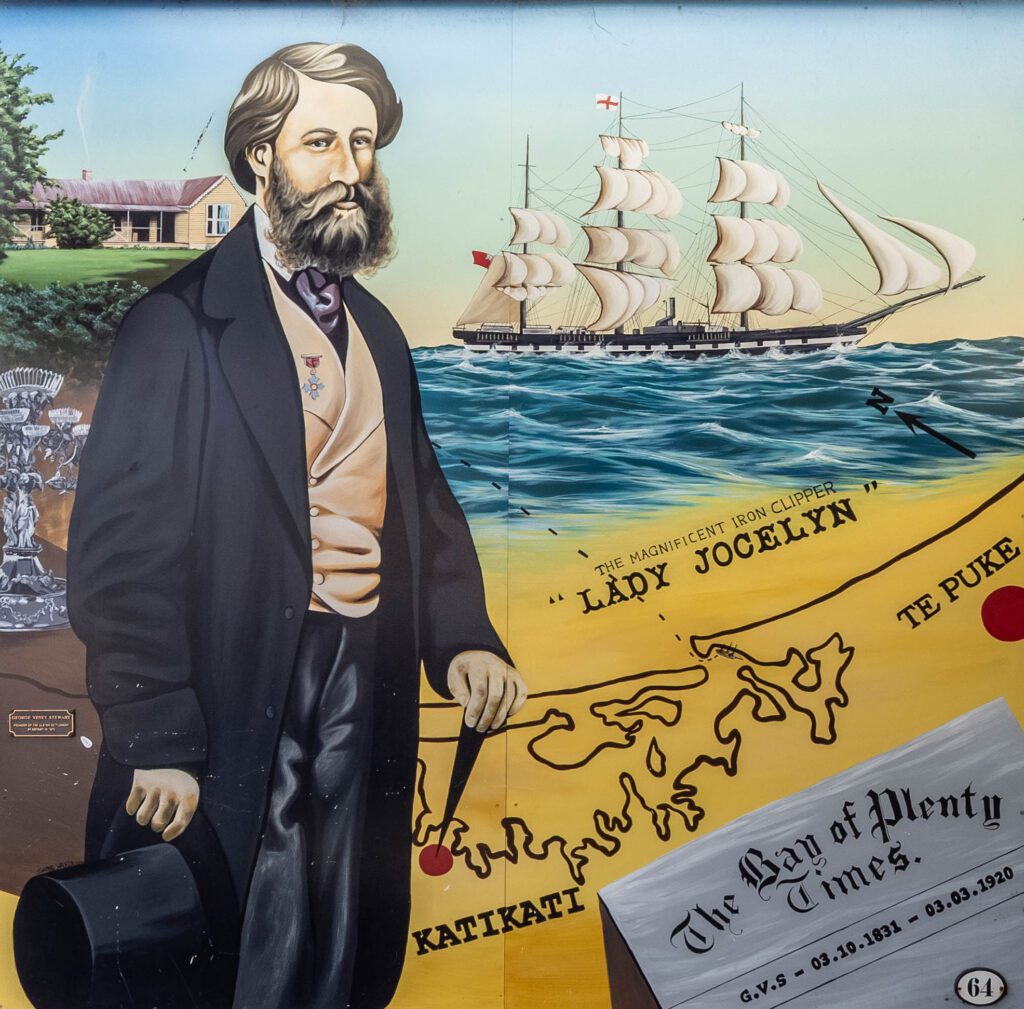
The Ulster Irish Settlement kicked off between 1875 and 1878. That’s when George Vesey Stewart from County Tyrone, Ireland, worked out a deal with the New Zealand government to create a special settlement for Ulster Protestants. The first group of settlers arrived at the Carisbrook Castle in 1875. Another group followed on the Lady Jocelyn in 1878. There were two types of settlers: the tenant farmers, known as “useful,” and those with money, called “ornamental.”
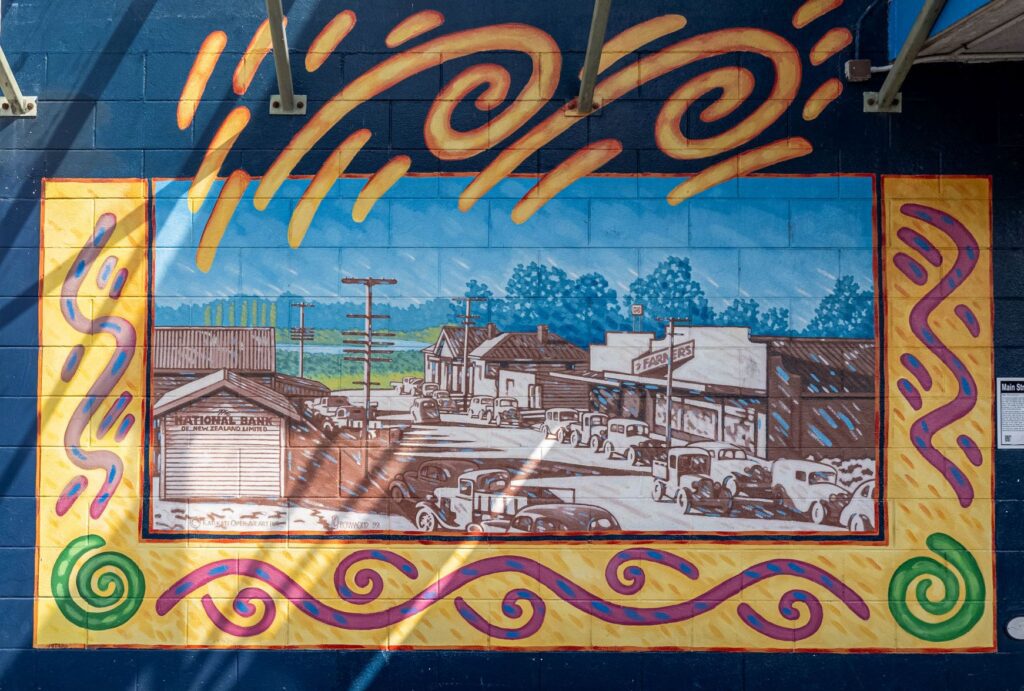
These settlers had to deal with tough terrain and some rough economic times at first. They relied on water transport until they built roads. Hugh Stewart and his wife, Adela, built a homestead that became the social hub of the area and served as a center for agricultural training.
The Murals
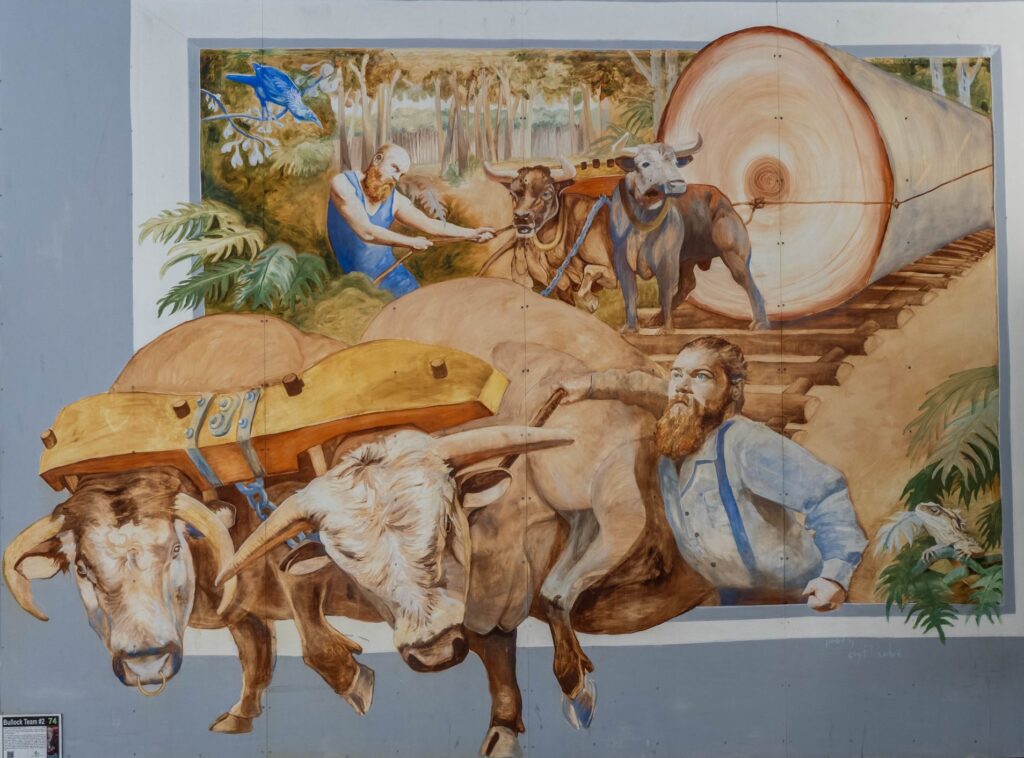
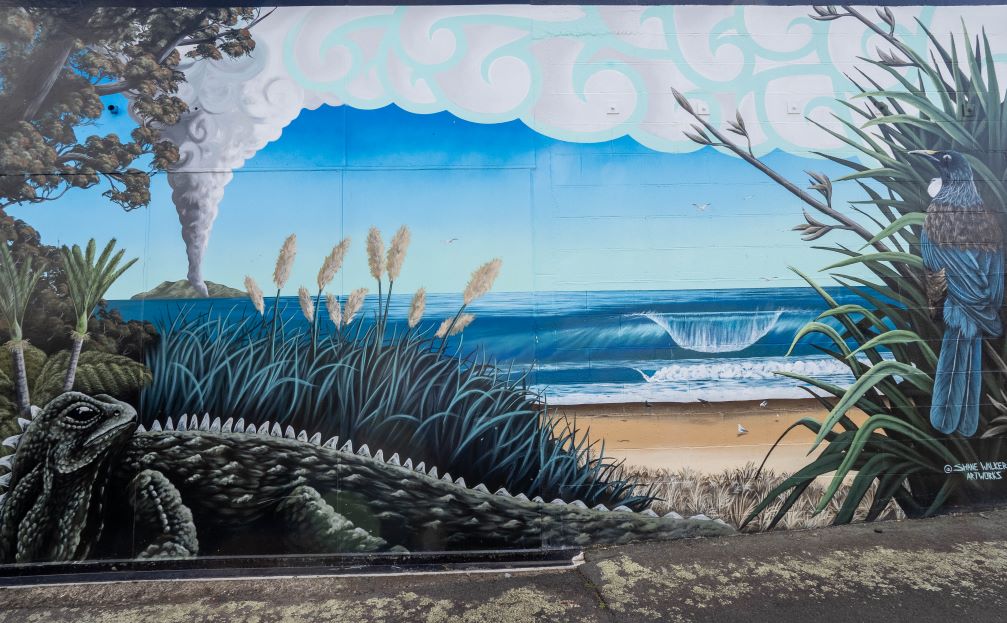
The project is a vibrant celebration of the area’s local history, cultural heritage, and environmental stories. It highlights important aspects such as Māori history and the planned Ulster Irish settlement. Weaving together a rich tapestry of narratives that honor the community’s diverse roots.
Like many other small towns in New Zealand, Katikati decided to embrace art as a means to attract tourism. This initiative began in 1990 as a response to economic challenges. It aims to revitalize the local economy through art and cultural expression.
Today
Today, the town features over 70 stunning murals and artworks that pay tribute to its settler history, Māori heritage, and significant industries, including the thriving kiwifruit farming sector.
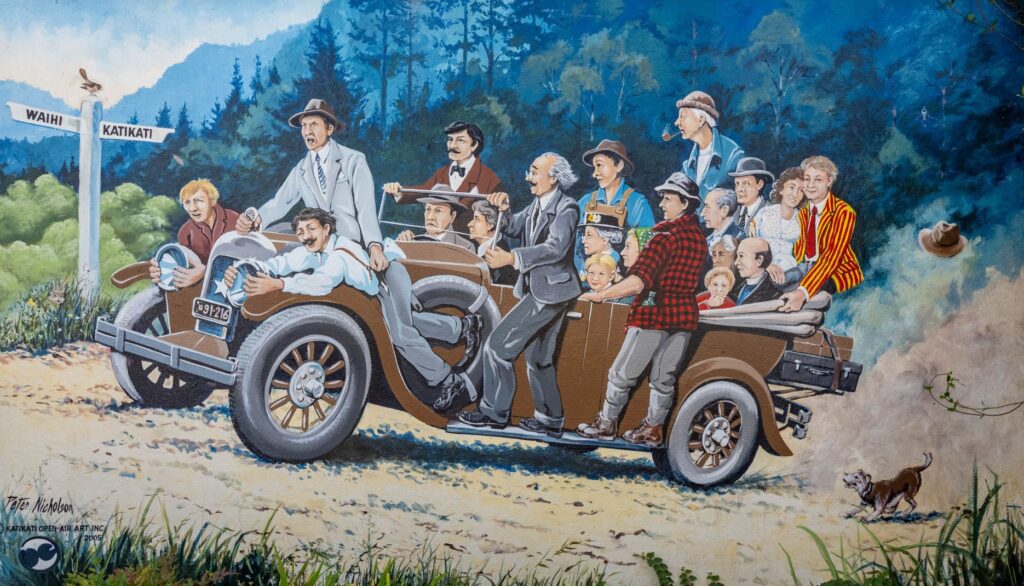
Some standout attractions include “Barry” the Kiwi Bloke, a fun character who captures the local spirit, and the Haiku Pathway. This serene walkway showcases etched poems on boulders. It encourages visitors to appreciate nature and the power of words. The successful Chemainus model from Canada inspired the project. The team created it to attract tourists and visitors during tough economic times.
There’s also a heartfelt memorial for the brave men and women from the district who went overseas to serve in wars. It is a reminding everyone of their sacrifices and contributions to the community.
🎨👩🎨🎨
Discover the vibrant charm of Katikati, the ultimate destination for mural enthusiasts! This welcoming town is a feast for the senses, adorned with stunning murals that tell captivating stories. After exploring the artwork, indulge in a delightful culinary experience at one of the many delicious eateries sprinkled throughout the town. Join us in Katikati, where creativity and flavor come together for an unforgettable adventure!
For anyone keen on exploring this artistic journey, a mural guide map is available at the information center. It offers detailed insights into each artwork and its meaning.