Morrinsville was such a pleasant surprise!
Last week, I took a trip up north for work and got to check out Morrinsville. This town is 32 km (20 miles) northeast of Hamilton. While my husband took care of his business, I wandered around town to see what it had to offer. I was super excited to find out they have this awesome street art featuring cows, which I like to call “Cow Paradise.”
One cool thing about Morrinsville is the bunch of life-sized cow sculptures all around town. I’ve noticed that many towns in New Zealand try to develop a theme to attract tourists. It looks like Morrinsville has gone with ‘cows’ since they’re right in the heart of dairy country, and it has the highest concentration of dairy cattle in New Zealand.
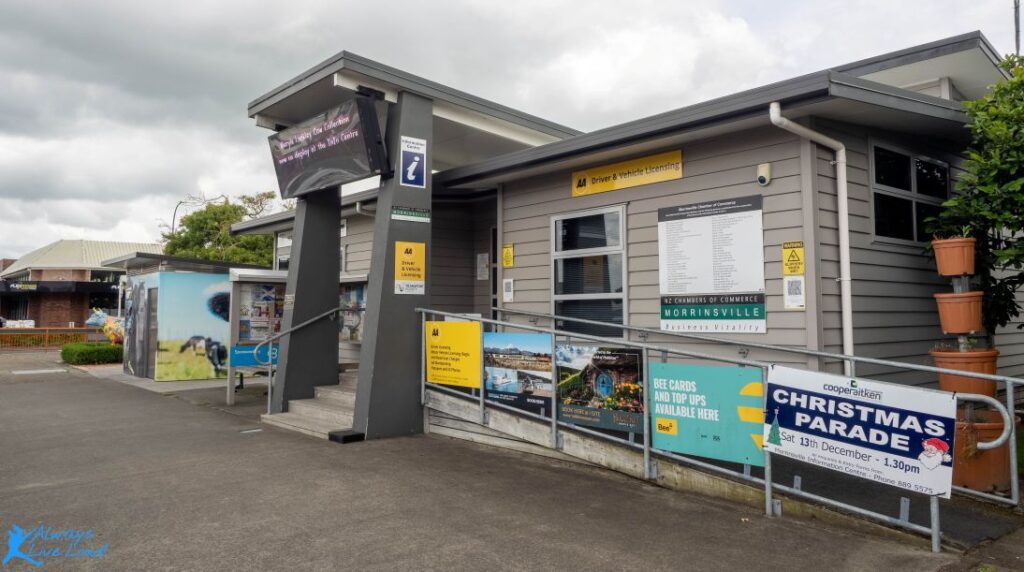
I checked out the local info center to find out about the cool spots in town and, of course, the cows. With a map and a trail guide for the cow herd, I hit the road to explore the incredible street art. Honestly, I’ve always had a thing for cows. Growing up in a country famous for its cattle, it’s no surprise that I’ve ended up loving cows as my favorite animals. I really hope that one day I’ll get to have one!
📜Some History of The Town
Colonial Settlement
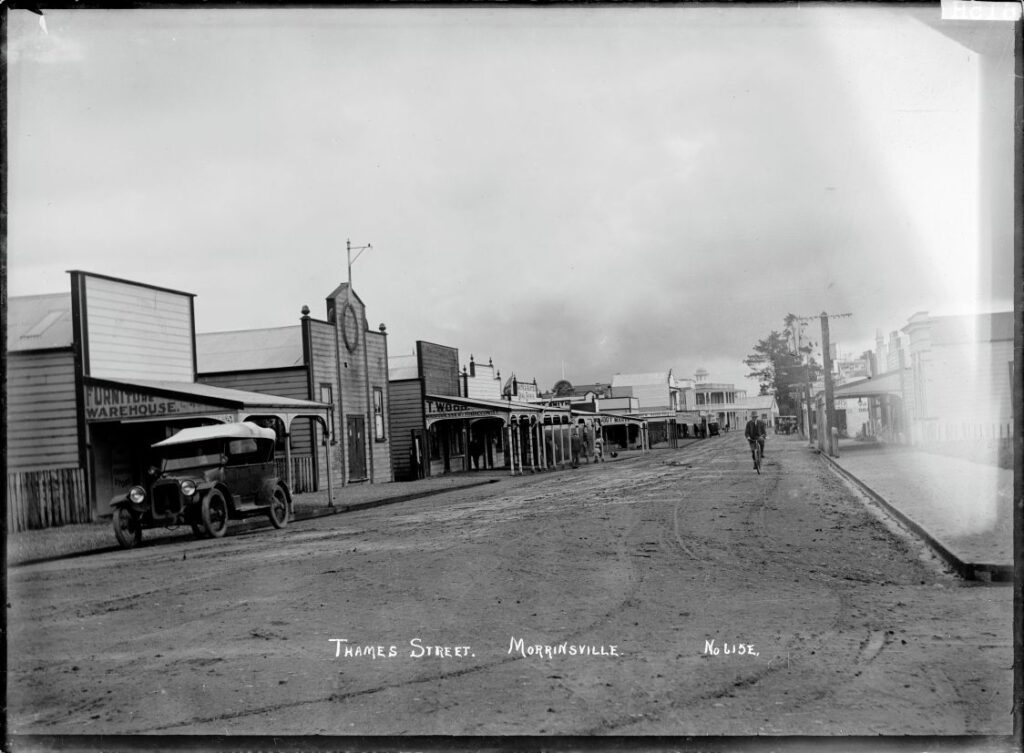
At first, both the town and the surrounding area were called Piako. But as more people moved in, the town officially became Morrinsville. The local hotel became a key community hub. It served as a post office and general store, meeting the needs of locals and travelers alike.
Morrinsville became important because it was a hub for roads and train lines. The main highway connected it to the Coromandel Peninsula. The other roads led out to farming spots like Mangateparu, Tauhei, Tāhuna, and Hoe-o-Tainui. Plus, a railway line from Hamilton opened up in 1884, making it even more accessible.
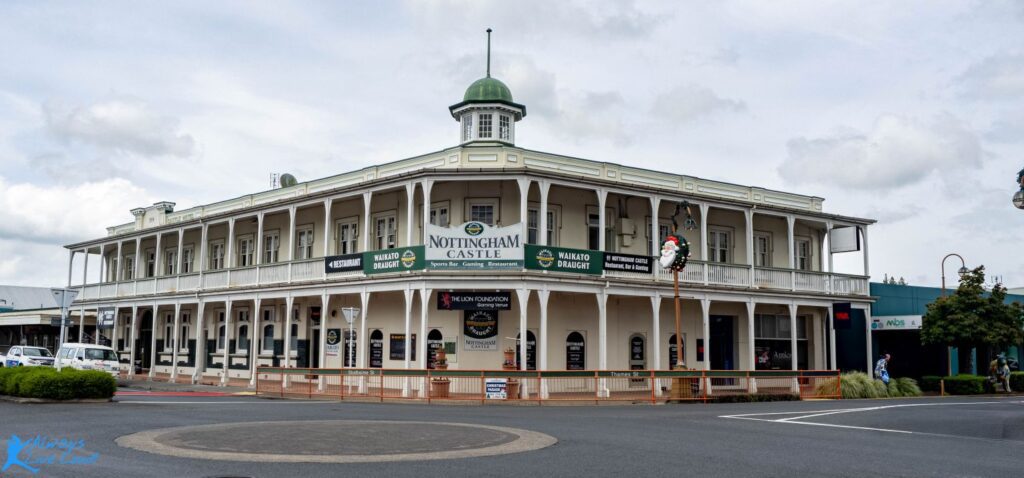
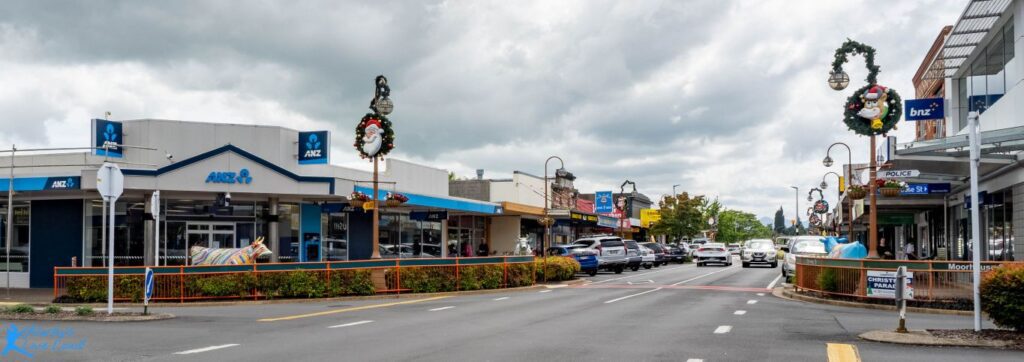
As Morrinsville grew, a few important places popped up. They built a railway junction station, which made it easier for people and goods to get around. Plus, a blacksmith shop opened up, providing essential services for locals, especially those into farming and transport.
With more people settling in, the town introduced some handy community services. Among the first notable places were a school for education. A post office to stay in touch with the outside world. And of course, a few churches that helped build a sense of community and offered spiritual support. They also opened a new hotel for visitors, started a creamery to process local dairy, and created a tennis club for leisure activities. Plus, a part-time branch of the Bank of New Zealand (BNZ) opened, providing banking services, helping to fuel the town’s growth and economy.
The Meaning of the Town’s Name
In 1874, two Auckland entrepreneurs, Thomas and Samuel Morrin, purchased about 30,000 acres (12,000 hectares). They named their estate ‘Lockerbie.’ They later changed the name to Morrinsville to honor Thomas Morrin, the founder of the area in the 1870s.
They had plans to turn Morrinsville into a town to provide housing for their workers. By the 1890s, the government took over the estate, and the land around Morrinsville was split up for closer settlement.
🐮The Herd of Cows🐂
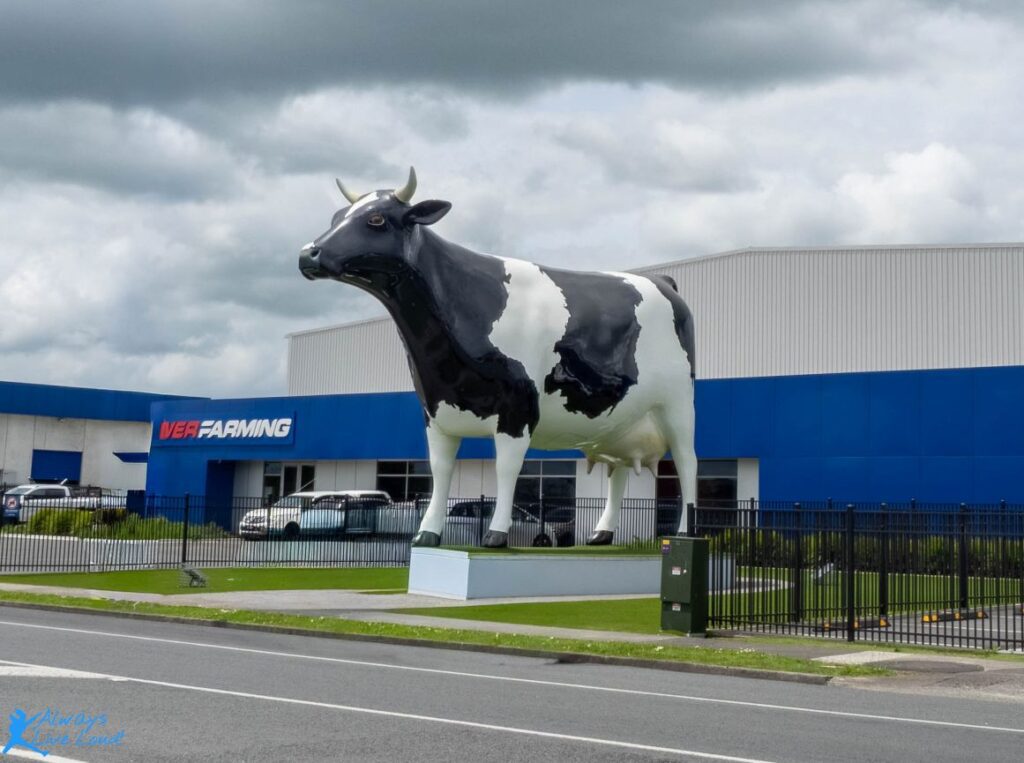
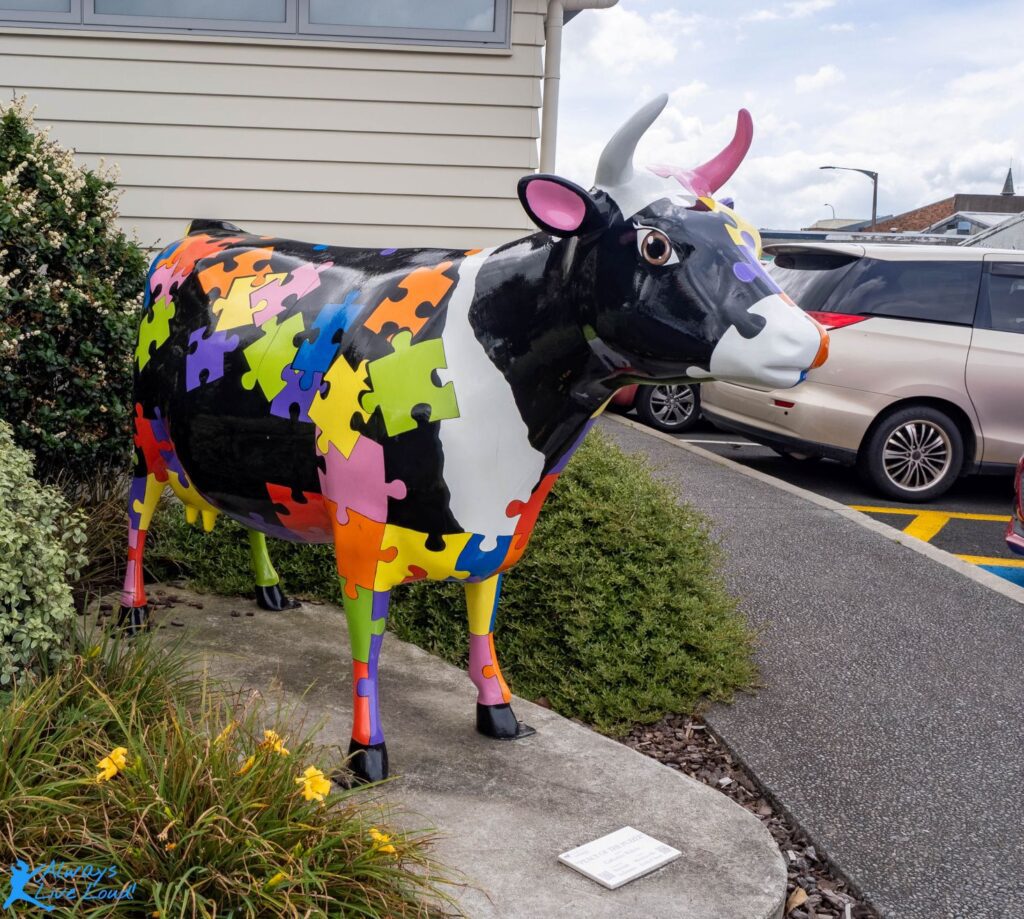
After I got the map, I checked out the trail. I spotted 60 full-size cows with all kinds of fun designs around town. The standout is “Marbel the Mega Cow.” It’s a massive 6.3 meters (20.6 feet) tall, standing on Thames Street as you head into town.
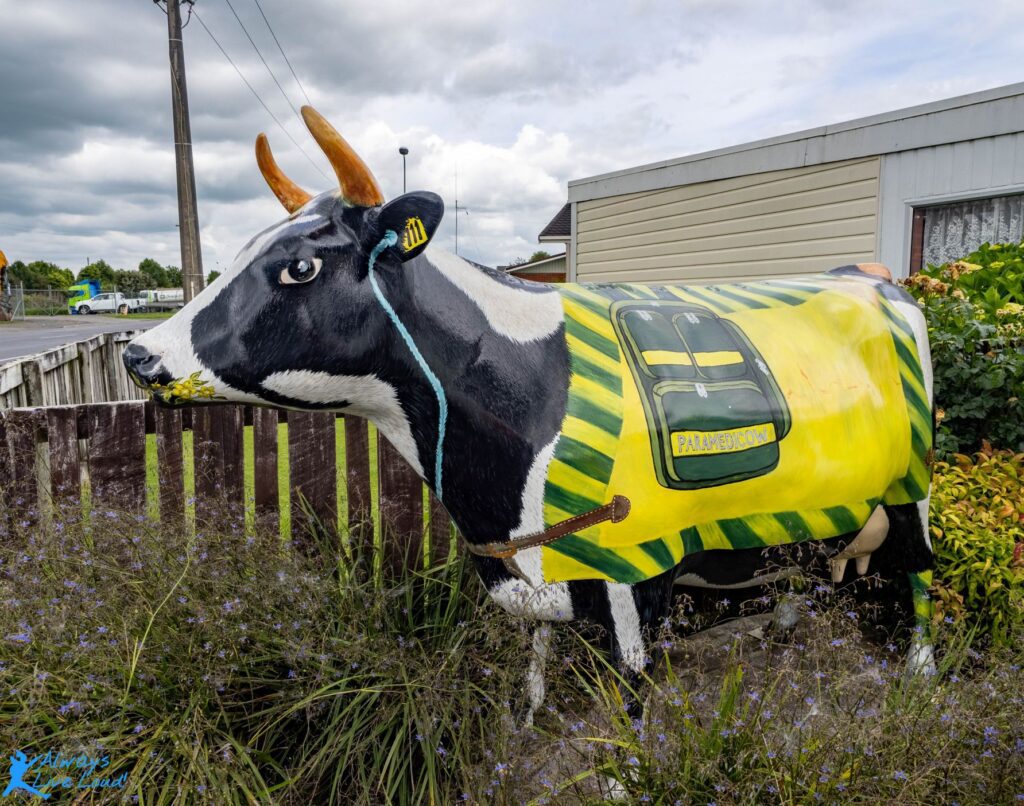
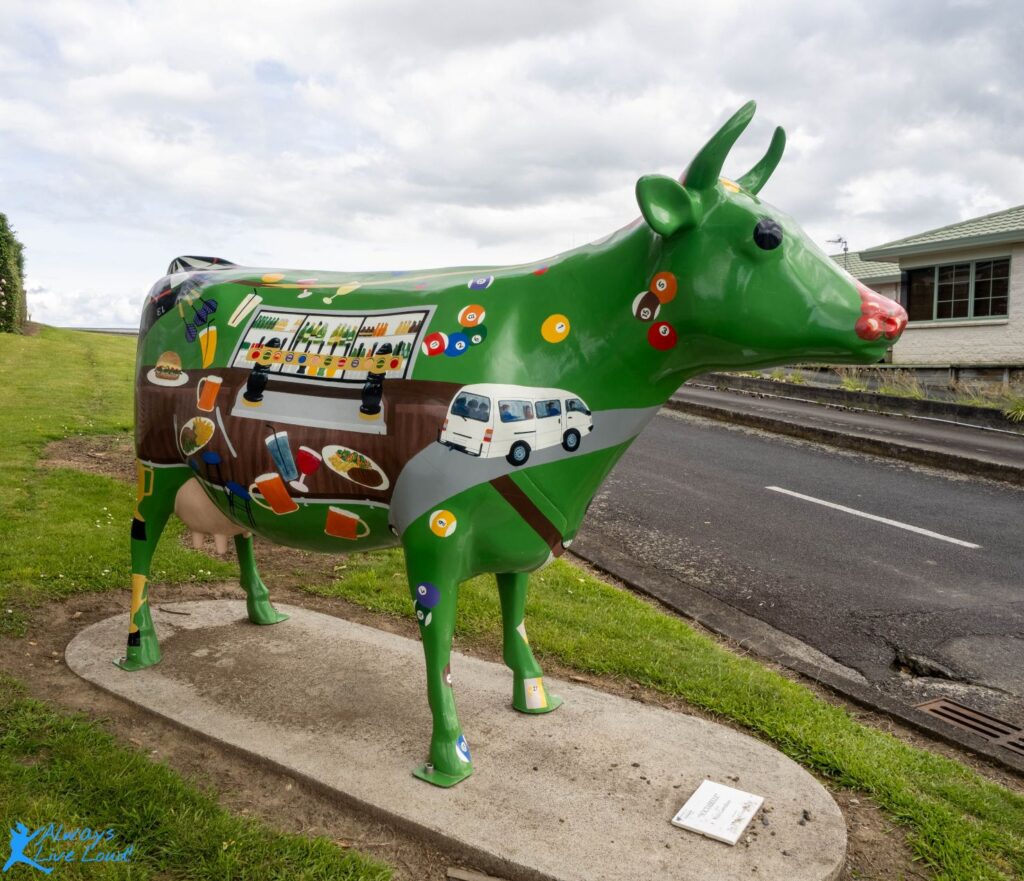
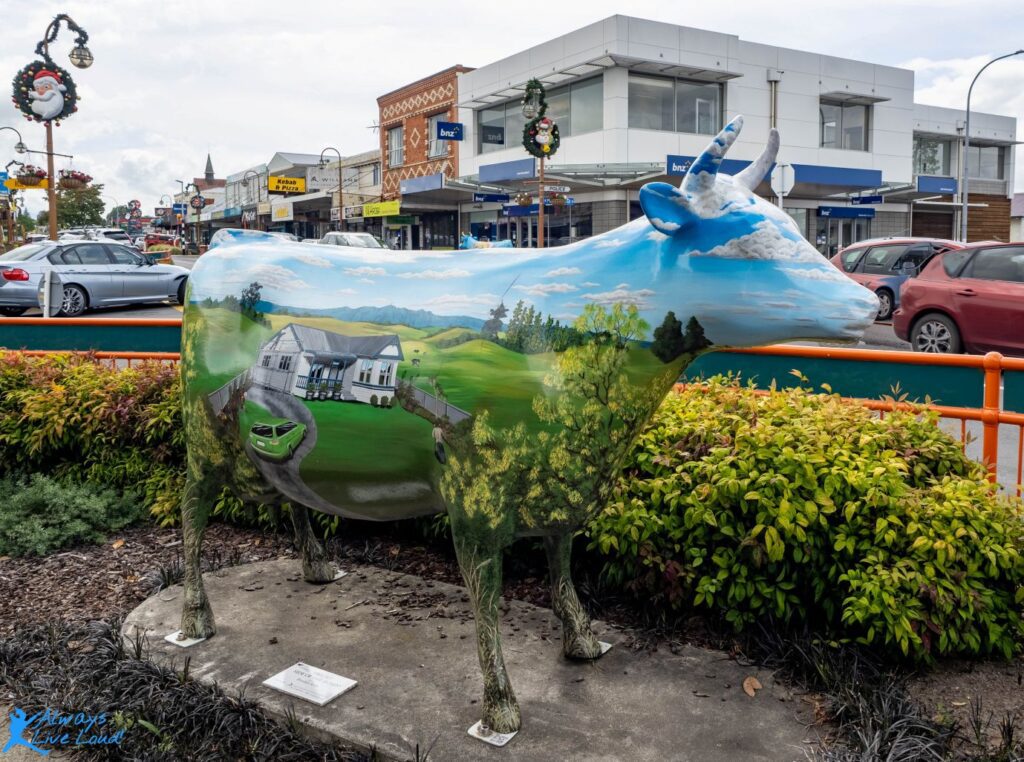
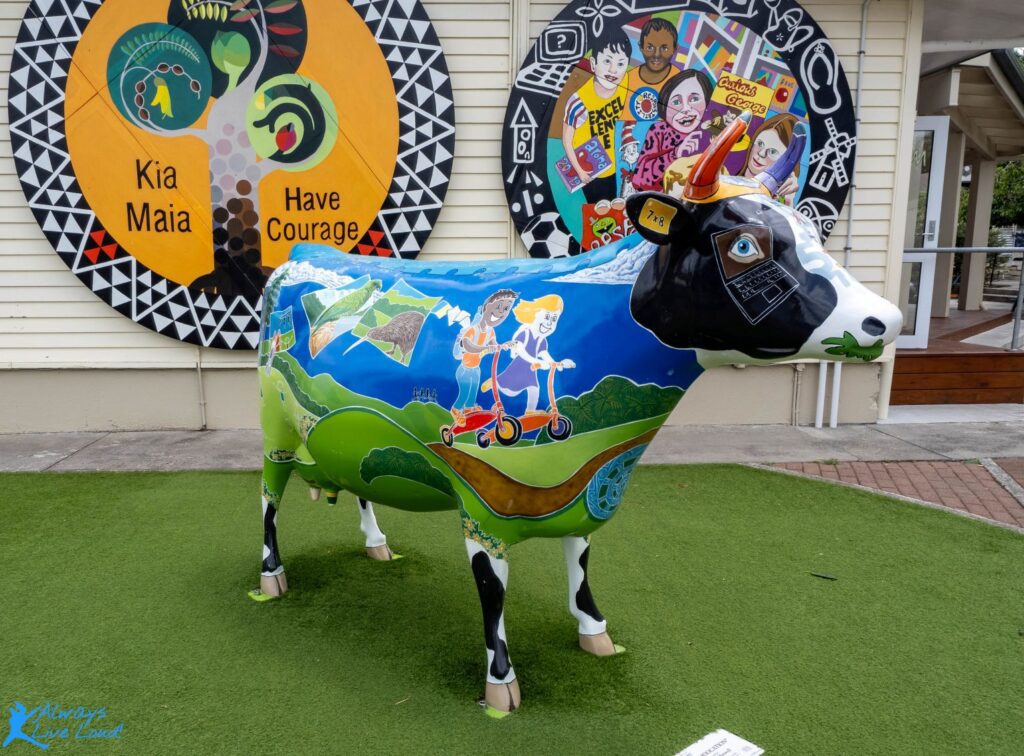
The rest of the cows are the same size and painted to match their spots. They’re placed right in front of the businesses they represent, making it super easy to figure out what each one is about. For instance, the cow in front of the police department is decked out in a uniform with a radio, and its horns light up like the blue and red lights on a cop car. At the hospital, the cow is dressed as a doctor with a stethoscope. It’s really not hard to guess what each business is just by looking at the cows!
Some displays along Thames Street focus on family and love❤️.
So why did the Town decide to have the herd of cows?
History and development
The project was conceived in 2015 to celebrate and showcase Morrinsville’s rich dairy heritage. With the enthusiastic involvement of the local community and talented artists, the initiative aimed to provide a vibrant representation of the town’s agricultural roots. It began with a modest herd of 15 life-size fiberglass cows, each uniquely designed to reflect various aspects of the dairy industry and local culture. Over the years, this herd has significantly expanded, now featuring over 60 cows, with new designs and artistic sculptures regularly added to enhance the collection.
One standout piece is the Mega Cow, affectionately named Mabel, which has become an iconic landmark in the town. Mabel was installed not only to capture visitors’ eyes but also to serve as a symbol of Morrinsville’s pride in its dairy-farming legacy.
And Today…
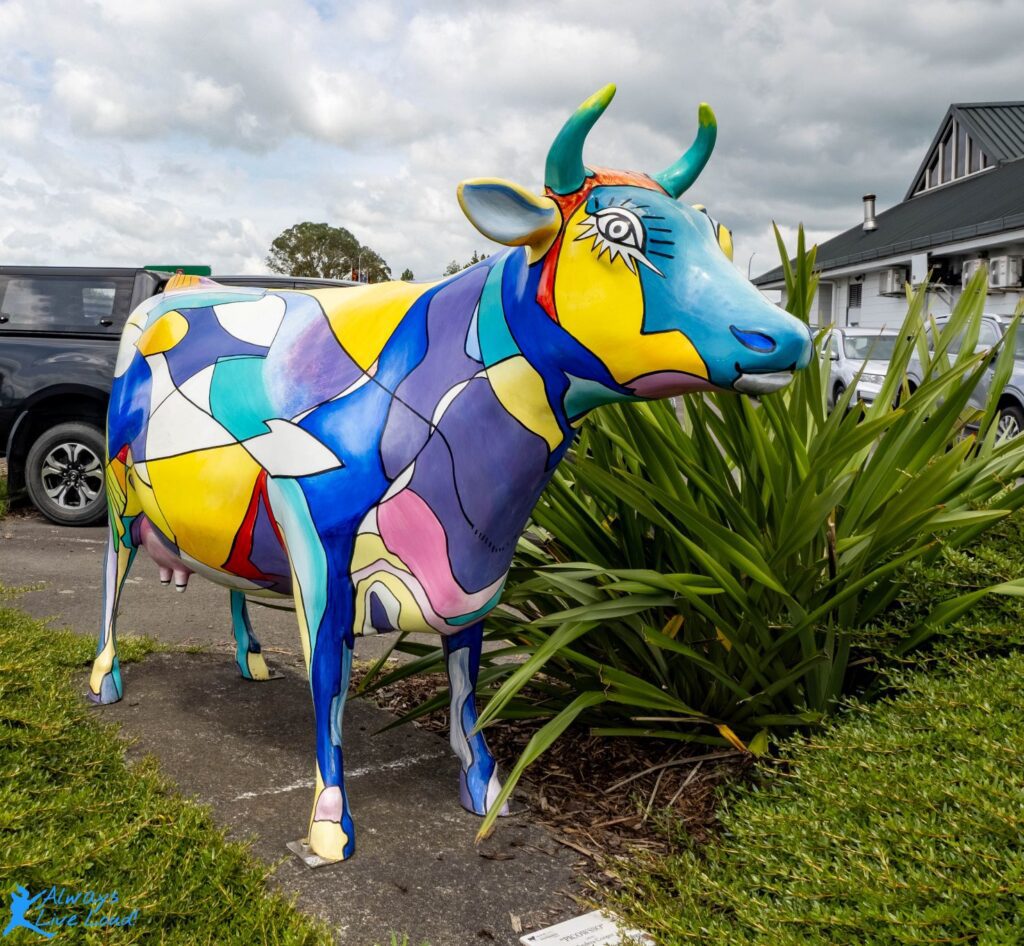
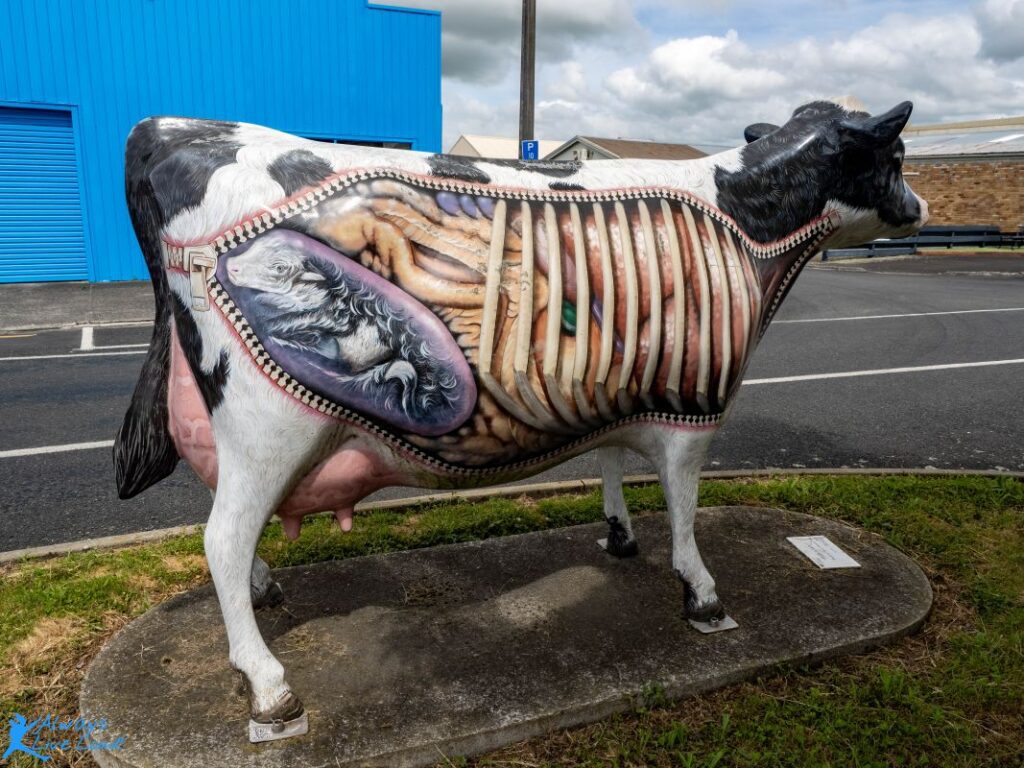
The “Herd of cows” is a fun and lively outdoor exhibit featuring a bunch of colorful cow sculptures scattered throughout the town. Each cow has its own unique design that showcases the artist’s creativity while also capturing the town’s vibe.
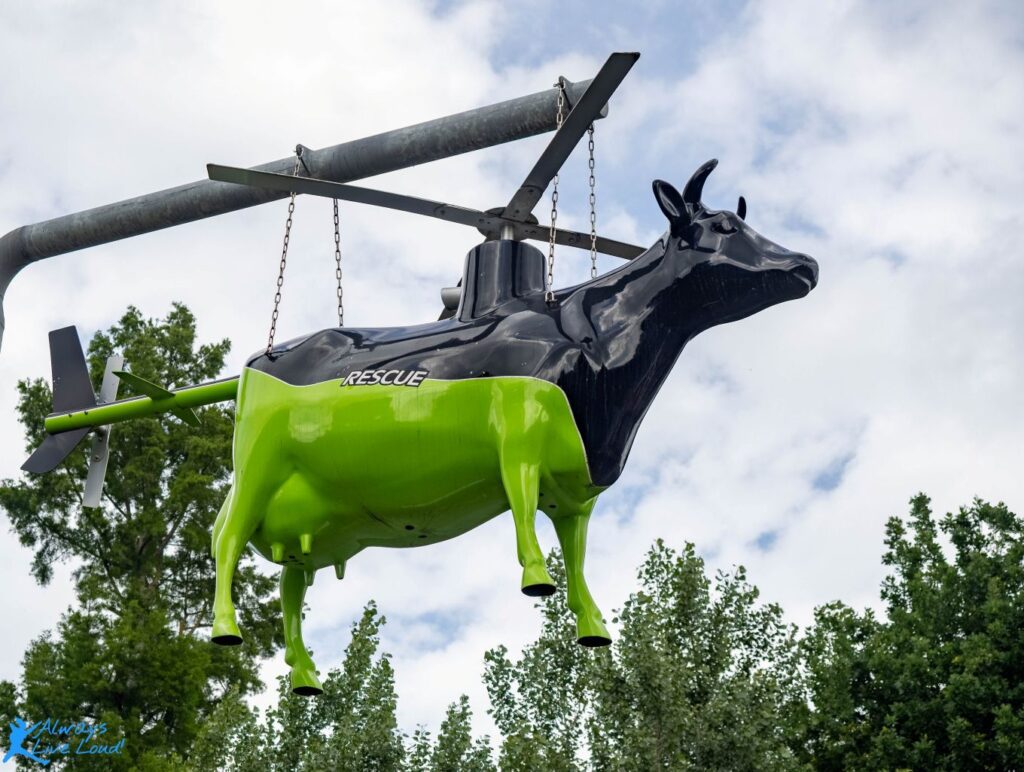
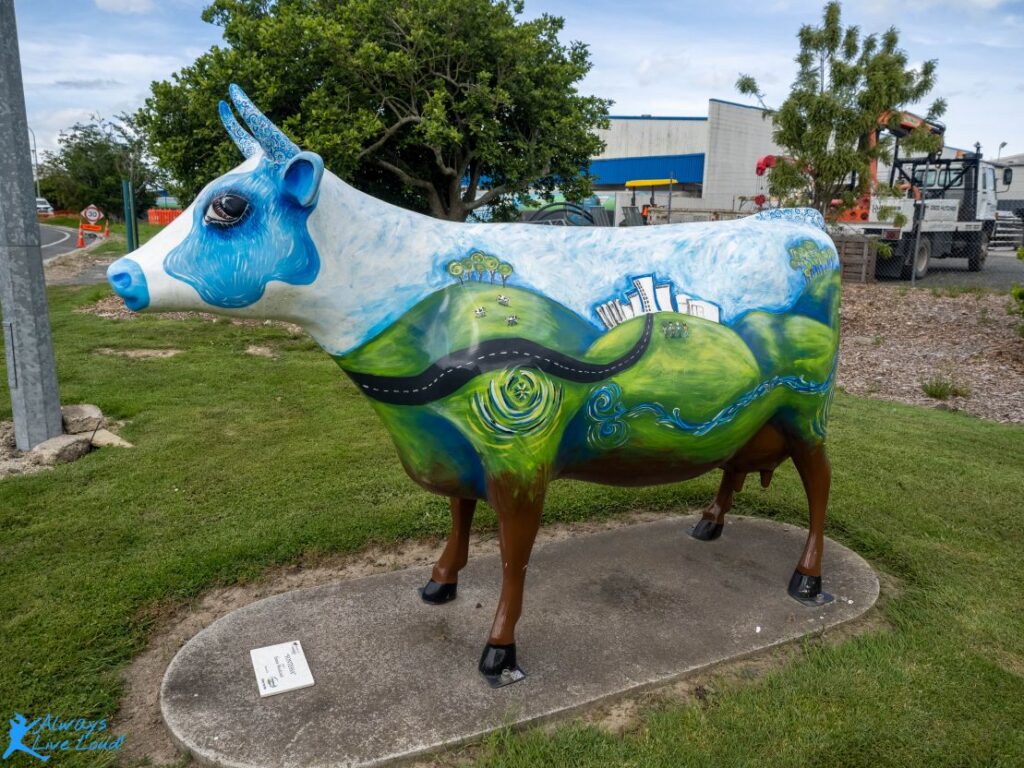
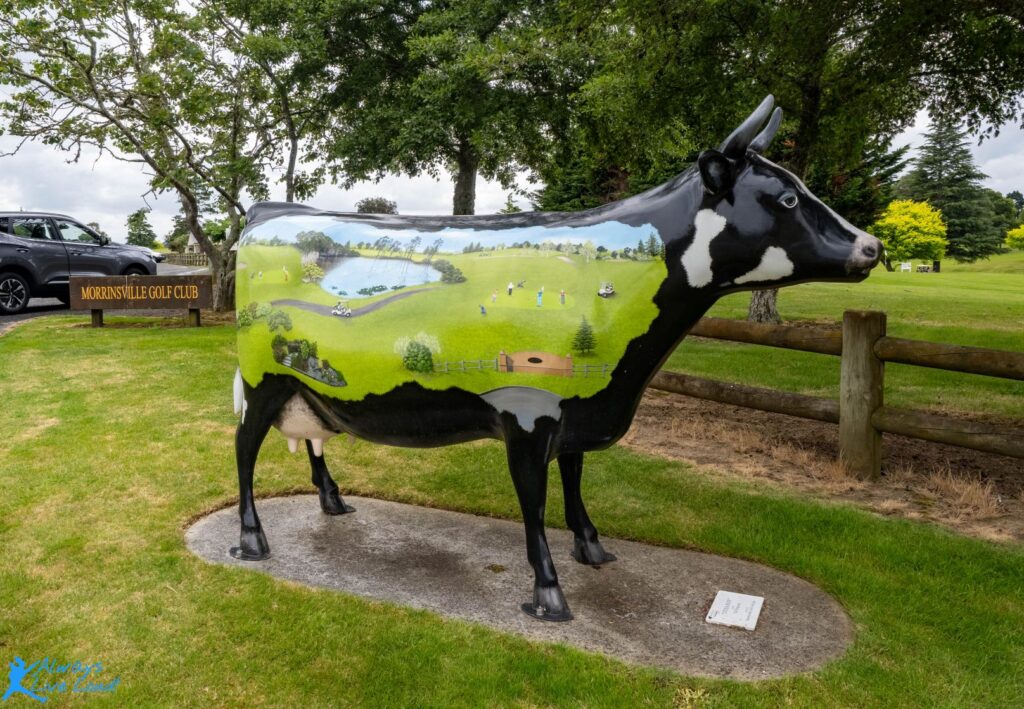
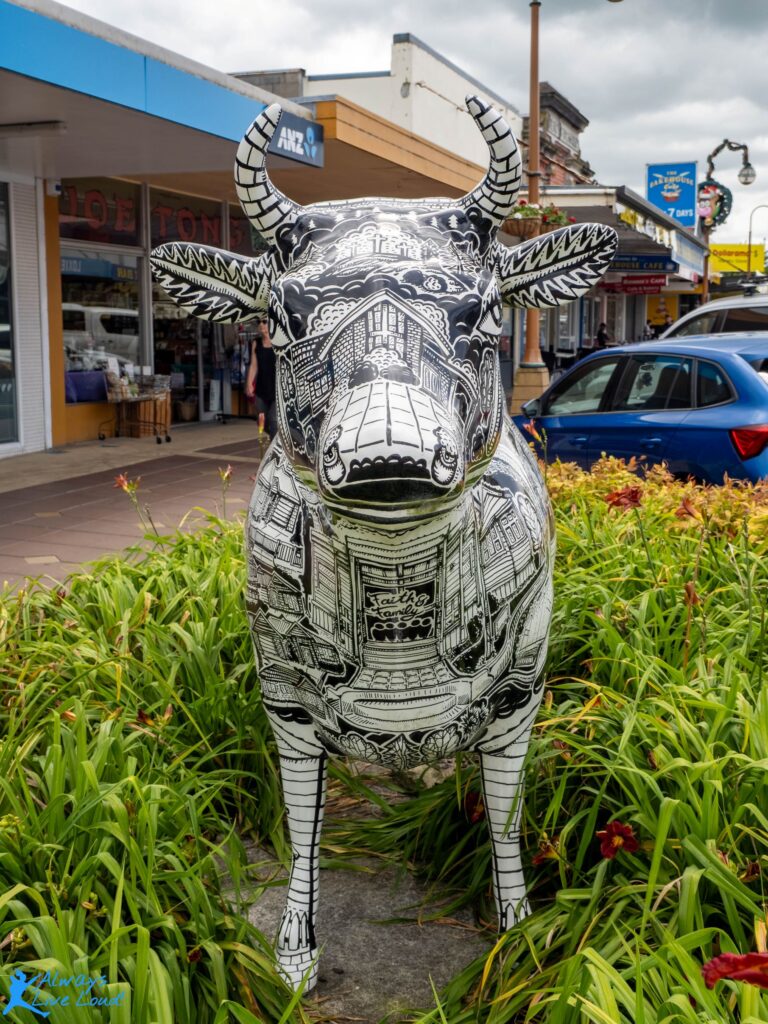
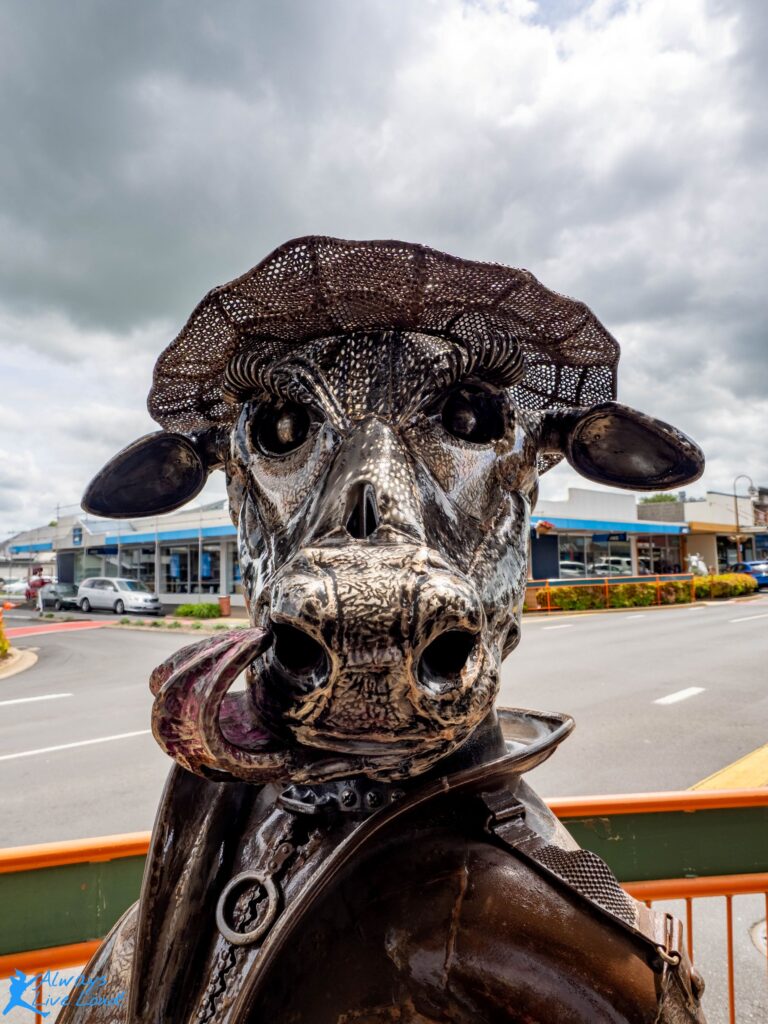
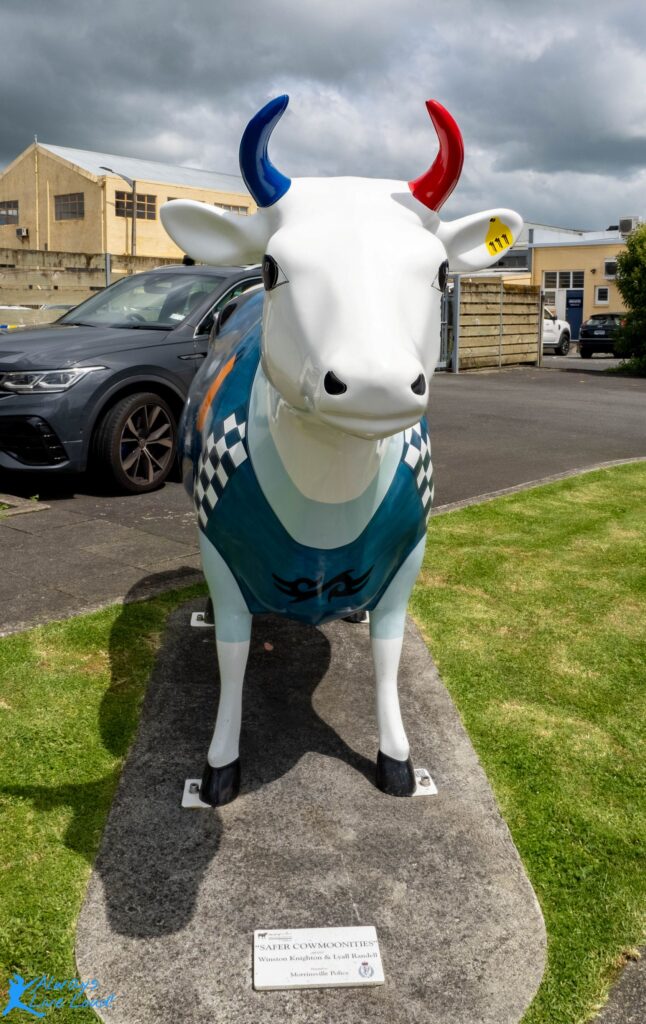
This project has quickly become a favorite spot for both locals and tourists, who wander around the streets and parks looking for these hidden cow sculptures. It’s like a creative treasure hunt, and people get to enjoy a mix of artistic styles and themes along the way.
The Herd of Cows continues to grow, with new sculptures being added all the time. Each cow is a collaboration between a local artist and a sponsoring business or organization, fostering a strong sense of community and support for the arts. This initiative not only enhances the town’s cultural scene but also highlights local talent and gives businesses a cool way to connect with the public.