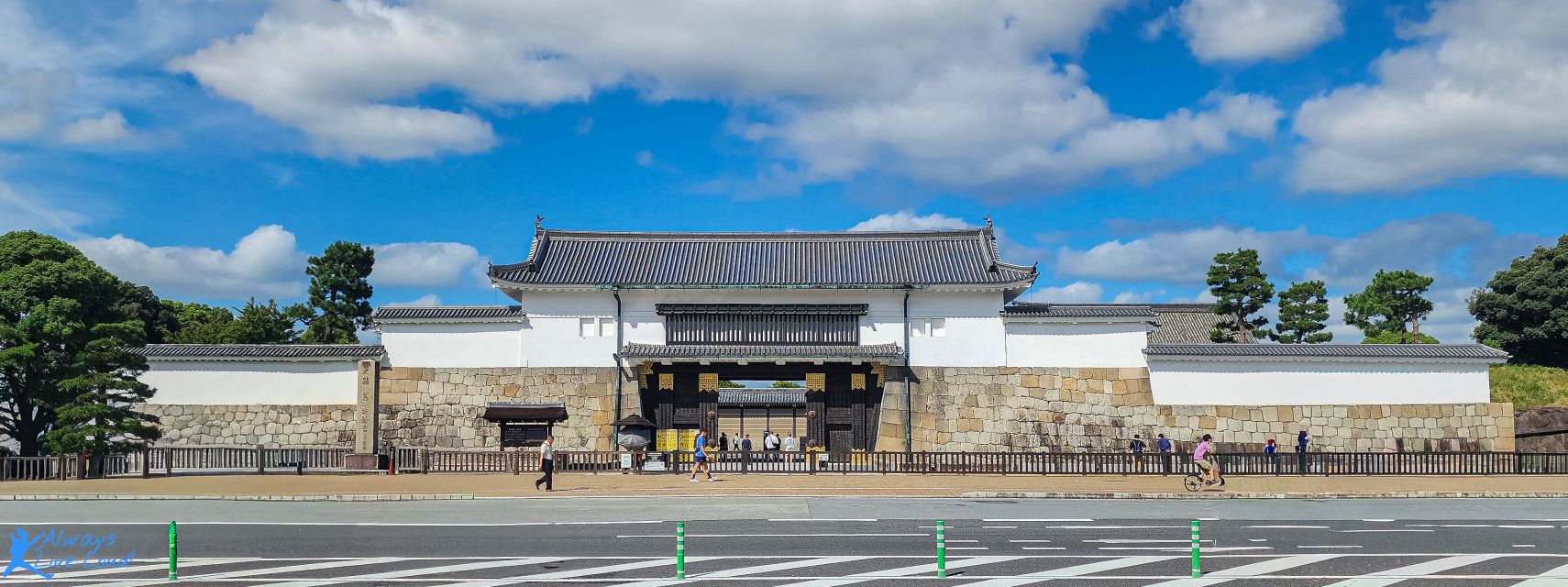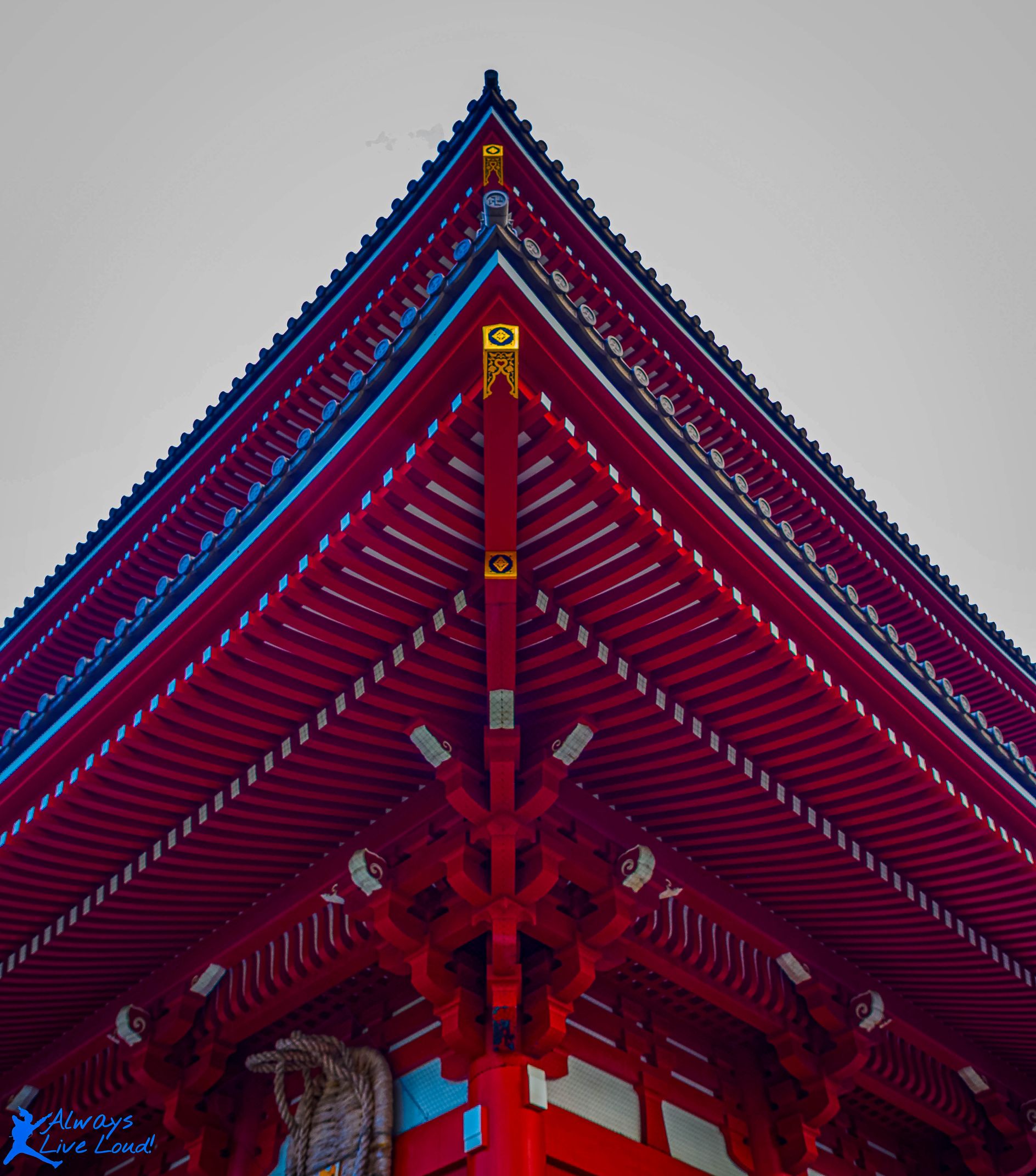
When you think of Kyoto, you probably picture quiet, minimalist aesthetic vibes. Moss gardens, weathered wooden shrines, maybe a solitary monk sipping green tea. But if you want to see what happens when Japan’s military rulers wanted to flex absolute wealth and political dominance right down the road from the royal family, head straight to Nijō Castle.
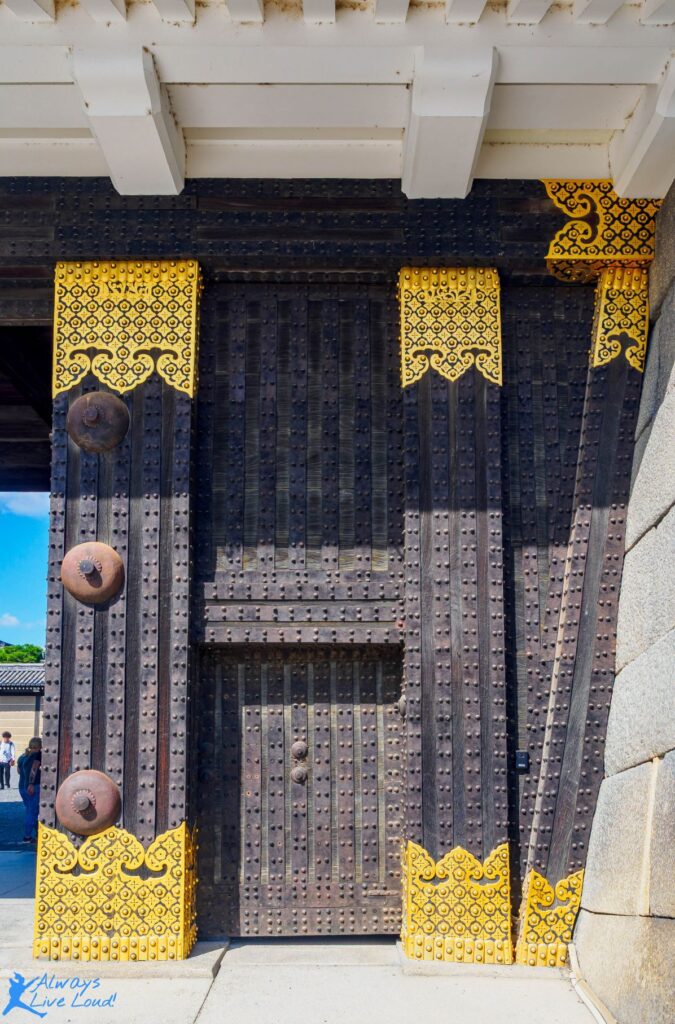
Crossing the castle’s outer moat puts you face-to-face with the magnificent Karamon Gate, and it honestly hits like a flash of lightning. It is an absolute explosion of brilliant gold leaf, dark lacquer, and fiercely intricate woodwork. But behind all that blinding golden shine lies a wild history. Nijō Castle isn’t just a fortress; it’s basically a historical monument puzzle that someone casually reassembled on a single plot of Kyoto real estate.
👑The Ultimate Warlord Flex👑
First, let’s clear up a common historical mix-up. This place wasn’t built for the Emperor. In fact, it’s not even a traditional defensive military castle. It was built for the powerful Tokugawa Shogunate.
Back in the day, the Emperor was essentially a symbolic religious figurehead living down the street. The Shogun held all the real power—controlling the military forces, dictating taxes, and making the actual rules. So, when the Shogunate built Nijō Castle, it wasn’t to protect the city. It was a massive physical flex to intimidate visiting feudal lords.
Because traditional Japanese architecture relied heavily on wood, things catching fire was a regular Tuesday back then. To fix this, Japan’s rulers didn’t just rebuild from scratch—they solved it like a giant jigsaw puzzle by relocating pieces from other elite properties across town.
🧩Puzzle Piece 1: The Stolen Entrance (Karamon Gate)
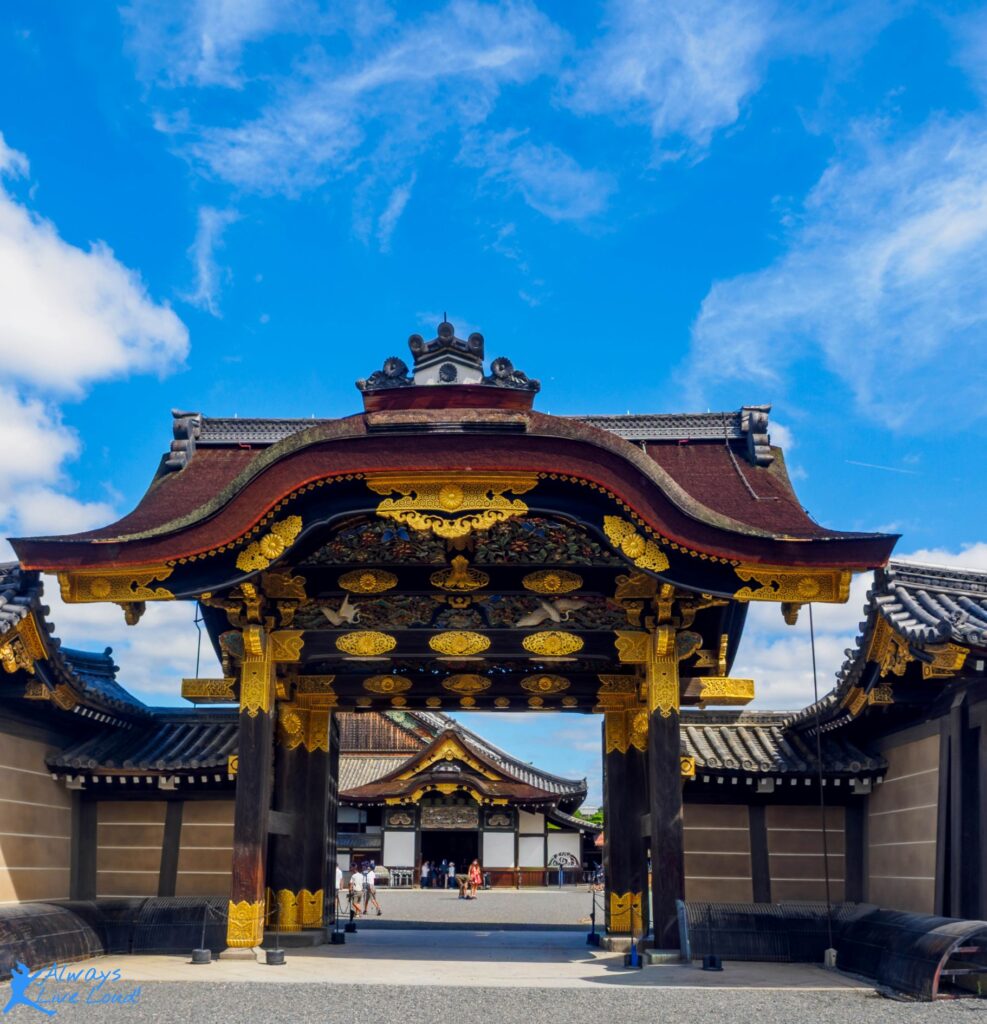
The magnificent, curved Karamon Gate guarding the entrance to the Ninomaru Palace wasn’t even meant for this castle.
It was originally the crown jewel of Fushimi Castle, located about 10 kilometers south.
When the Shogunate decided to dismantle Fushimi Castle in the 1620s, they looked at this jaw-dropping golden gate and thought, “Yeah, we’re taking that with us.” They carefully took it apart, carted it across town, and slotted it right into Nijō.
✌️Puzzle Piece 2: Lightning Strikes Twice
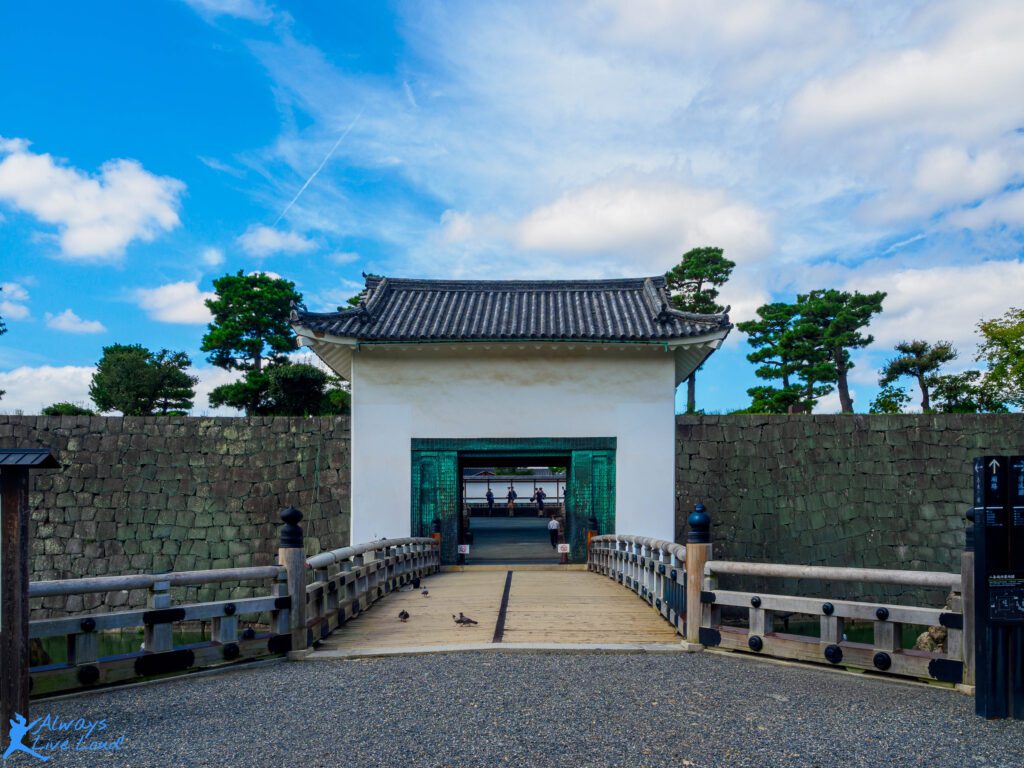
The inner circle of defense, the Honmaru, has had a rough time. Originally, the Shogun moved a massive five-story main tower from Fushimi Castle into this inner ring.
Then, in 1750, lightning struck the tower and burned it to the ground. To make matters worse, a catastrophic city-wide fire swept through Kyoto in 1788, entirely destroying the inner palace building. For over a century, the entire inner ward of the castle sat completely empty, looking like a sad, vacant lot.
🤟Puzzle Piece 3: Borrowing from a Prince
By the late 19th century, the Samurai era ended, power flipped back to the Emperor, and the property needed a serious glow-up. The government solved the empty inner ward problem with another ultimate relocation trick. Between 1893 and 1894, they targeted a disused royal residential complex within the Kyoto Imperial Enclosure belonging to an imperial prince (the Katsura-no-miya Palace). They dismantled its elegant rooms, moved them to Nijō Castle, and reassembled them directly over the old foundations to create the Honmaru-goten Palace you see today.
🏯Inside the Palace🏯
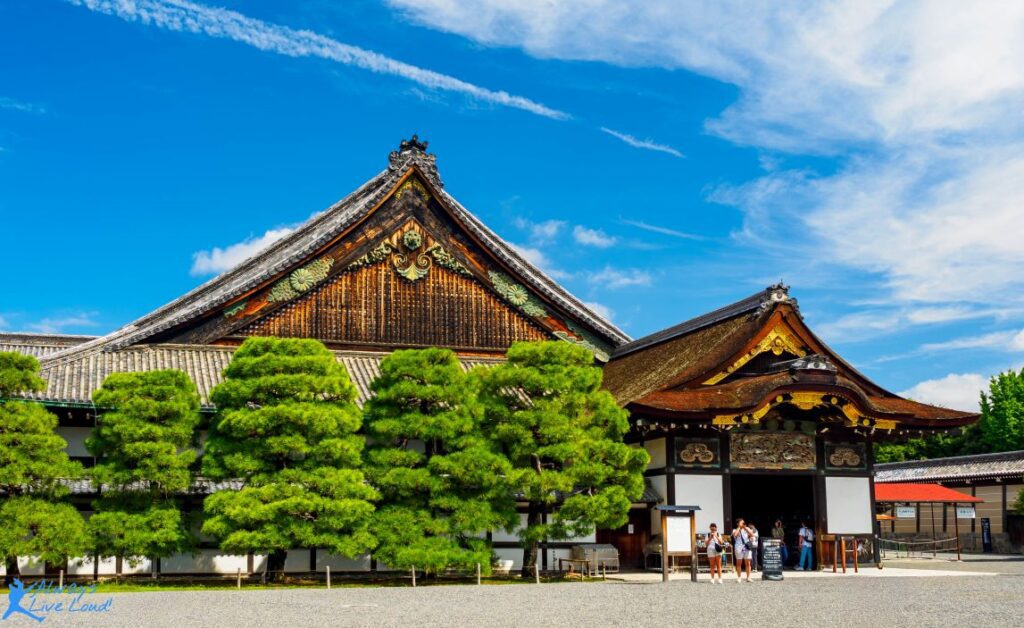
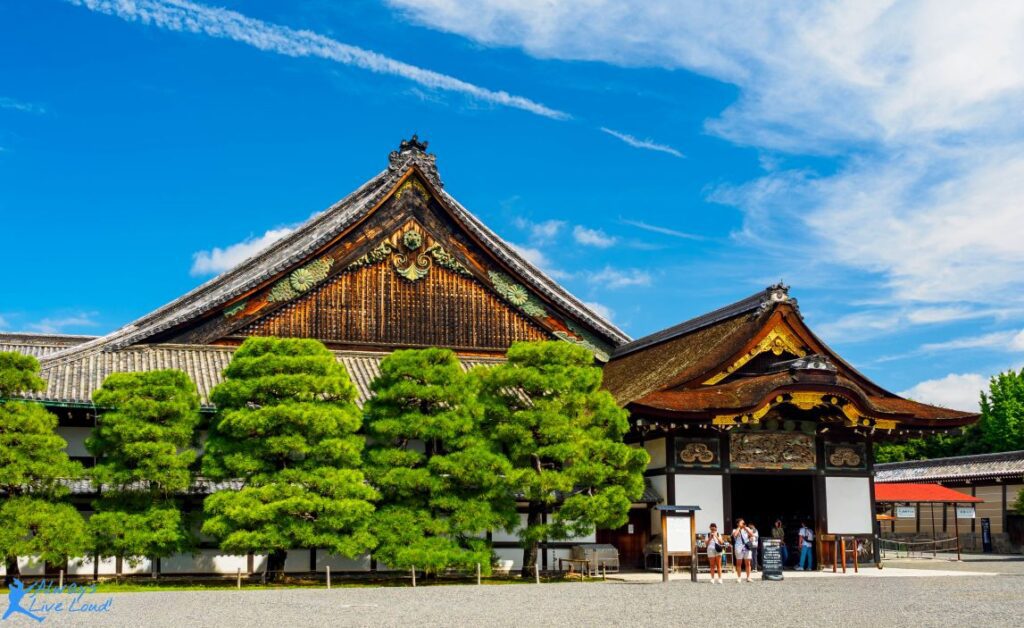
Once you pass through the golden Karamon Gate, you head into the Ninomaru Palace. First rule of business: put your camera away. They strictly prohibit any indoor photography to protect the delicate, centuries-old artwork. But honestly, it forces you to stop looking through a screen and really stare at the empty rooms, the impressive woodwork along the walls, and the bizarre psychological warfare built into the murals.
Each room was meticulously themed based on exactly who was allowed inside:
- The Intimidation Room (Massive Pine Trees): In the grand audience halls where low-ranking feudal lords waited to speak with the Shogun, the walls are covered in massive, towering green pine trees. The scale was intentionally designed to make visitors feel tiny and thoroughly intimidated.
- The Senior Officers’ Rooms (Peaceful Ducks): Move further back into the private chambers used by the Shogun’s ministers, and the vibe completely shifts. The aggressive trees disappear, replaced by peaceful, calming scenes of ducks swimming in tranquil waters.
- The Room of the… “Drunk” Tigers? Then you get to the rooms painted with fierce leopards and tigers, meant to project absolute power. But if you look closely, the tigers look incredibly weird—almost like a cross-eyed house cat that had one too many drinks. As it turns out, the master artists who painted them in the 1600s had never actually seen a living tiger! They had to invent their anatomy using imported tiger skins, old sketches, and local alley cats.
🪷The Ninomaru Garden:
Zen Vibes and Secret Strategies🪷
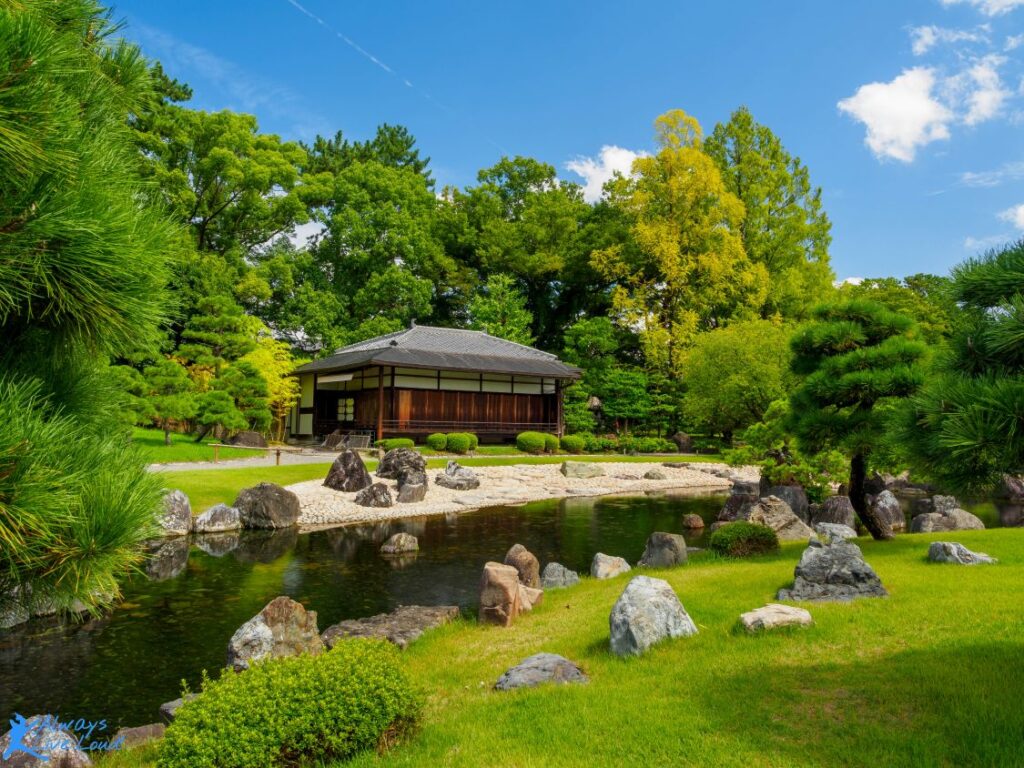
Stepping out of the intense, “drunk-tiger-guarded” palace rooms and onto the actual palace grounds instantly rewinds your heart rate. The Ninomaru Garden is pristine, perfectly cared for, and overwhelmingly peaceful.
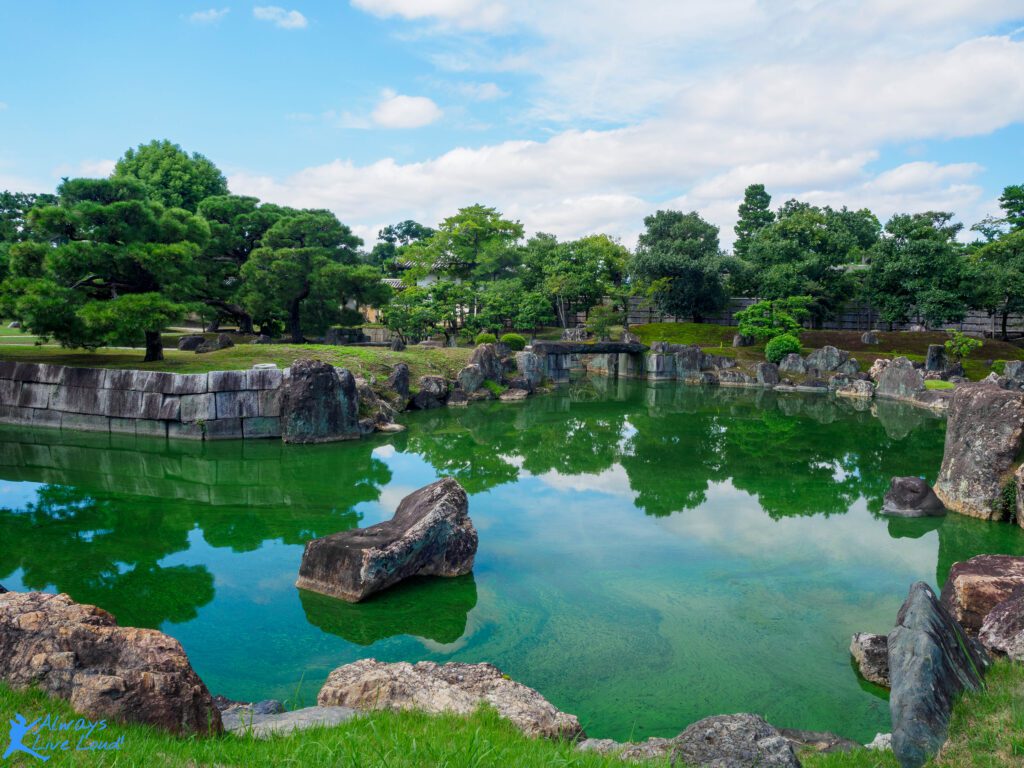
But as you stroll along the pathways, it’s wild to imagine who walked here centuries ago. Instead of tourists resting on the benches, these paths were once pacing grounds for the Shogun and his top military strategists. You can almost picture them in heavy silk robes, looking out over the water and whispering about how to squeeze more tax revenue from regional lords, or plotting how to expand the Japanese empire’s reach.
Today, the high-stakes political plotting has been replaced by pure tranquility. The massive moat and ponds wrapping around the property have taken on a deep, rich green hue over time. If you sit quietly on one of the visitor benches by the edge, you’ll see giant fish sporadically swimming through the green water, breaking the glass-like reflection of the clouds.
It is the ultimate spot to pause, rest your feet, and realize that time eventually turns even the most aggressive military power trips into a peaceful place to sit and watch the fish.