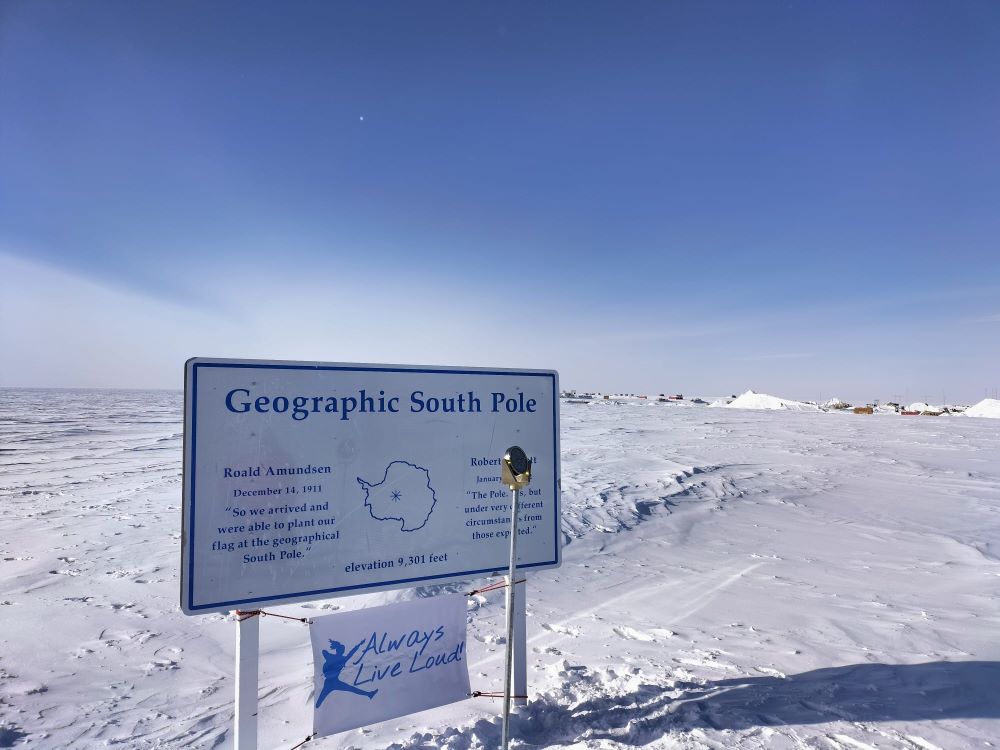
Standing at the Geographic South Pole is an incredible experience that feels almost unreal. Everything here—geography, time, and even nature—seems to work differently than anywhere else on the planet.
The South Pole is about 9,300 feet high and is surrounded by a huge, icy landscape. You have these endless, bright white plains that stretch out in every direction, making it look like a scene out of a sci-fi movie.
The sun acts pretty strangely around here. In the summer, it stays bright for six whole months, while in winter, it’s dark for just as long. This weird cycle can really mess with your sense of time. Plus, the freezing temperatures and high altitude make the environment really tough, pushing people to their limits and testing how well we can adapt.
Surreal Geography
North is the way to go🚶♂️
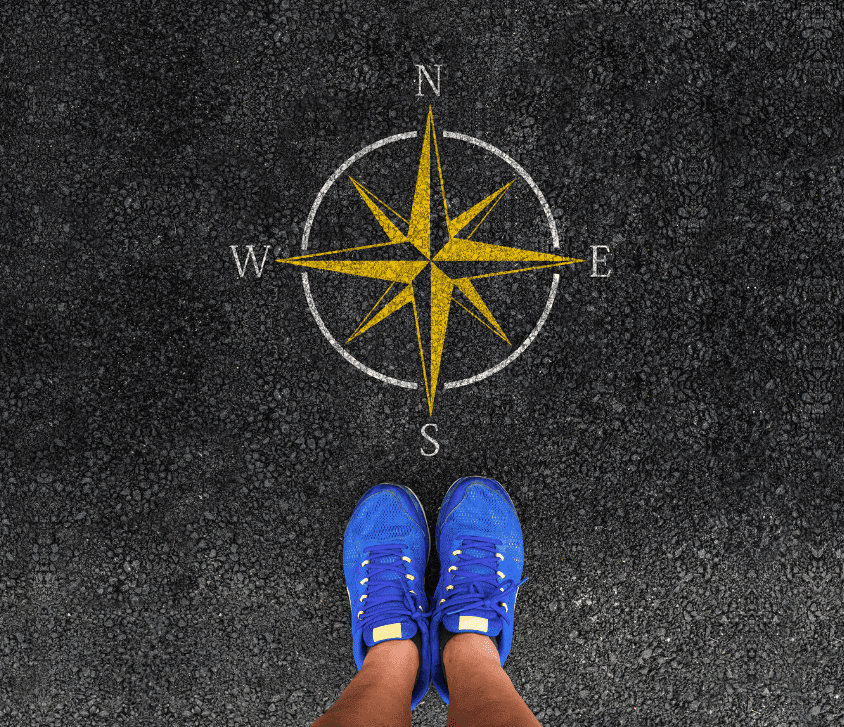
Standing at the South Pole, it hits me that no matter how I turn, I’m always facing north. Being the southernmost point on Earth means that all the lines of longitude meet here. Even taking a single step away from this spot means I’m headed north.
The icy landscape around me—just endless white with some snowdrifts here and there—really drives home how isolated I am. In this cold, remote place, I can’t help but think about how vast the Earth is and what direction really means.
The Moving Marker🚩
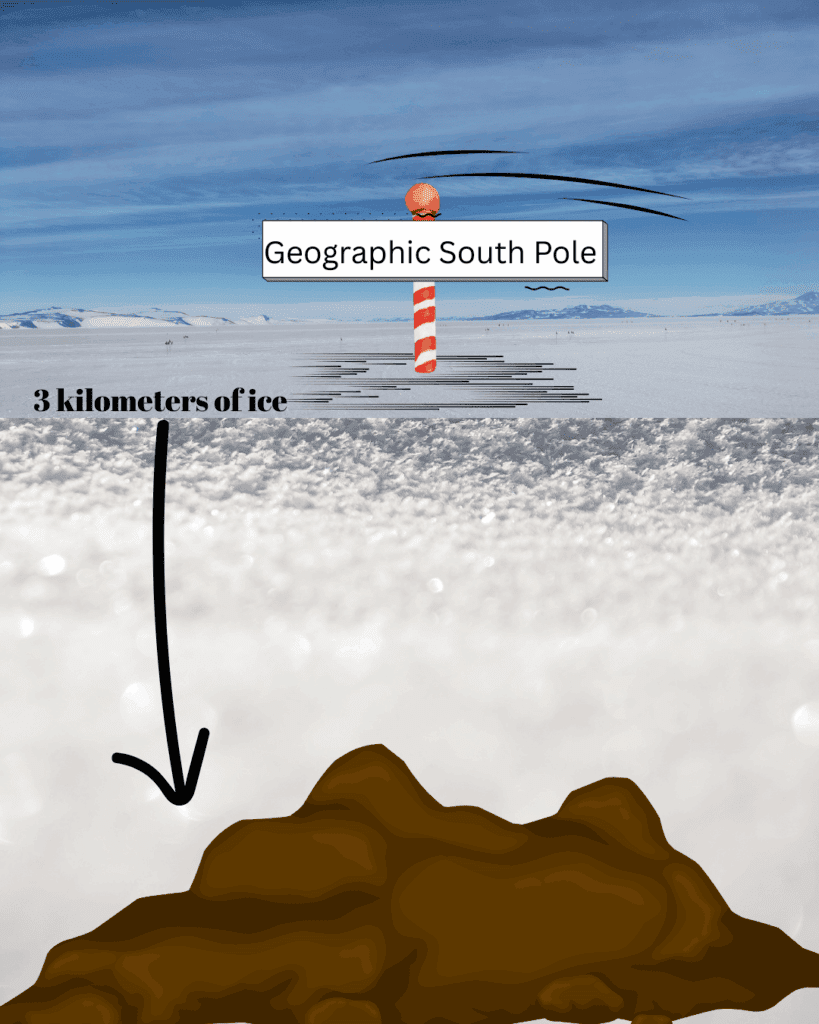
Standing at the South Pole, it hits me that I’m on nearly 3 kilometers of ice—how cool is that?
This ice actually flows about 10 meters each year, which makes things a bit tricky. They have to move the bronze marker every New Year’s Day to ensure it still shows the correct spot for 90°S latitude.
It’s an awesome reminder of how alive and changing our planet really is!
A Polar Desert🏔️
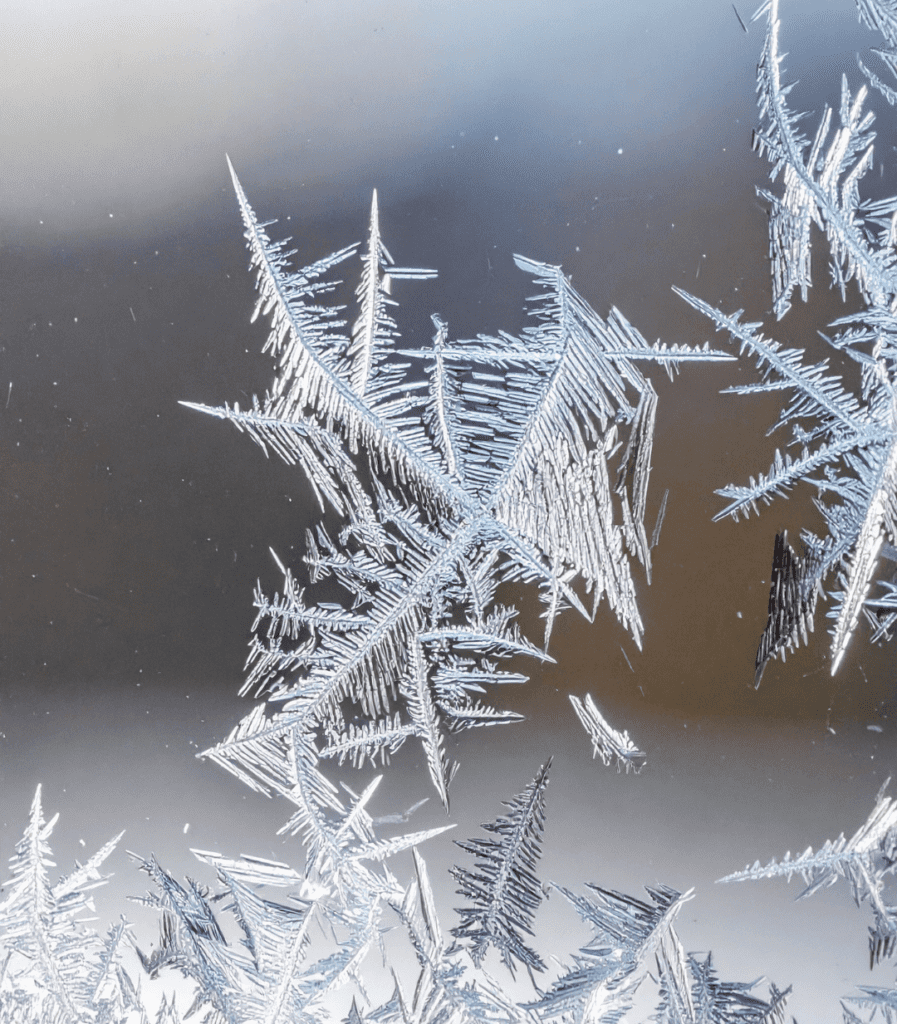
Even though it’s covered in ice, the South Pole is actually the biggest desert in the world.
It doesn’t get much new precipitation, mainly just tiny ice crystals called “diamond dust,” making it drier than the Sahara!
Time and Astronomy🔭
All time zones at once⌚
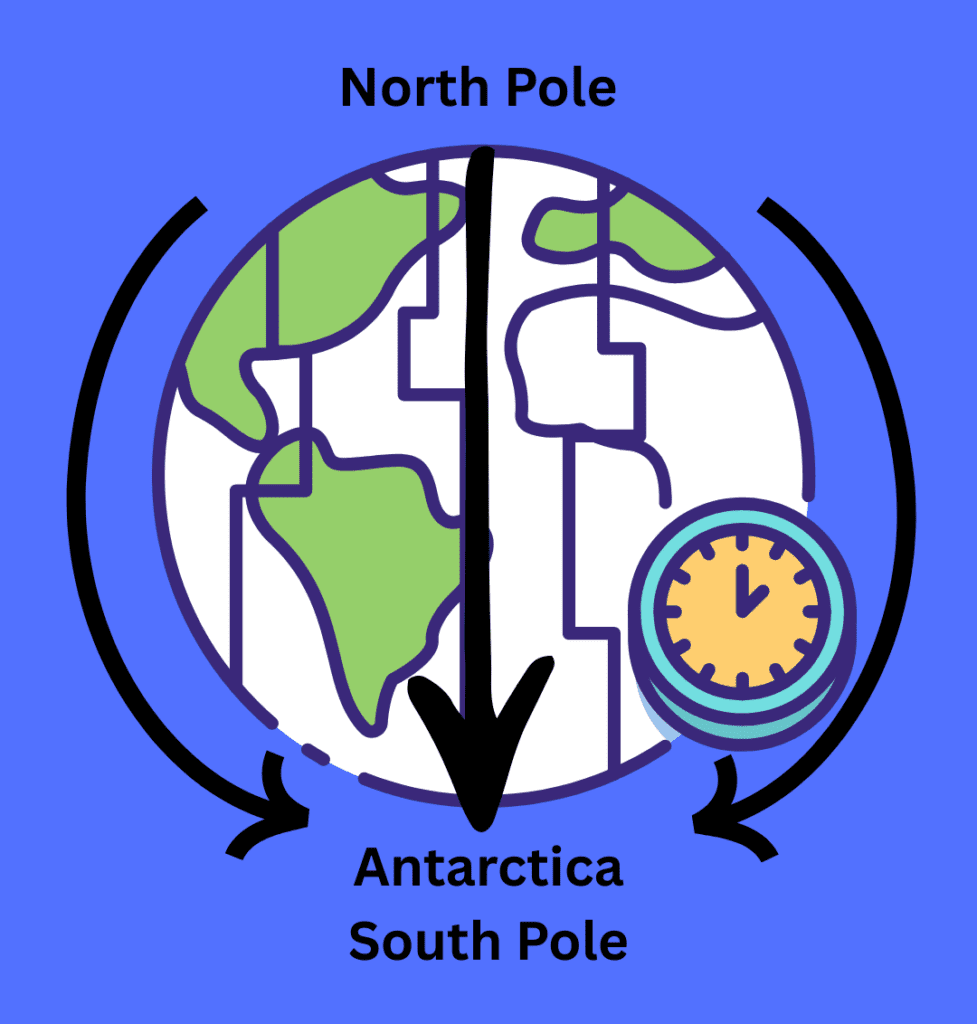
It’s pretty cool that all the lines of longitude meet up at the Pole, which means you could technically be in any time zone you want.
But for the sake of convenience, the Amundsen-Scott South Pole Station goes with New Zealand Time (UTC+12) as its standard.
This makes sense since it’s the main logistics hub and helps everything run smoothly.
Six months of light🔆
The sun only rises once a year at the September equinox and sets just once at the March equinox.
This means there’s a wild six-month “day” followed by six months of total darkness.
While I’m in Antarctica, it’s always bright outside, and it makes it tough to sleep. I often wish I had better curtains in my room to block out all that constant daylight.
The “Race Around the World”🏃♂️
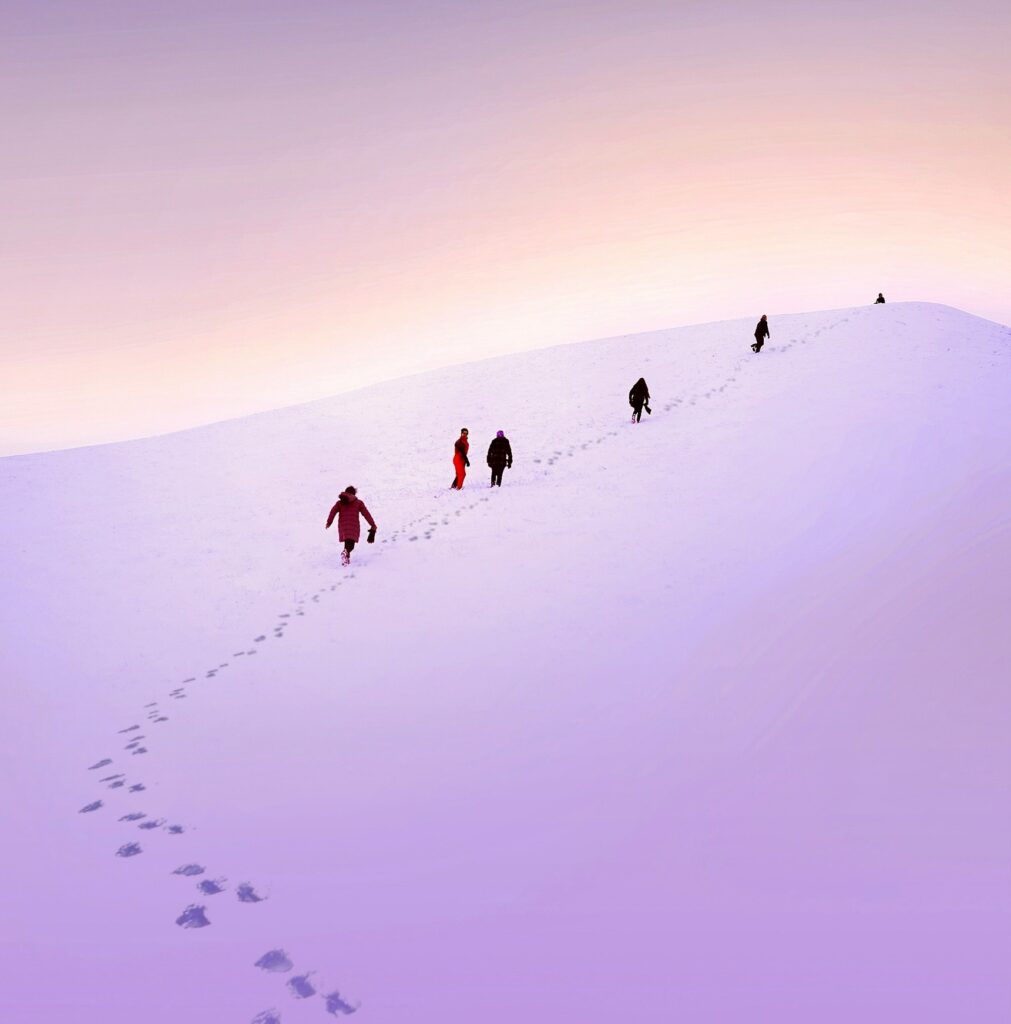
Every Christmas, the folks at the research station hold a two-mile race around the Geographic Pole. It’s pretty cool because you get to run through every time zone on Earth in just a few minutes!
I’ve never had the chance to join in, but I’ve heard those who participate have a blast. Maybe you, one day!?
❄️❄️❄️❄️❄️
In this super remote spot, you really get a sense of the planet’s wild extremes. The sunrises and sunsets are stunning, lighting up the ice in bright colors that make the South Pole feel both strange and beautiful.
My experience was amazing, and I thought I’d share some cool facts about this isolated and freezing part of the world.
Hope you like it!