During our recent trip to the Nelson area in the northern part of the South Island, we had the opportunity to experience a fascinating tour of Farewell Spit that lasted a few hours. This tour is ideally scheduled for early morning to take advantage of low tide, and it’s easy to see why.
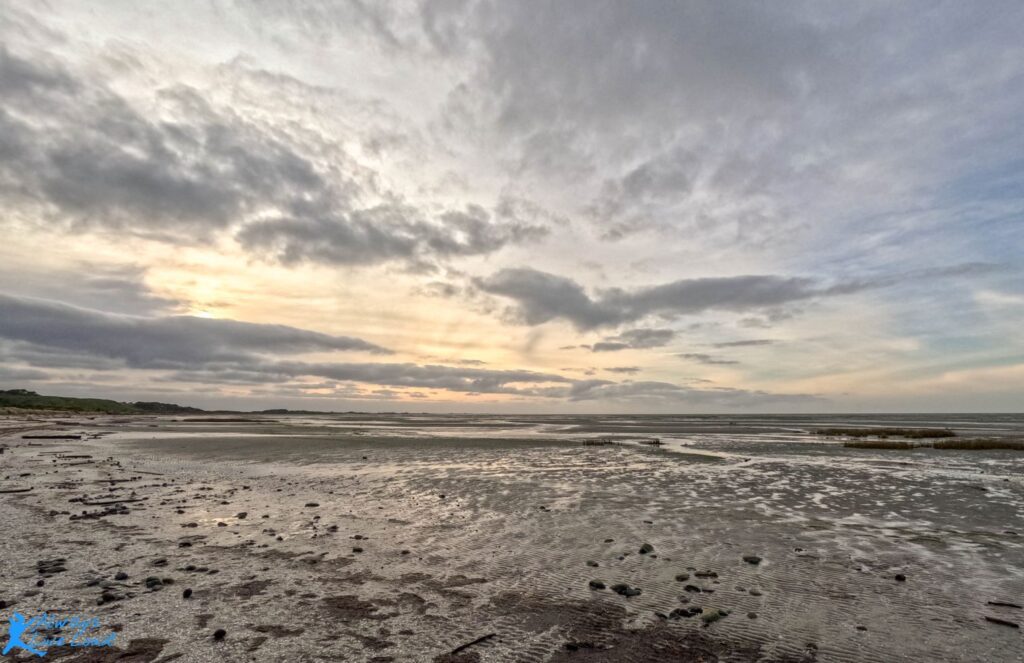
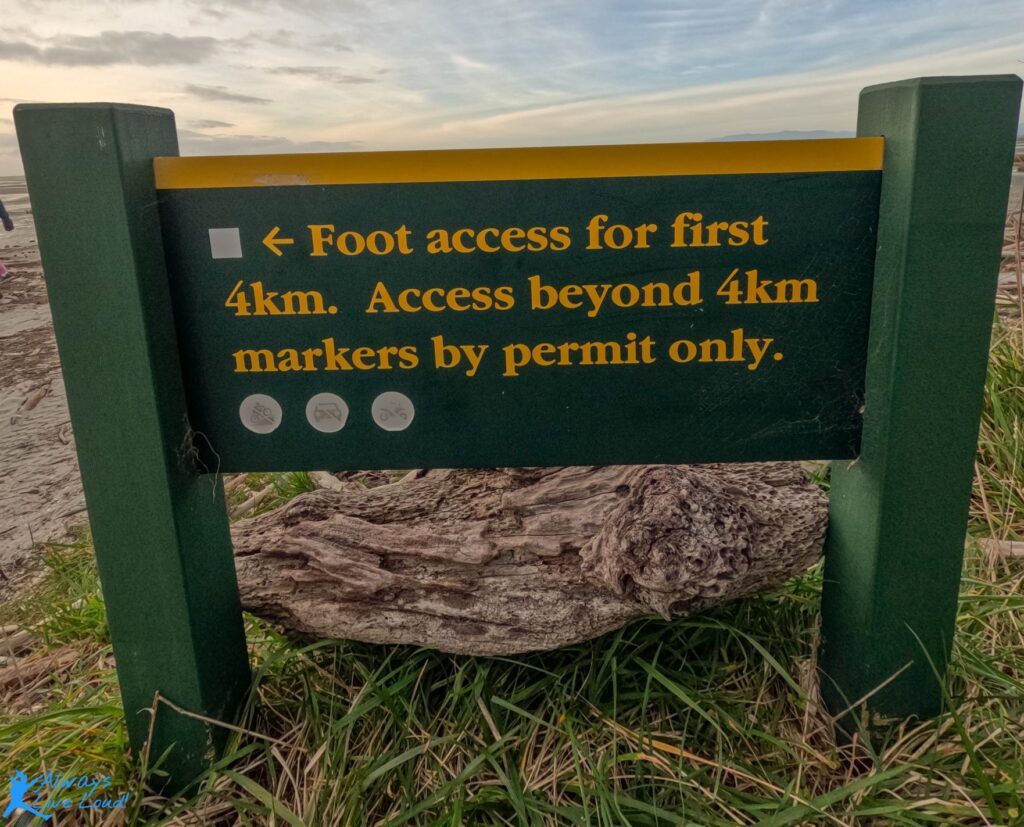
Farewell Spit Nature Reserve serves as a vital bird sanctuary. It is a wetland of international significance, offering even greater protection than a national park. The area stretches about 35 kilometers (21 miles), with public access limited to the first 4 kilometers (2.4 miles). Beyond this point, supervised tours led by authorized concession holders provide the only vehicle access. These restrictions are in place not only to safeguard the delicate ecosystem of the bird sanctuary but also to prevent people from inadvertently getting stranded, as the sand can become submerged during high tide.
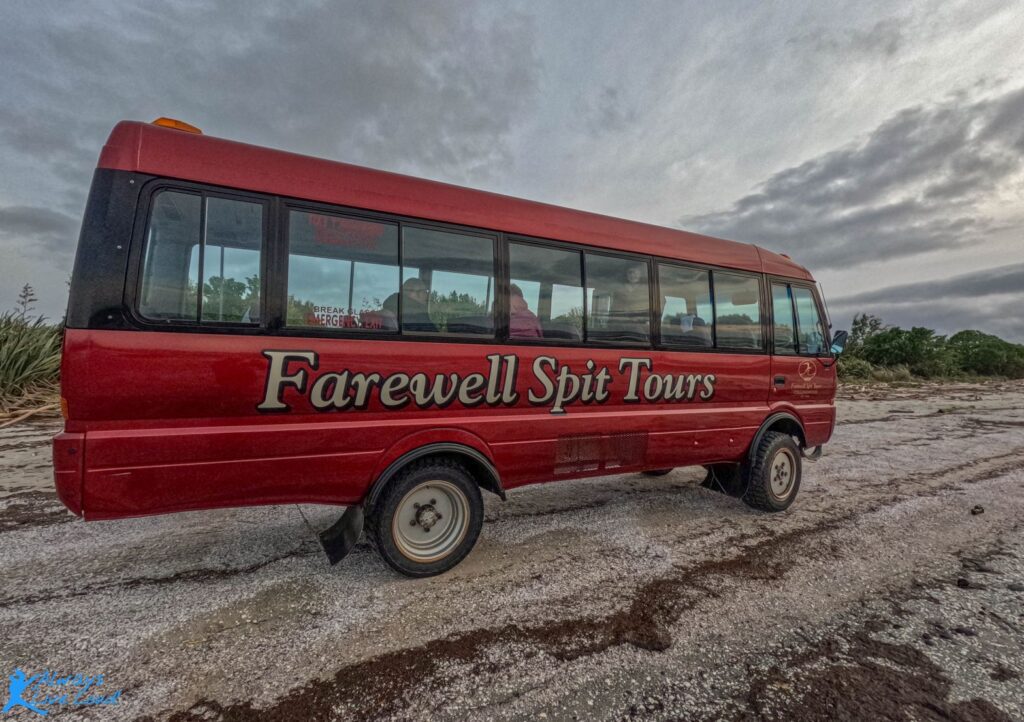
After entering the bus, the guide took us to our destination. While driving, he shared some history of Collingwood and interesting facts about the area.
History of Collingwood
Collingwood is an important historical site in New Zealand, recognized as a 19th-century gold-rush town in Golden Bay. At one time, it was even a candidate for the national capital. The gold rush era transformed New Zealand into a key destination for settlers seeking a better life. Collingwood exemplifies this spirit of ambition and hope. Like many other towns across the country, it contributed significantly to New Zealand’s rich historical tapestry during this dynamic period.
The community, initially named Gibbstown, was renamed in honor of Admiral Cuthbert Collingwood. He served as second-in-command at the Battle of Trafalgar. This battle, fought off the coast of Spain, was a pivotal naval engagement in history, in which a British fleet led by Admiral Lord Nelson defeated a combined French and Spanish fleet.
The discovery of gold in the Aorere Valley in 1856 marked the beginning of a significant boom for the area, even though the gold rush was relatively brief. Throughout its history, the town has demonstrated resilience, overcoming challenges such as major fires and population fluctuations. Despite declining from its peak as a potential capital, Collingwood continued to serve as a port for local produce and timber. Additionally, a trucking firm was established there in 1928.
The Creation of the Reserve
In the late 19th and early 20th centuries, this area was a popular destination for bird shooting, a practice that many considered a sport. Enthusiasts would often shoot up to 20 birds without regard for the consequences. However, in 1938, Perrine Moncrieff, a British-born aristocrat who moved to New Zealand in 1921, took a stand against this practice after settling in the region during the 1930s. She was horrified by the slaughter of birds and deeply troubled by the significant decline in their populations caused by hunting.
As a dedicated conservationist, Moncrieff played a vital role in numerous successful initiatives, including the establishment of Farewell Spit as a bird sanctuary. Her most remarkable contribution was the creation of Abel Tasman National Park in 1942, which continues to serve as a testament to the importance of preserving our natural heritage.
Farewell Spit a trape for Whales
This beach is known for being a location where whales often become stranded. It features a long, shallow sand spit that traps them in a bay with gradually shallowing water. When the tide is low, the whales can find themselves marooned on the sand for hours.
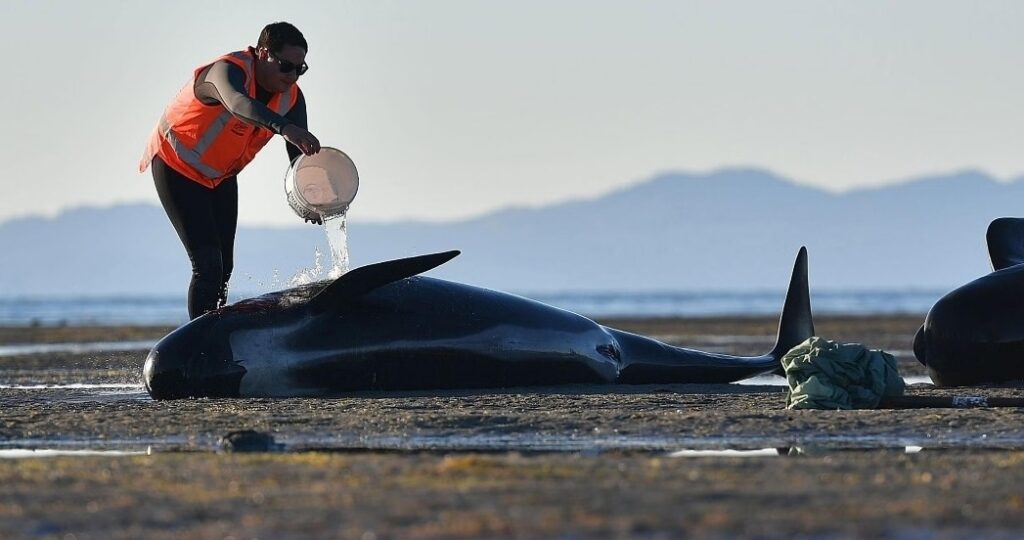
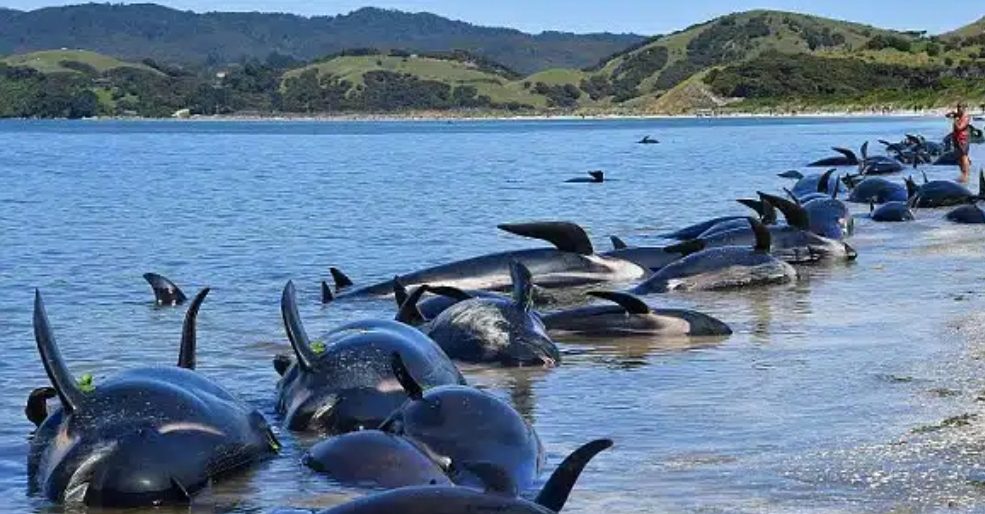
Whales rely on a sensor that works well in deep water, but in this area—where there are no rocks, only a slope of sand—they struggle to use it effectively. As they swim into the bay, it becomes too shallow for them to navigate properly with their echolocation, making it difficult for them to find their way out. Every year, a few whales become stranded, with one year seeing as many as 40 whales trapped.
When this occurs, various organizations and agencies come to help the whales. They ensure the whales stay stable and roll them onto their bellies; otherwise, their weight can cause their rib cages to collapse. Once the tide returns, they guide the whales back out of the bay. Unfortunately, not all of the whales are fortunate enough to survive.
The Lighthouse History
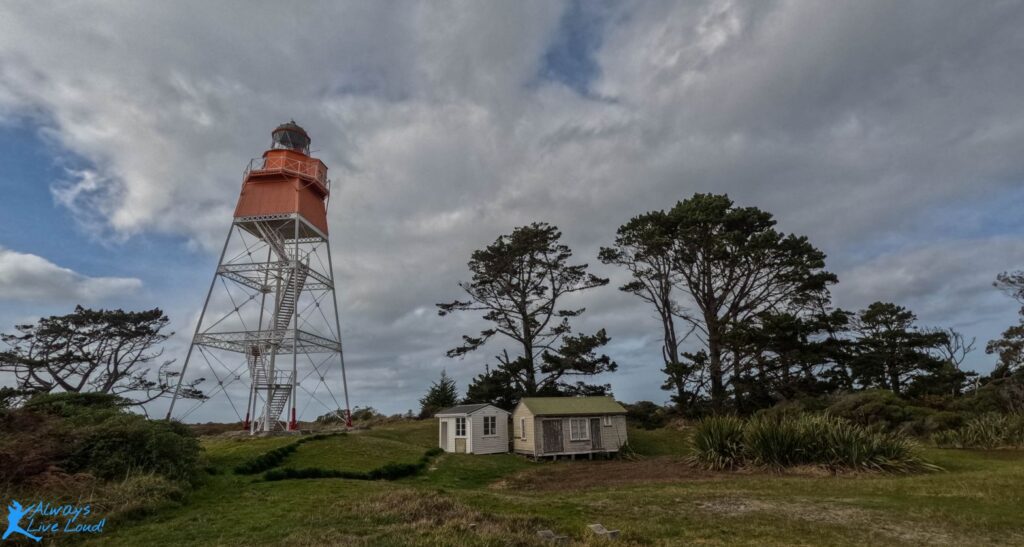
The Farewell Spit Lighthouse, located at the very tip of Farewell Spit, has quite a fascinating history! The builders initially constructed the lighthouse in 1870, but the wooden structure could not withstand the harsh coastal conditions. As a result, they replaced it in 1897 with a durable steel tower designed to endure the elements. This lighthouse has been an essential guiding light for ships navigating the tricky waters of Cook Strait, known for its strong currents and often challenging conditions.
In 1984, the lighthouse entered a new era by becoming fully automated, a big step forward for maritime navigation technology! This change meant that the live-in keeper, who had cared for the lighthouse for years, was no longer needed. Not only is the area around the lighthouse important for sailors, but it also carries historical significance—Captain James Cook named it “Farewell Spit” back in 1770 after spotting it during his first voyage exploring New Zealand. Standing at over 20 meters tall, the lighthouse remains a beloved landmark and a reassuring symbol of maritime safety in the region!
Is it Worth visiting the Farewell Spit?
Yes absolutely!
There are so many reasons to enjoy this experience! It really depends on what you’re looking for. If you’re a nature lover and want an adventure, I highly recommend taking a guided tour to the outer spit. You’ll get to see amazing unique dunes, watch gannet colonies and seals, and even make your way to Cape Farewell.
If you prefer to explore on your own, you can take a self-guided walk on the first part of the spit. It’s free and offers some breathtaking views, although it doesn’t go as far as the guided tours. Either way, you’re in for a treat!