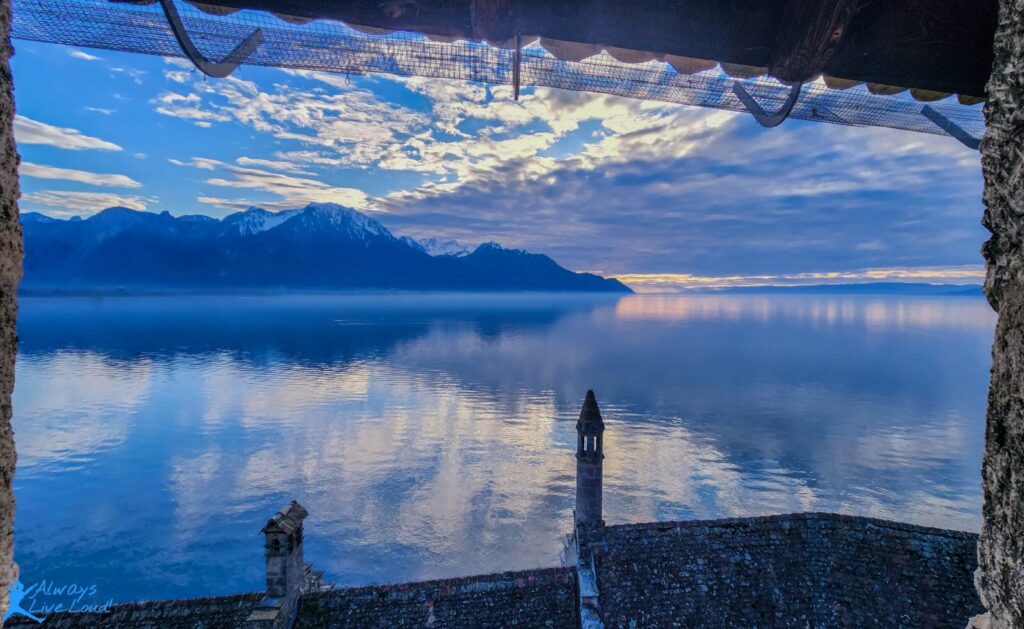
When we think of Switzerland, we often envision awe-inspiring mountain landscapes dominated by the majestic Swiss Alps, adorned with snow-capped peaks, pristine lakes, world-class alpine ski resorts, picturesque hiking trails, and enchanting villages.
Switzerland is also synonymous with exquisite products such as fine chocolate, artisanal cheese, and precision watches.
Switzerland boasts an extraordinary culture enriched by a harmonious blend of German, French, and Italian traditions.
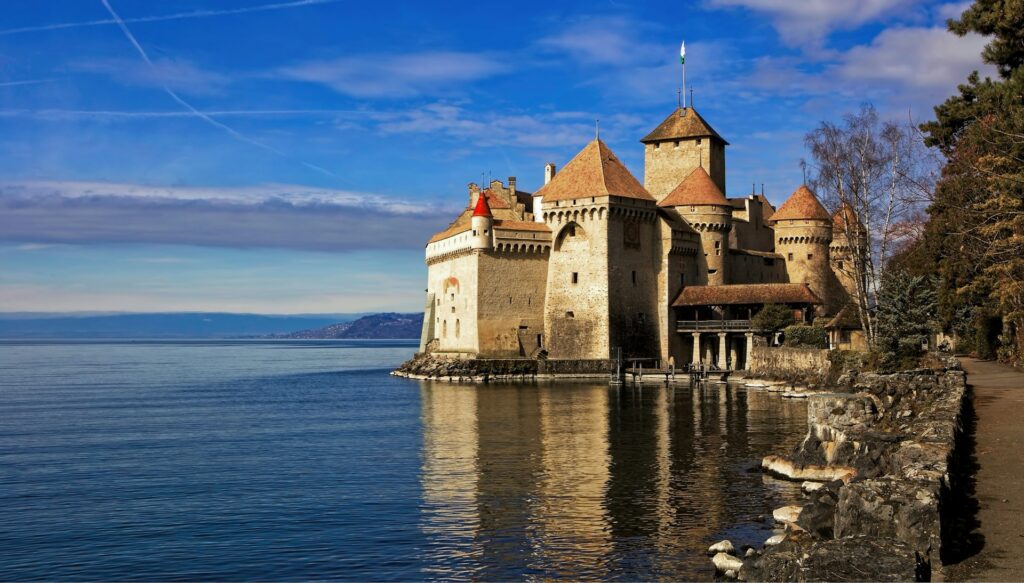
Today, though, our focus will be on a remarkable gem in the French-speaking region of the canton of Vaud: Chillon Castle, the oldest castle in the area, where history comes to life and natural beauty flourishes.
what Makes Chillon Castle so Special?
Chillon Castle holds unique historical significance, shaped by various factors throughout the centuries. It was a residence during the three prominent eras: the Savoy, Bernese, and Vaud periods.
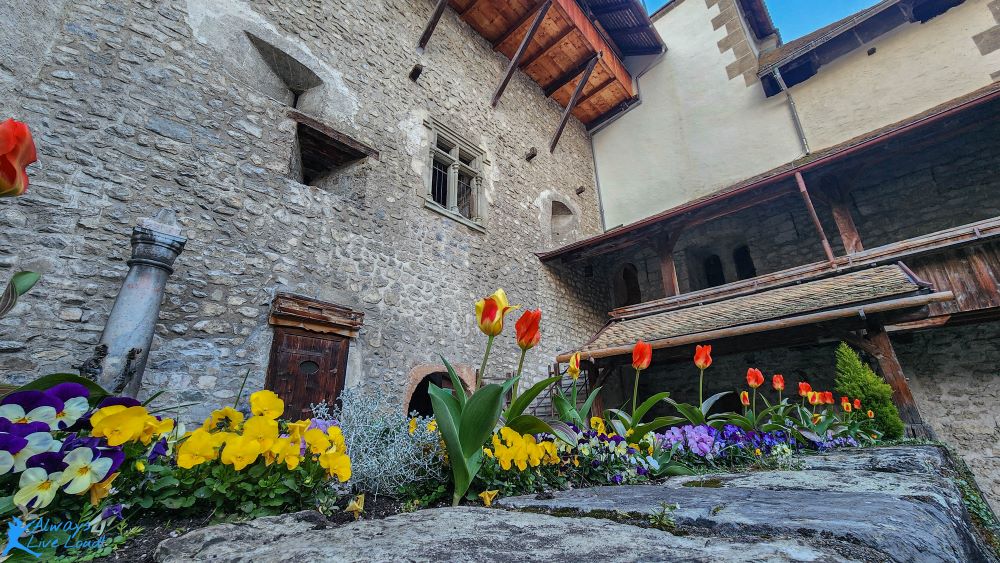
One of the castle’s noteworthy features is its role as a toll station for nearly four centuries, which has been crucial in generating revenue for the Counts of Savoy. Its strategic position on a rocky island in Lake Geneva enabled it to effectively control passage and collect tolls from boat traffic and travelers on the vital route to Passo del San Bernardo.
Moreover, Chillon Castle is fascinating for its dual functionality as a fortress and a prison, a distinction it has maintained for over 260 years. Peter II of Savoy transformed the structure, originally built to store supplies and weapons, into a prison around 1290. During its history, it also served as a hospital and, in the Bernese period, became the residence of the bailiff of Vevey.
The castle’s distinctive architecture and stunning location greatly enhance its charm. Perched on a rocky island, Chillon Castle serves as a remarkable historical site and a breathtaking visual spectacle.
Some Interesting Facts About the Castle
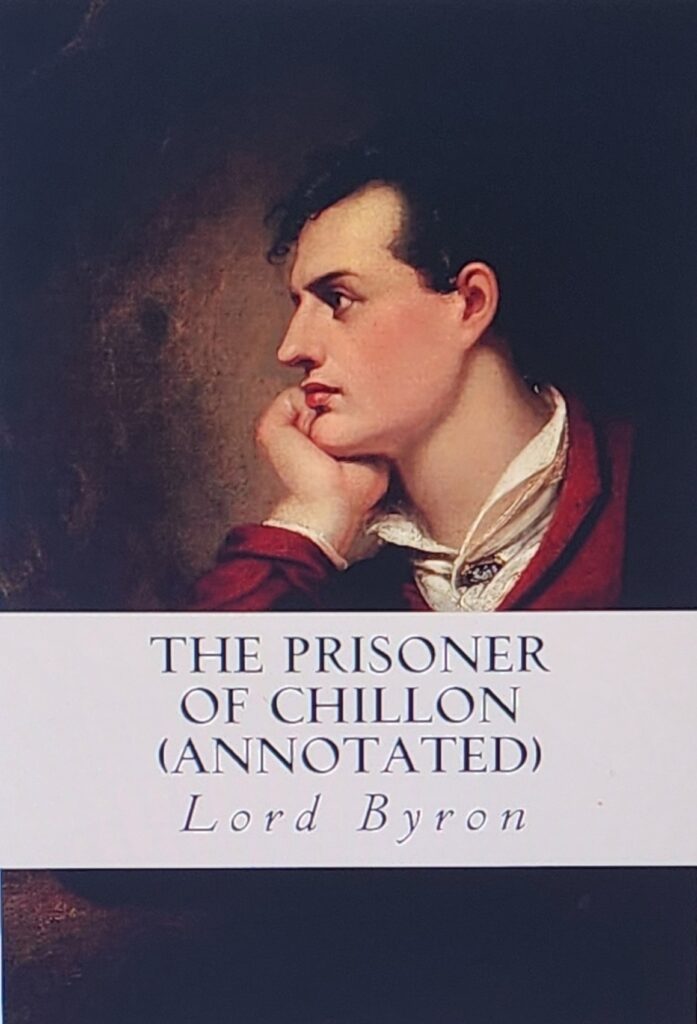
The castle gained popularity thanks to Lord Byron’s poem “The Prisoner of Chillon,” which tells the story of François Bonivard, a 14th-century monk from Geneva who spent six years imprisoned in the castle’s dungeons. Byron’s work romanticized Bonivard’s experiences and played a crucial role in bringing global attention to the castle’s rich history and its significance in Swiss heritage. This enduring interest has inspired countless writers and poets, resulting in many literary interpretations centered around the castle and its storied past.
This remarkable medieval monument dates back to the 10th century and served as a notable detention center for individuals accused of witchcraft. The history of witch-hunting in the Pays de Vaud from the 15th to the 17th centuries led to over 2,000 death sentences for the accused.
In addition to its role in witch trials, the castle served as a prison during the 16th-century religious wars and later became a state prison in the 18th century.
Additionally, Chillon Castle inspired Prince Eric’s castle in the Disney animated film “The Little Mermaid.”
Unique Construction
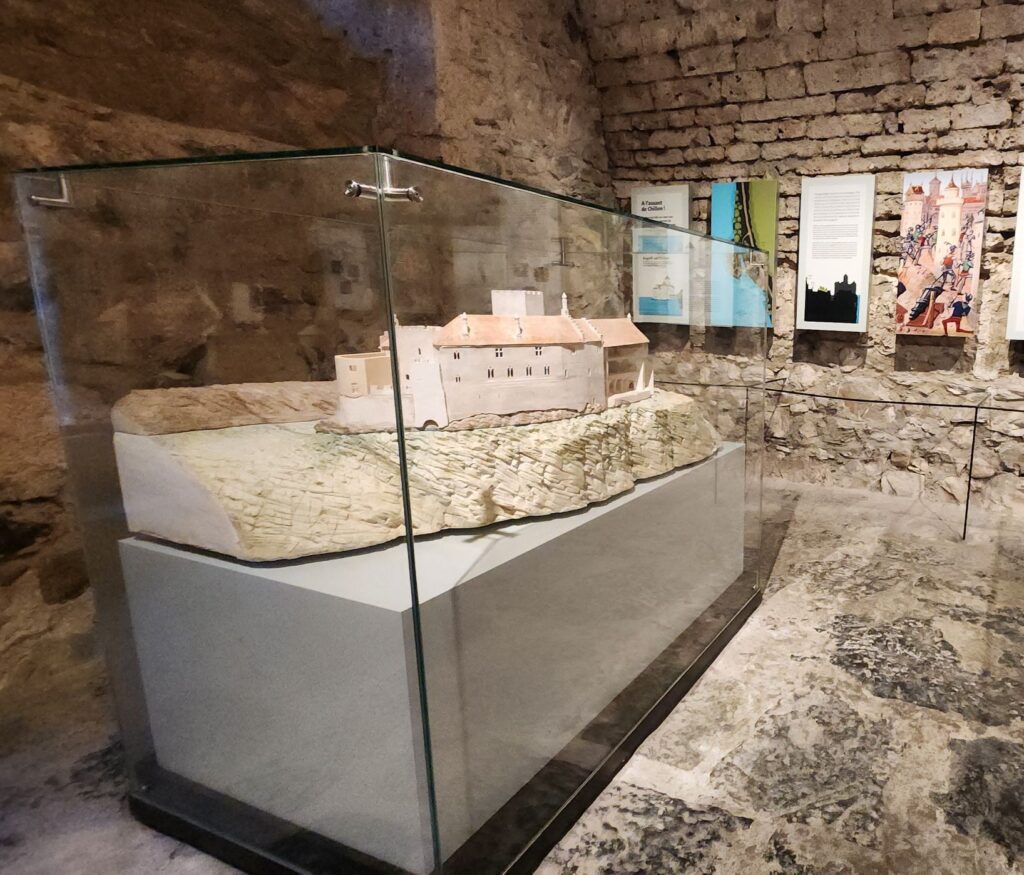
Chillon Castle sits on an oval-shaped rocky island in Lake Leman, also known as Lake Geneva. A natural moat surrounds it, allowing water access from all sides and earning it the designation of a “waterside castle.” A bridge connects the castle to the mainland, enhancing its natural defenses and underscoring its crucial role in controlling trade routes.
The island’s steep slopes provided strong protection against land attacks, while its location on the Lake facilitated trade management between northern and southern Europe.
As a result, Chillon Castle evolved into a significant fortress, residence, and toll station, significantly increasing its importance in the region.
The Castle Exhibits
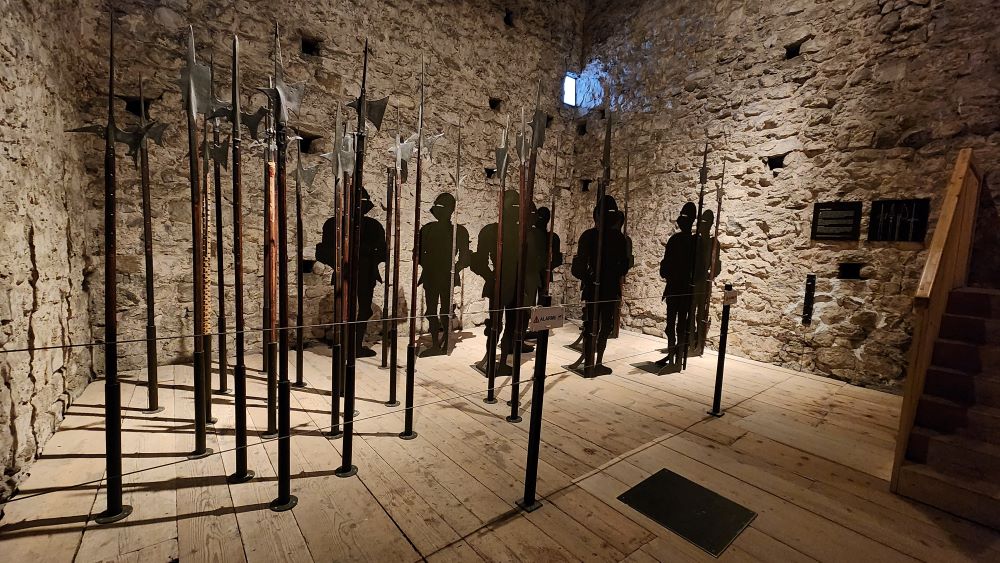
The castle has about 300 exhibits that provide interesting details about its history. The collection includes furniture, weapons, and armor that show both military and daily life in the castle. Most of the items on display were uncovered by archaeologists during excavations from 1896 to 1903.
These excavations uncovered many artifacts, from everyday household items to decorative pieces. Together, they illustrate the lives of the people who once lived in the castle.
Highlights of the Castle
The Great Halls
The castle boasts three elegant great halls with windows that offer breathtaking views of the Lake. The Savoy family used these halls for extravagant banquets, while the Bernese utilized them to dispense justice.
Aula Magna Hall
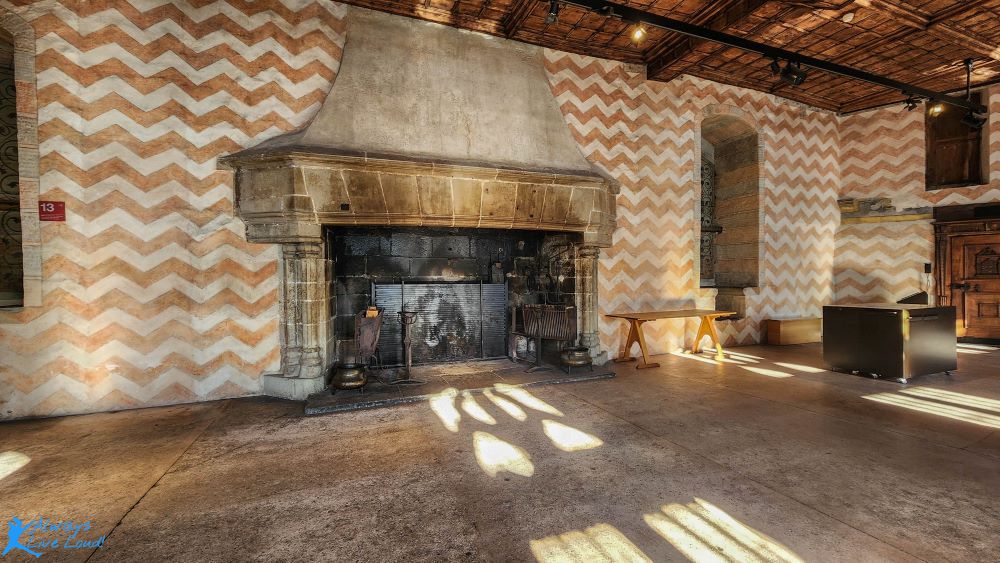
In the Middle Ages, the Savoy family used this room for receptions, banquets, and administering justice. Originally known as the “Aula Magna,” the space transformed into a milling area in the 13th century when someone added a mill.
In 1839, it was renamed the “Hall of Justice.” The black marble columns and lakeside windows are from the 13th century.The ceiling and chimney date to the 15th century.
Constable’s Diner Hall
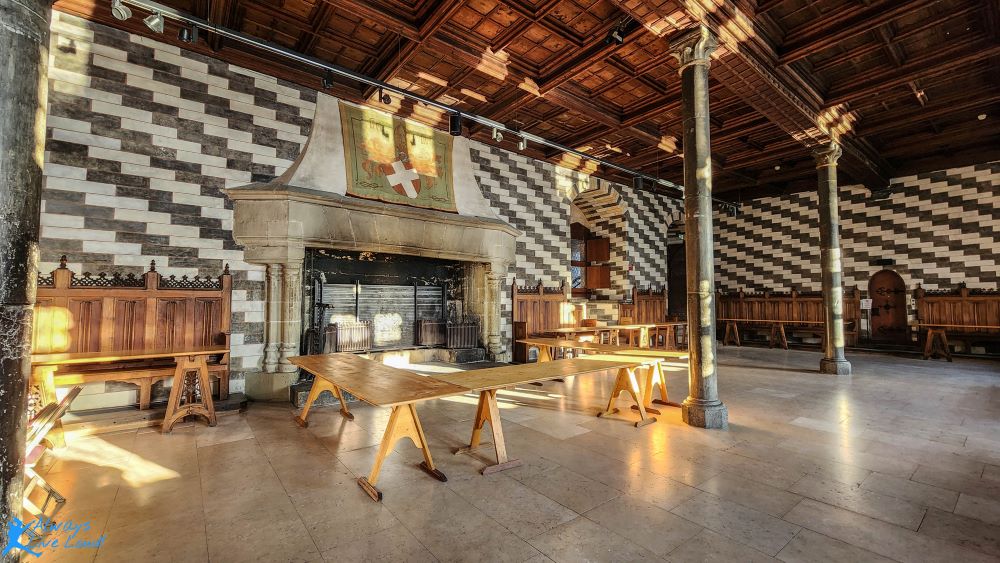
Renovated in the early 20th century, this room features a medieval style with distemper paint reminiscent of the late 13th century and authentic oak columns from that era. The coffered ceiling and chimney were added in the 15th century. Located in the residential area of the castle, it has large 13th-century windows. Initially serving as the constable’s dining hall during the Savoy period. It was later divided into a kitchen and a living room in the Bernese period.
Domus Clericorum
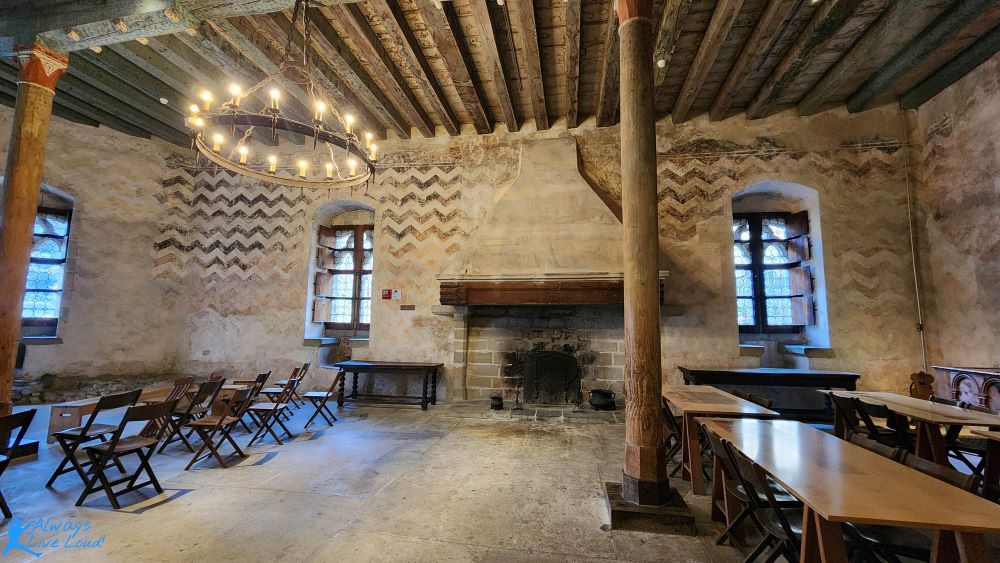
In the 13th century, the ‘Domus Clericorum’ (Clerks’ Abode) was the administrative center for the Chillon domain and the Chablais bailiwick, featuring two floors. This building either collapsed or was demolished in the 16th century.
The clerks’ room on the lower floor was restored in the 20th century. The wall paintings recreated between 1947 and 1948 based on remnants of the original 13th-century art. The ceiling painting also reflects additional decorations found in the torture chamber.
The Bernese Bedroom
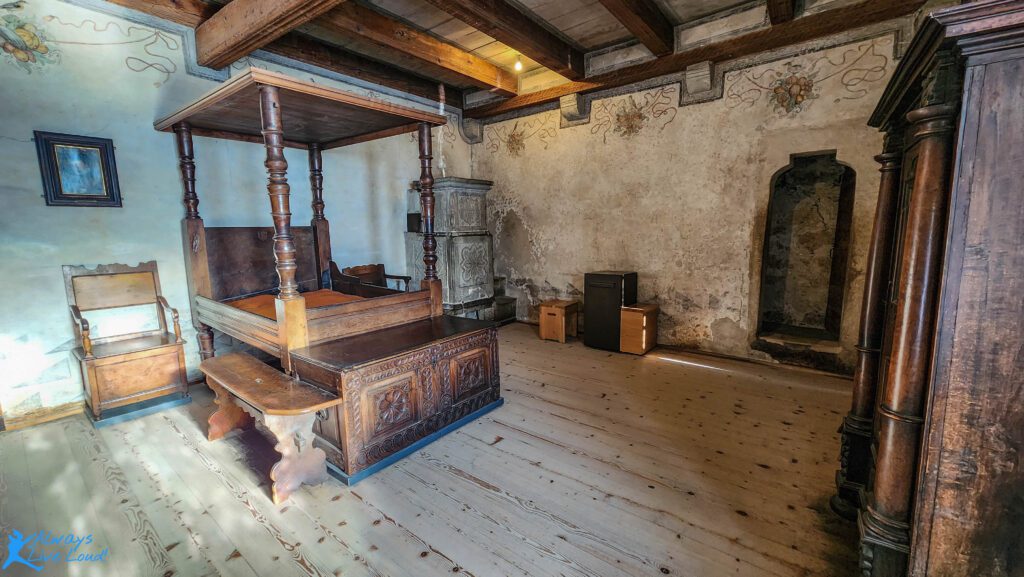
This inviting bedroom offers a comfortable and understated design, with a spacious four-poster bed. It had heating, an en-suite bathroom, and running water for added convenience. Originally used as a bedroom in the Middle Ages, it likely continued to serve the same purpose during the Bernese era. The charming Bernese-style decorations, featuring delicate paintings of plants, fruit, and animals against a white background, are a delightful nod to the early 17th century. This space beautifully combines historical significance with modern comforts.
Camera Domini
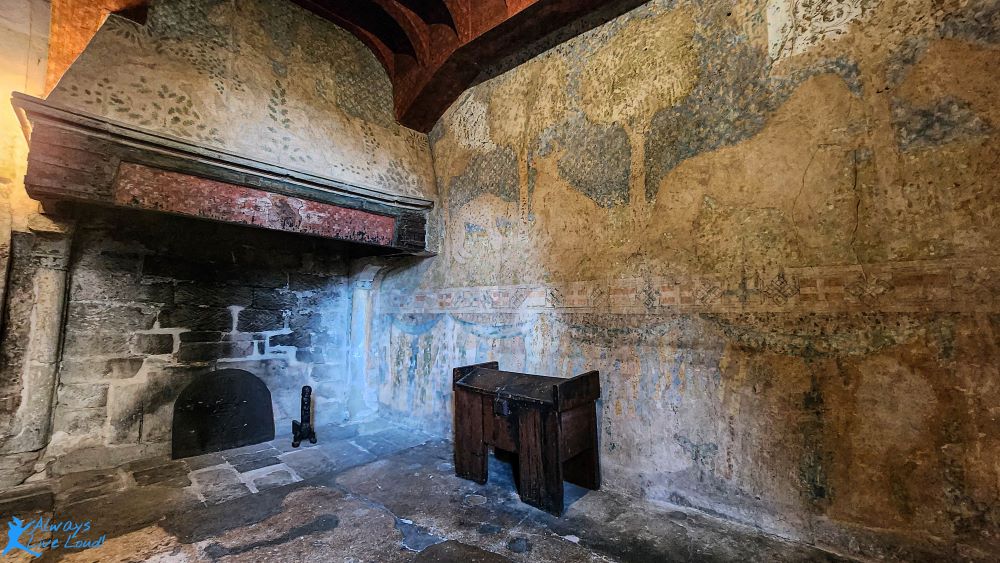
The residence features its most impressive room, specifically designed for the Count of Savoy. Featuring stunning murals from the 14th century, it showcases a variety of medieval animal symbols that add to its historical significance. Known as the Camera Domini, or the lord’s bedroom, this space was designed as a restful retreat for the counts and dukes of Savoy. Initially constructed in the 13th century during the reign of Peter II of Savoy. The room was thoughtfully renovated in the 14th century, resulting in the exquisite artwork that adorns it today.
Camera Nova
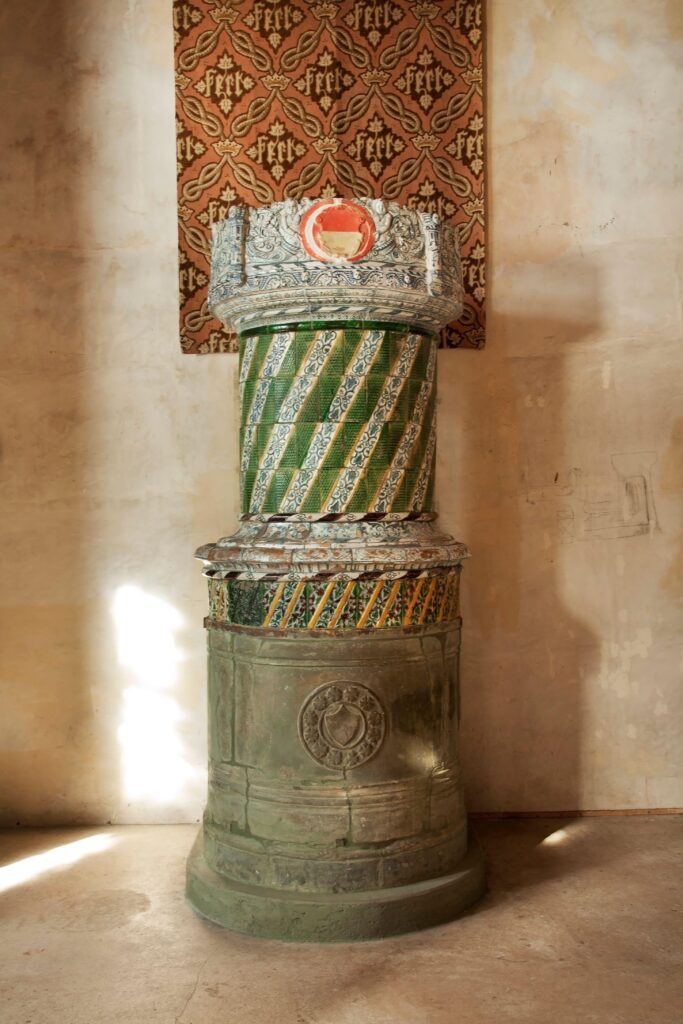
This room showcases a walnut wardrobe from 1590 and a ceramic stove with the Lutry town crest from 1602.
In the late 14th century, the Savoy family designated this space and called it the “Camera Nova Juxta Magnum Pelium,” meaning “the new room next to the large stove.”
More recently, people have referred to it as the Committee Room. It hosted meetings for the Association for the Restoration of Chillon Castle in the 1930s.
Peter II Room
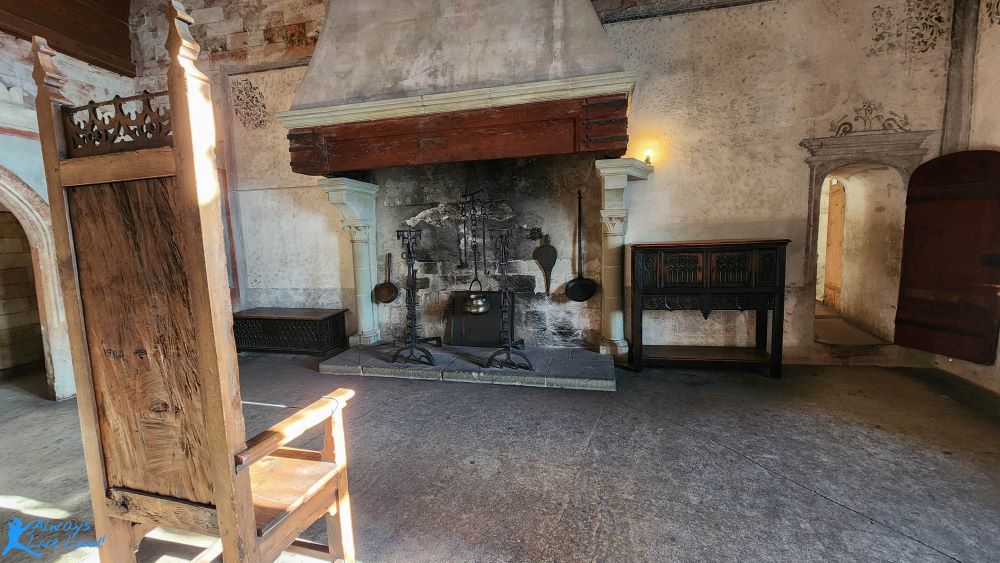
This room is dedicated to Peter II, Count of Savoy (1203-1268). It features displays that highlight the dynastic power of the Savoy family and their territorial influence.
Here are some interesting facts about Peter II that you might find intriguing. He was nicknamed “the Little Charlemagne”. Peter was known for his diplomatic skills and ambition to expand the Savoyard domain. He served as a personal advisor to King Henry III of England and was appointed Earl of Richmond, making him a significant figure in English politics.
In addition to his diplomatic efforts, Peter II also implemented building and administrative reforms.
👇
This beautiful medieval fortress waiting for you, and it’s one of the best-preserved castles in Europe.
Until next time, take care, and see you soon!😍