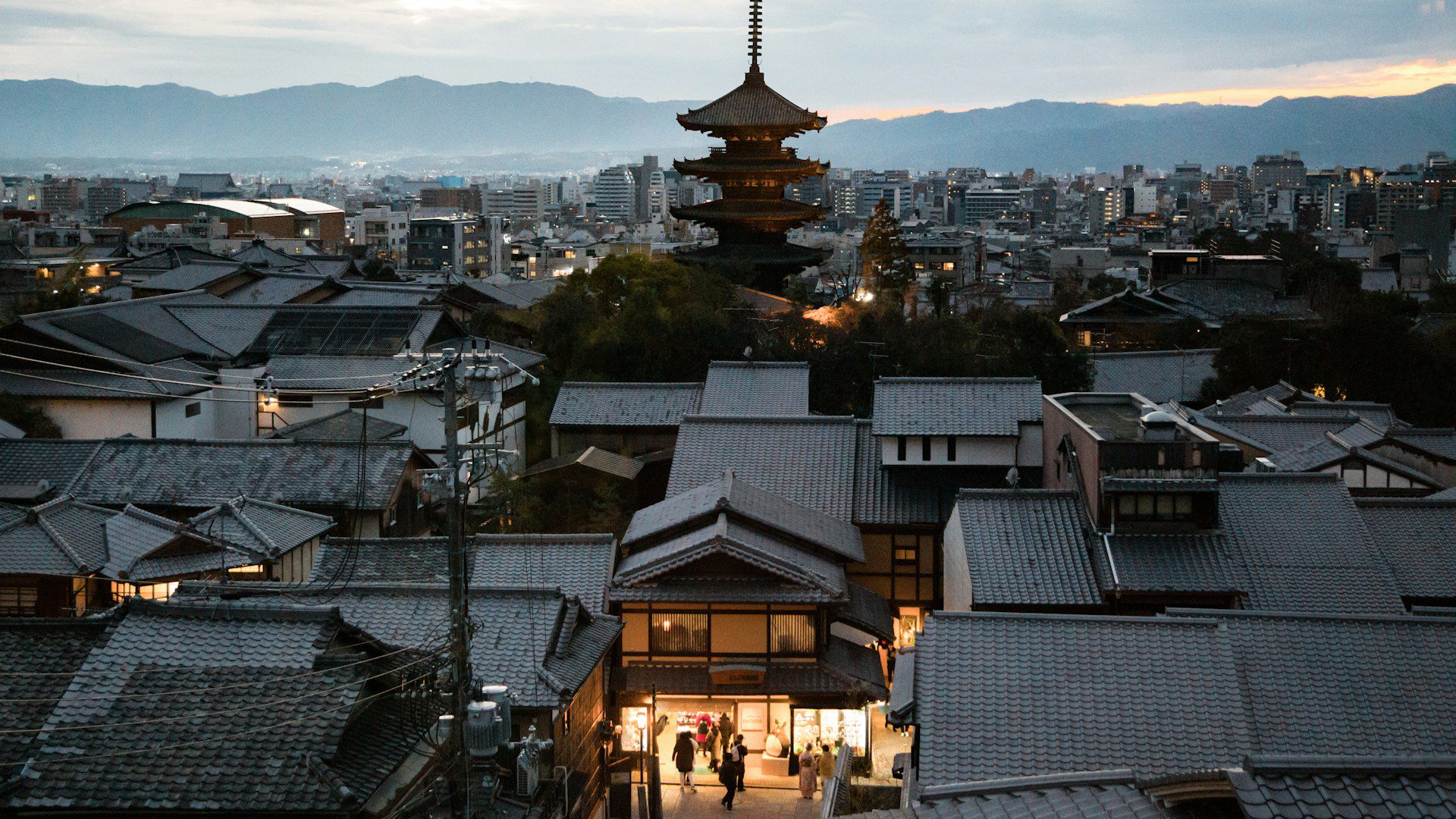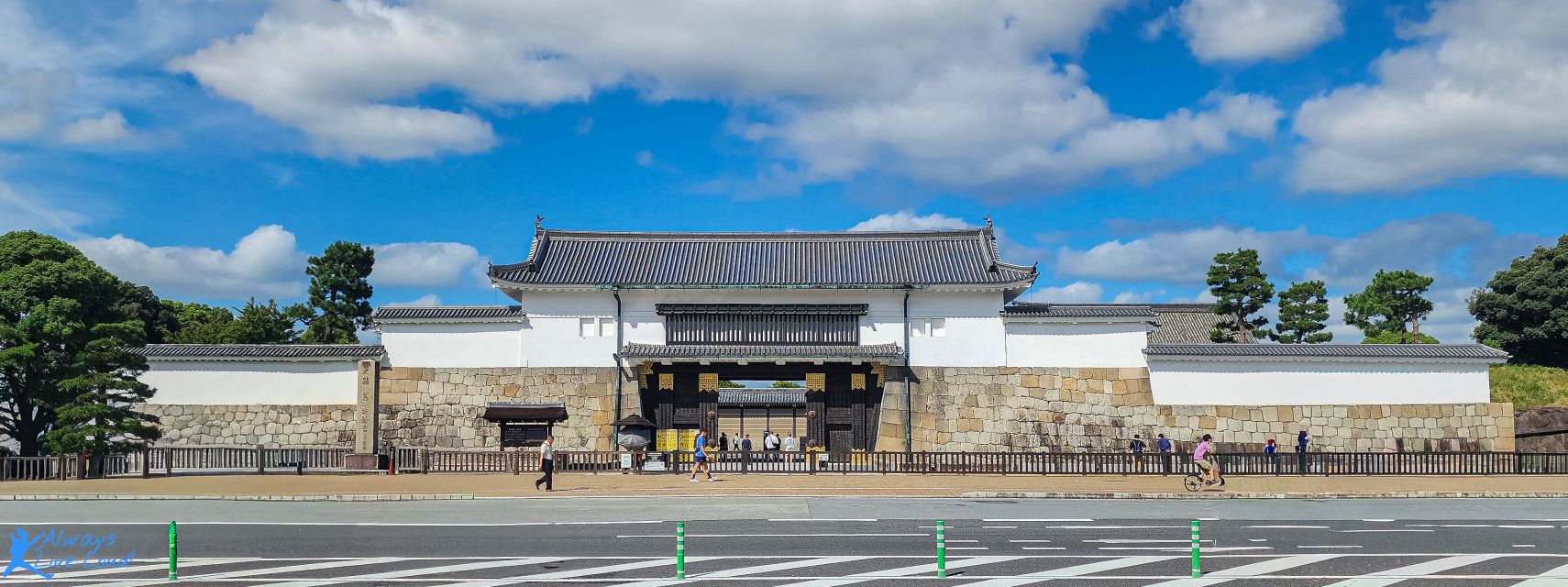
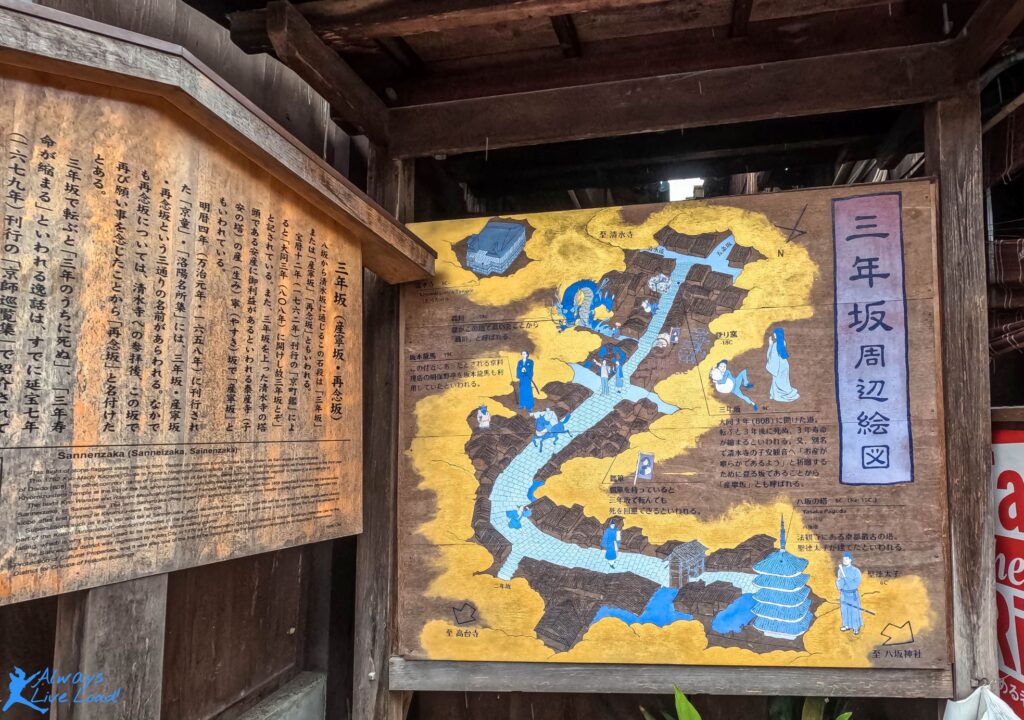
If you’ve ever scrolled through Instagram, you’ve definitely seen it: a perfectly framed, moody shot of a massive, ancient wooden tower rising majestically over a quiet, narrow street in Kyoto. It looks like a serene portal straight into old-world Japan.
Well, I recently visited the iconic Hokan-ji Temple—popularly known as the Yasaka Pagoda—and here’s the unedited, rainy-day reality check.
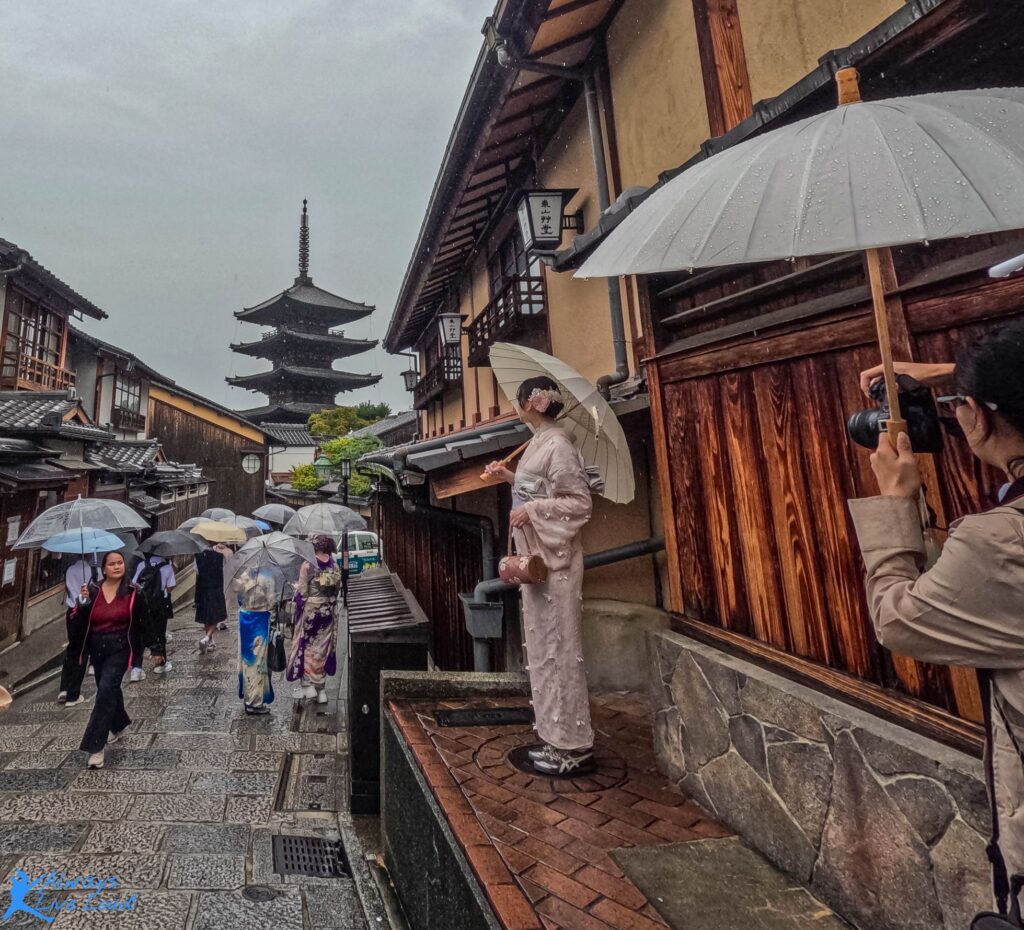
Spoiler alert: Mother Nature had other plans for my trip. It rained about 95% of the time I was in Japan, and my day in the Higashiyama District was no exception. Instead of a peaceful stroll, I found myself navigating a chaotic sea of umbrellas. If you’ve ever tried to take a masterpiece photo while fifty transparent plastic shields block your view (and you’re desperately trying to keep your camera dry), you know the struggle.
But even with soggy shoes and a wet lens, you can’t deny the magic of this ancient neighborhood. Let’s dive into the history, the unexpected weather, and how to survive the umbrella parade.
☀️ The July Weather Plot Twist ☀️
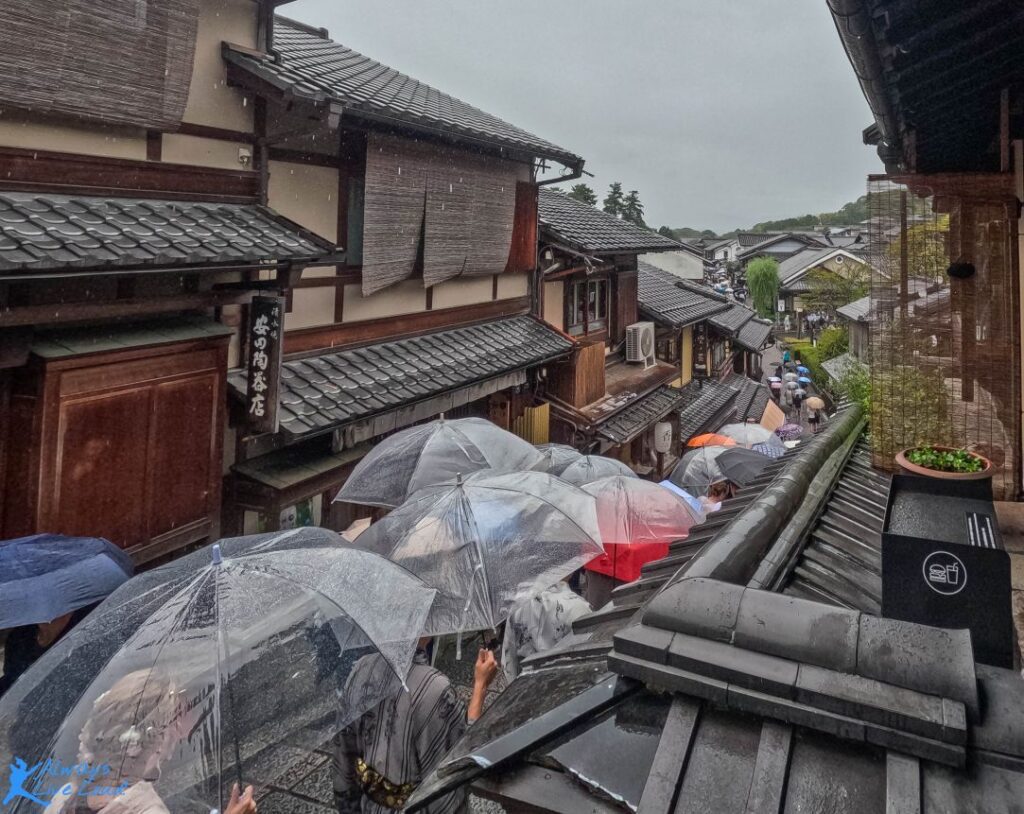
Here is the kicker: July is not supposed to be peak rainy season in Japan. Usually, the traditional rainy season (tsuyu) wraps up by late June, paving the way for hot, sunny summer days.
Not this year. This year, a massive El Niño weather pattern completely broke the rules. A relentless atmospheric setup turned what should have been summer sunshine into a historic deluge. It wasn’t just a bummer for my vacation photos—the unseasonal downpours were so severe they triggered catastrophic flash floods that submerged roads, cut power, and trapped commuters in major cities nationwide.
So when it started pouring on my Kyoto day, it wasn’t just a light shower. It was an epic, country-wide soaking.
🏯 3 Mind-Blowing Facts About the Yasaka Pagoda 🏯
While I spent a good chunk of my time wiping raindrops off my camera lens, looking up at the pagoda made me forget about my wet socks for a minute. This thing has some serious history:
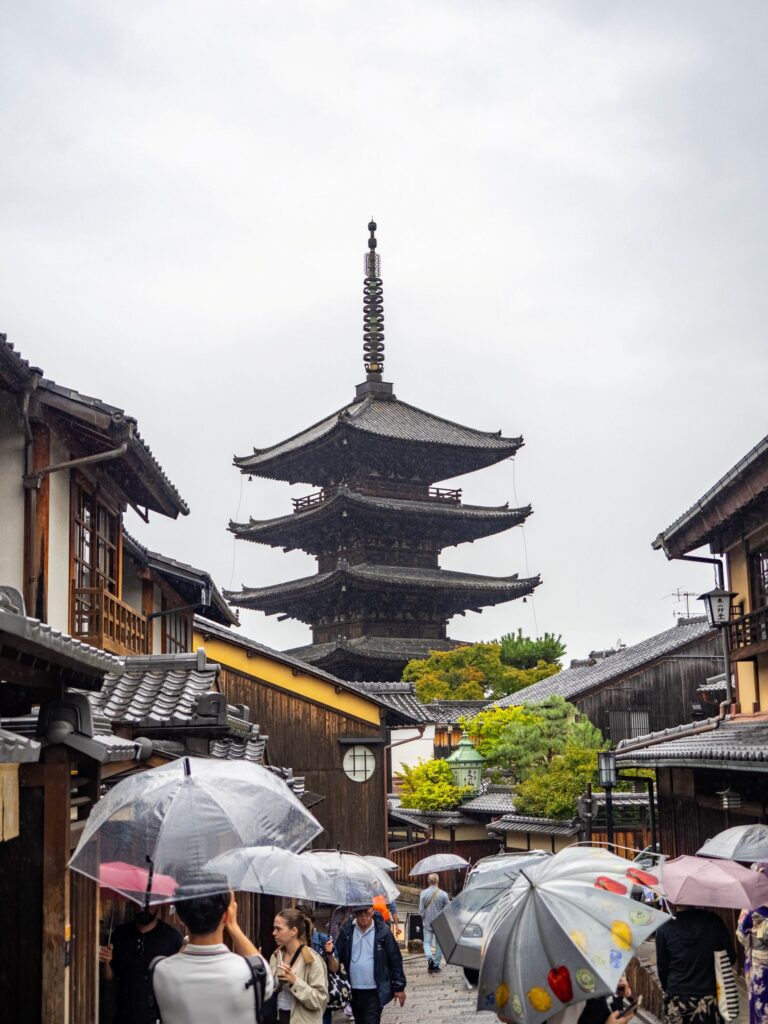
- It’s Way Older Than Kyoto Itself: The 46-meter-tall five-story masterpiece originally dates all the way back to 589 AD. To put that into perspective, Prince Shotoku built it before Kyoto even became Japan’s capital in 794 AD!
- It’s the Ultimate Survivor: While the pagoda looks timeless, the structure you see today isn’t the 6th-century original. Wooden buildings and ancient fires don’t mix well, and it burned down multiple times. Shogun Yoshinori Ashikaga rebuilt the current iteration in 1440. The rest of the original, sprawling temple complex eventually faded away, leaving just this solitary tower standing tall like the neighborhood gatekeeper.
- Built to Shake, Not Break: Japan is no stranger to earthquakes, so how does a 500-year-old wooden tower stay standing? It uses a brilliant piece of ancient engineering: a massive central wooden pillar called a shinbashira that acts like an independent pendulum. When the ground shakes, the floors and the central pillar sway at different frequencies, effectively canceling out the seismic energy. It’s basically 15th-century shock absorption!
⛩️ Exploring the Open-Air Museum ⛩️
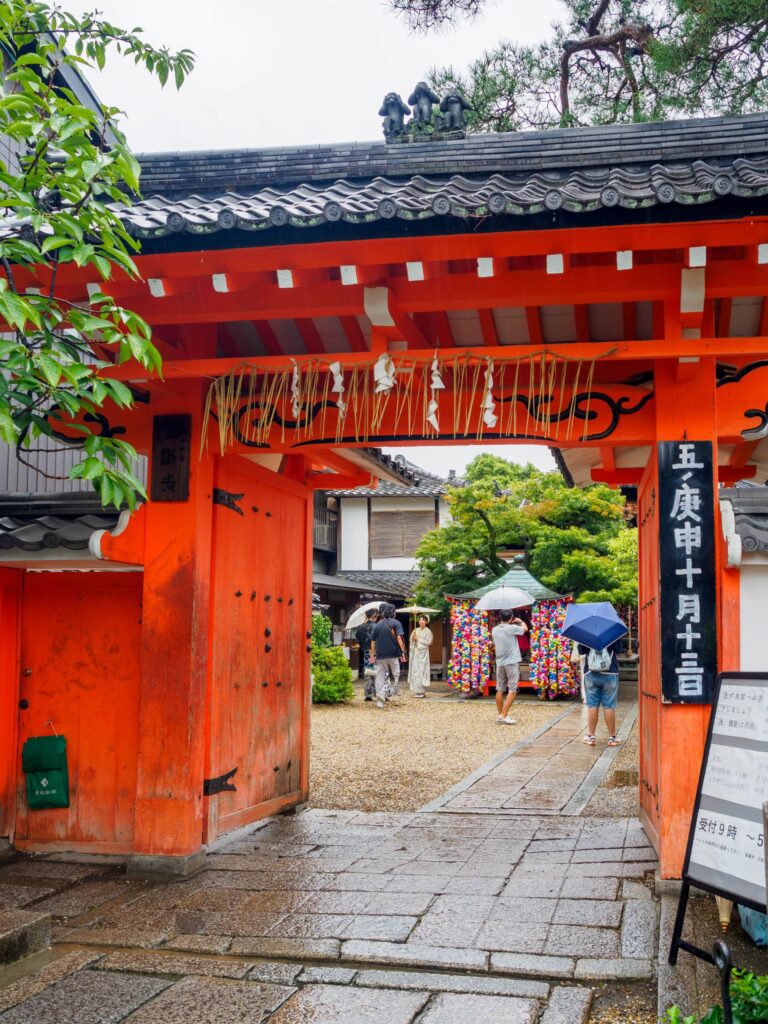
Because the rain was relentless, we adapted. The main buildings weren’t open to us, so instead of lingering at the entrance, we stayed right at the doorway—just long enough to catch a glimpse of the impressive altar—before turning our attention outward.
Honestly? It turned out to be a blessing in disguise. The whole Higashiyama area feels like a massive, open-air museum, so we completely shifted our focus to exploring the beautiful temple grounds, the stunning gardens, and the smaller nearby shrines.
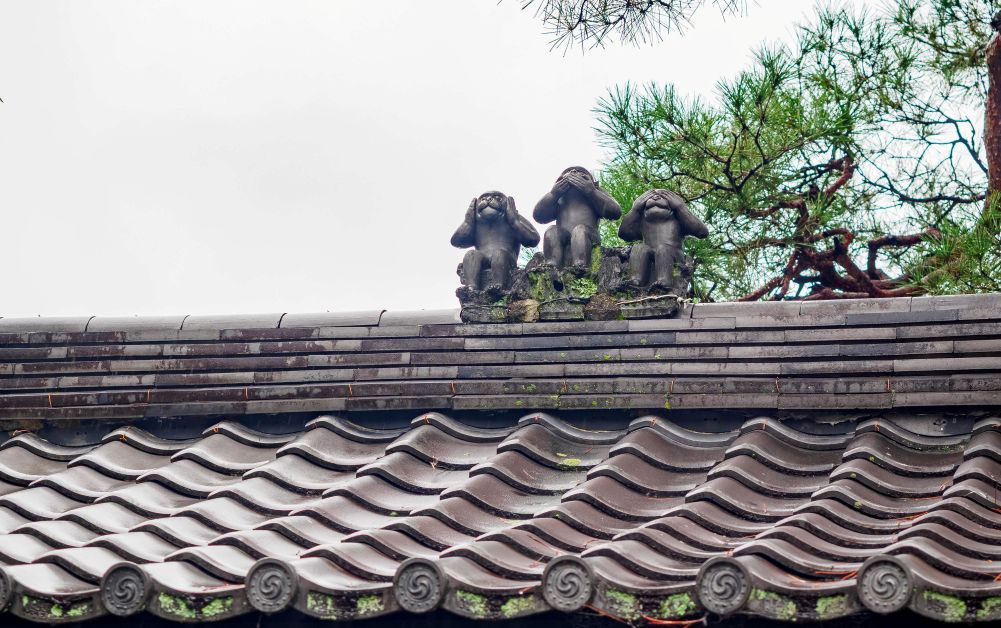
Right around the corner from the pagoda is the vibrant Yasaka Koshindo Temple. It’s famous for its walls covered in bright, colorful cloth balls called kukurizaru, which represent good-faith monkeys. Local lore says if you write a wish on a monkey ball, it will come true—but only if you give up one of your greeds in return. (I wished for the rain to stop, but clearly, my greed for dry shoes was too strong).
🏺 Hidden Treasures: The Antique Shops 🏺
Once you’ve taken in the temples and start descending back toward the main road, keep your eyes peeled. This hillside path is dotted with incredible, tucked-away antique shops that are a paradise for collectors and history geeks alike.
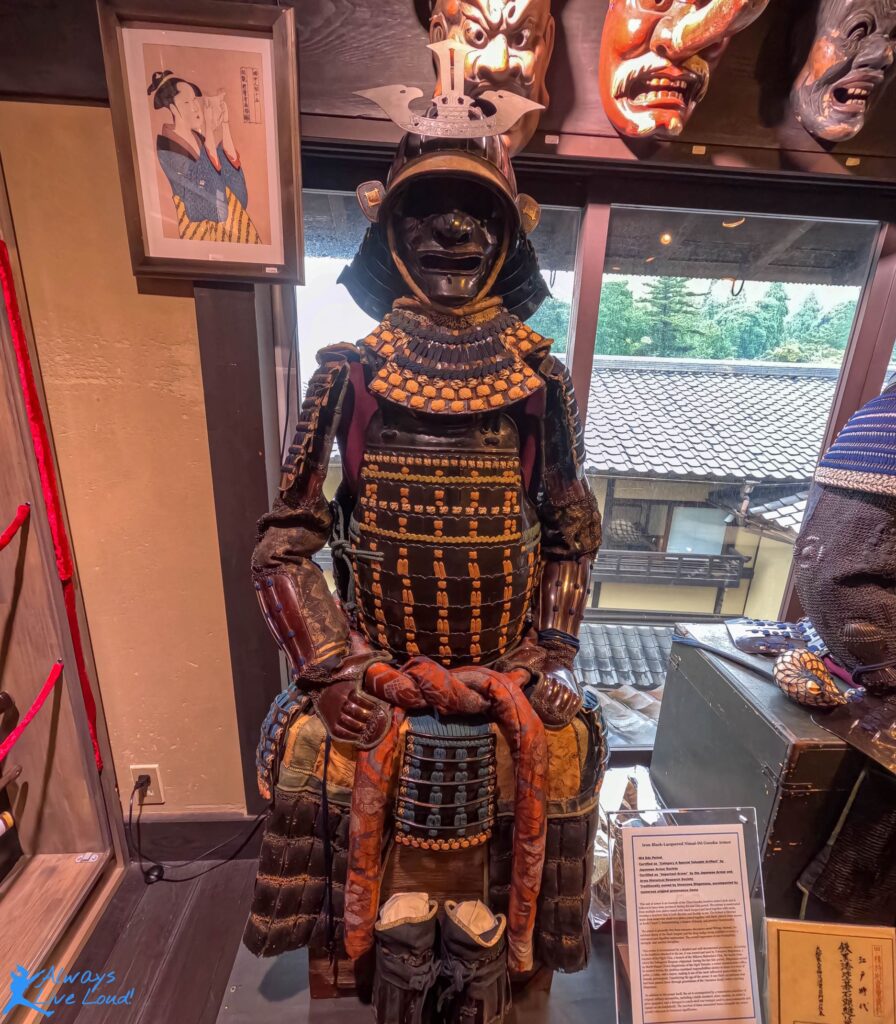
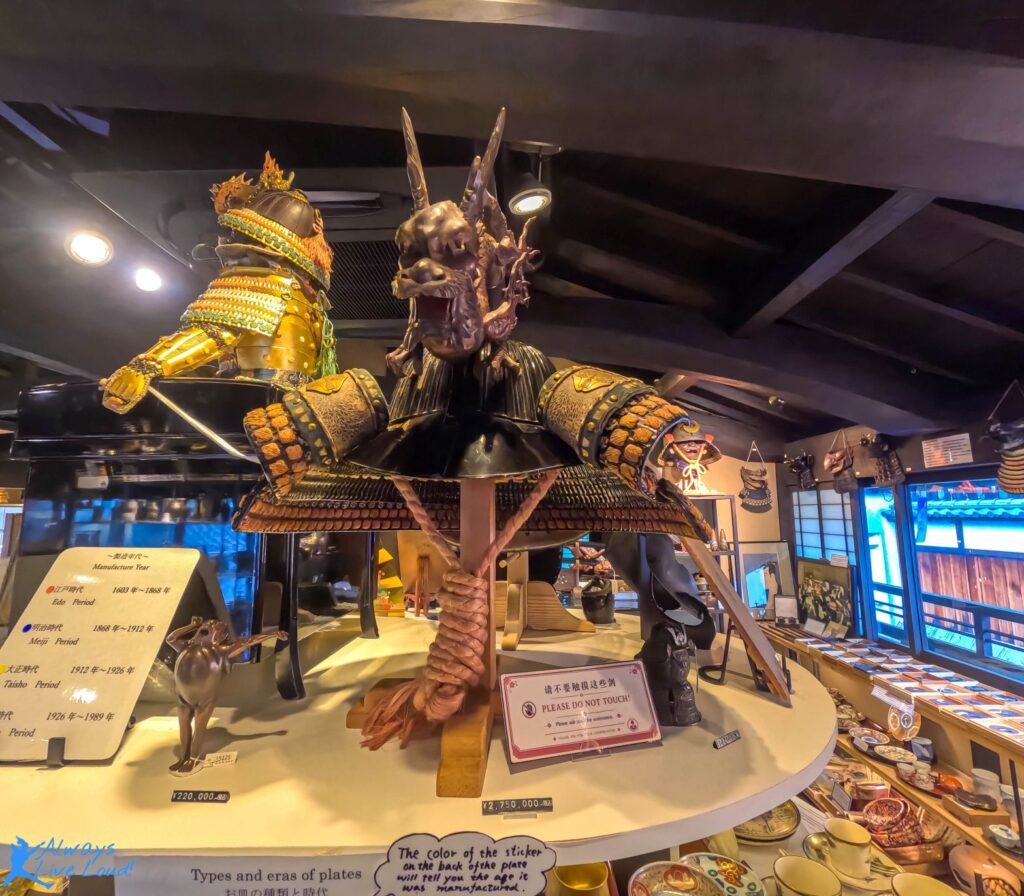
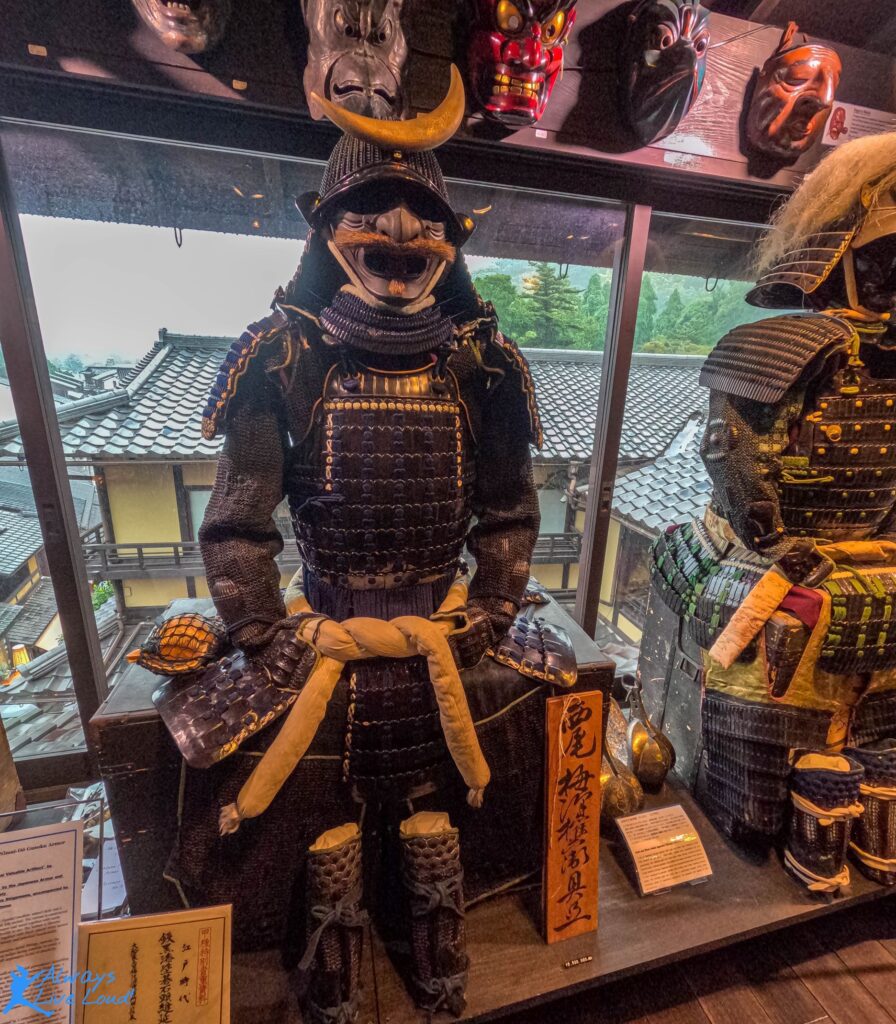
These places are definitely worth a stop. They’re packed with genuine historic items: everything from authentic, striking samurai masks and ancient coins to traditional dishes, elegant vases, and intricate old mechanical gears. Hunting through these shelves feels like a mini-archaeological dig, and it’s the perfect way to duck out of the relentless July rain for a bit.
If you keep walking past these shops along the historic, stone-paved slopes of Sannenzaka and Ninenzaka, you’ll see beautiful traditional machiya houses leading all the way up toward the massive Kiyomizu-dera Temple.
🏛️ The Verdict 🏛️
Is the Yasaka Pagoda worth visiting in a relentless downpour? Absolutely.
Despite the umbrella wars, the wet shoes, and the fact that we couldn’t go past the building doorways, the pagoda’s sheer presence is breathtaking. It has stood the test of time against wars, fires, and earthquakes, so a little historic El Niño rain wasn’t going to ruin its charm. If you gear up properly, step back to enjoy the temple grounds and stunning gardens from the outside, and take a detour into the incredible hillside antique shops, it remains an unforgettable slice of old Japan. Just bring a good raincoat and check the radar before you go!
☀️🏯⛩️🏺🏛️🏺⛩️🏯☀️