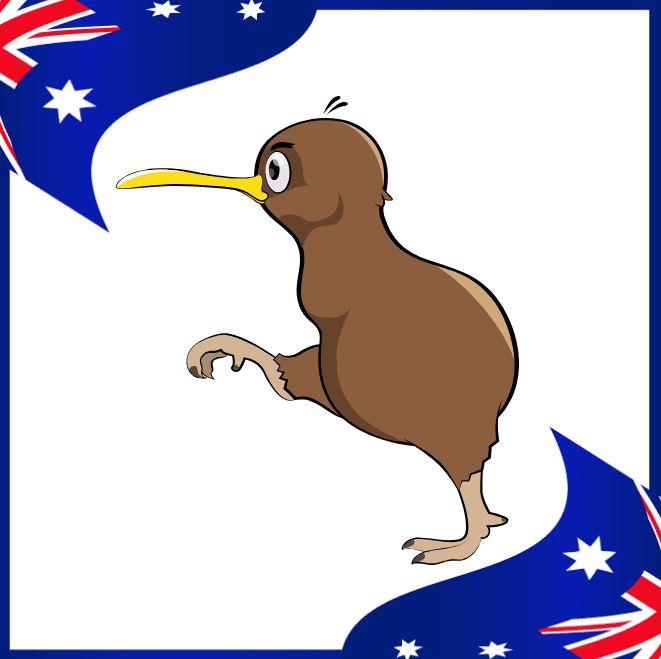
If you close your eyes and picture New Zealand, you might envision a small, round bird with a long beak. The kiwi bird, flightless and unassuming, has become one of the most enduring and distinctive national symbols in the world. But how did this unlikely creature come to represent an entire country—its land, its people, and even its spirit?
The Bird
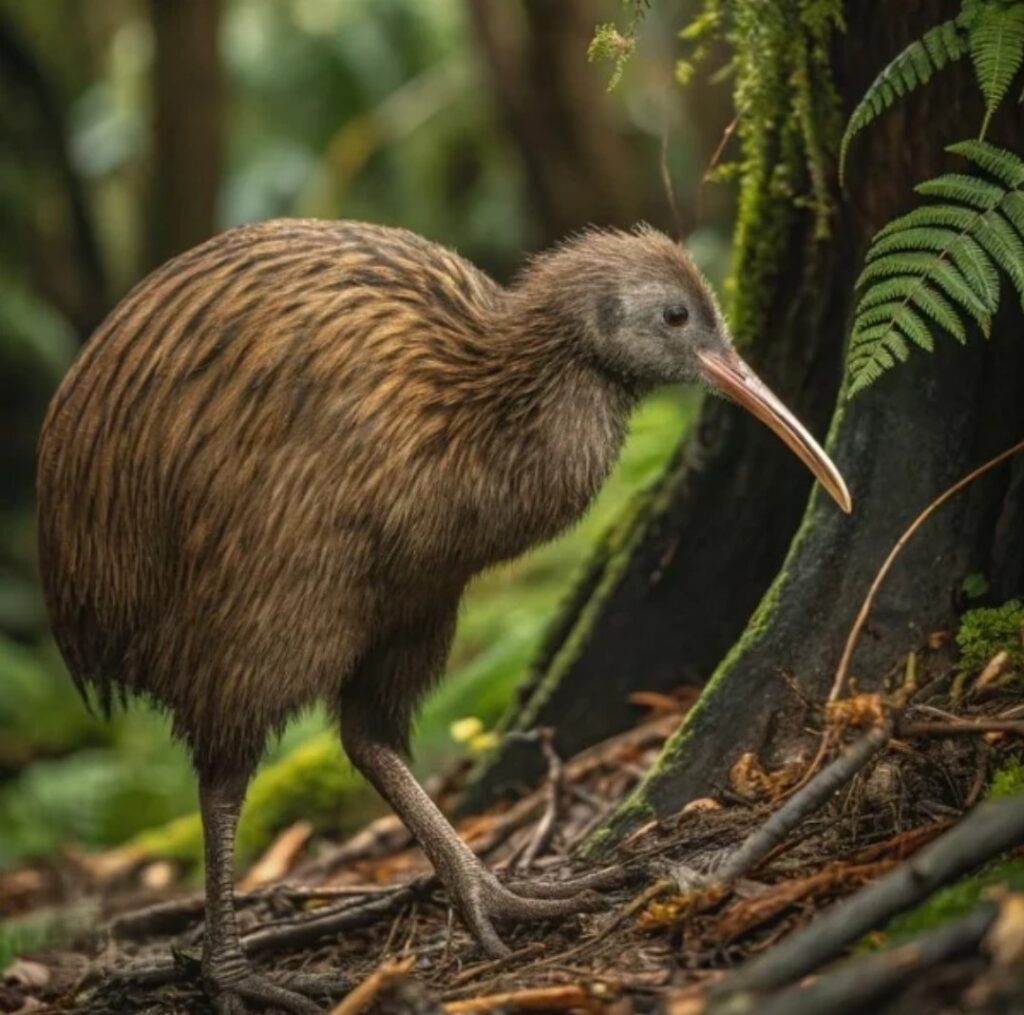
Let’s begin by examining the bird itself.
Kiwis are native only to New Zealand. They evolved in isolation, free from land mammals, and developed a unique lifestyle. About the size of a domestic chicken, kiwis are nocturnal and possess tiny vestigial wings, making them unable to fly.
Instead, they forage among the undergrowth, using their sensitive beaks to probe for insects and worms. Their brown, bristly feathers resemble shaggy fur, and their eggs are among the largest relative to body size of any bird in the world.
Cultural significance

For the Māori, New Zealand’s indigenous people, the kiwi is a treasured symbol, regarded as a taonga, or spiritual treasure.
Historically, the bird feathers adorned important cloaks, and the birds were protected on hunting grounds, recognized as rare and significant to the land.
When European settlers arrived in the 19th century, they were struck by the kiwi’s uniqueness. It didn’t take long before the bird was used to promote the distinctiveness of New Zealand itself.
In the late 1800s, illustrations of the bird began appearing in political cartoons and advertisements as a playful representation of the new nation.
National Identity

The pivotal moment when “kiwi” emerged as a national identity occurred during World War I.
New Zealand soldiers fighting overseas were nicknamed “Kiwis” by their comrades from Australia and Britain. This moniker gained traction and spread from military slang to the general population. Soon, “Kiwi” was not just a bird but also a shorthand for anyone from New Zealand.
After the war, the kiwi symbol appeared everywhere: on military badges, coins, postage stamps, and sports uniforms. Companies featured it on products destined for export. Over the decades, the kiwi became closely tied to New Zealand’s global image.
Today, New Zealanders, whether at home or abroad, proudly refer to themselves as “Kiwis”—a friendly, informal term recognized worldwide.
Today
In the modern era, conservationists are working to protect and celebrate the kiwi, whose habitats are threatened, but whose symbolism remains stronger than ever.
Rarely has a humble, flightless bird so thoroughly captured the heart of a nation. The kiwi may not soar above the forests of New Zealand, but as a symbol, it flies higher than ever—uniting the country under a single, simple, and uniquely New Zealand identity.